Home
Benefits
News
entertainment
shop
finance
careers
education
join military
community

Untitled Document

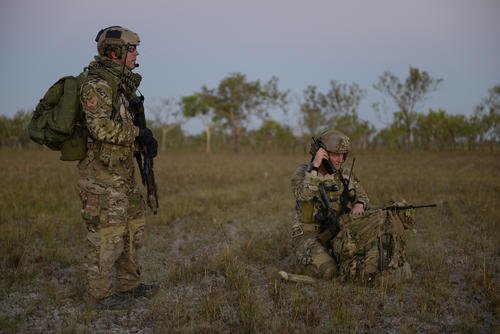
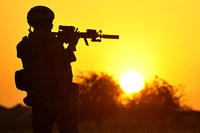
U.S. Special Operations Forces are known as the quiet professionals, ever ready to respond anytime, anywhere to assist U.S. diplomats and military teammates, as well as foreign military personnel and local and national government officials around the world. These American soldiers, sailors, and airmen, equipped with cross-cultural skills and special language capabilities, are helping foreign militaries daily, while at the same time enhancing the stature of the United States, and promoting U.S. national security interests.

Special Forces comprise a very low percentage of total U.S. forces. Yet the "return" on Special Forces' missions is extremely high. Why? One answer is the training is extremely challenging. Navy SEALs, for example, have a reputation of providing the toughest training anywhere in the world. Often only 30% of a given class will complete training and become SEALs! Another reason for Special Forces' low numbers is stealth. With small numbers, quick changes and quiet movement are possible.

Check out related Special Forces Resources, or read more about Special Forces groups below...

Army | Navy | Air Force | Marines | International

Army

Delta Force
The 1st Special Forces Operational Detachment-Delta (SFOD-D) is one of two units in the United States Armed Forces assigned primarily to combat terrorism. The other is the Navy's 'Dev Group.' Delta members are experts at counterinsurgency, small unit tactics, and various infiltration techniques.

Many of them come from Ranger battalions or Special Forces (Green Berets) groups. They are well seasoned, well conditioned and are some of the most experienced soldiers in the service. But as Mark Bowden, author of Black Hawk Down, said, "They are professional soldiers who hate the army." They are very independent warriors who like working in small teams and are very resilient.

Army Rangers
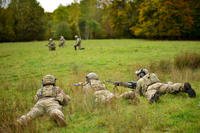
"Rangers lead the way," is the motto of this highly trained strike force. They are experts at moving quietly into areas in small teams for an attack. They may also be used for long-range reconnaissance patrols or setting up observation posts. Rangers are still reeling over the tragic mission in Somalia, and are looking for another chance at victory. They are also a great ready-reserve force if other Spec Ops troops get into trouble.

Green Berets
Received fame during the Vietnam war, these soldiers are specialists at working with the local population. Their role could be crucial to developing solid intelligence. The Northern Alliance, rebels who oppose the Taliban, hold significant ground and could provide another great staging point for attacks by the United States.

Task Force 160 (the "Night Stalkers")
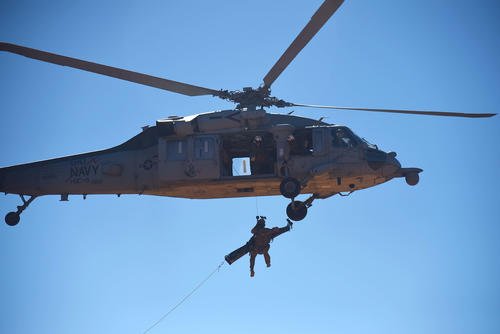
Formed after the failed hostage rescue attempt in Iran and received much attention during the deadly Somalia raid, this unit provides aviation support to other Spec Ops warriors. They received their moniker because of their expertise at flying night operations. The Night Stalkers may benefit from the current season in Afghanistan. The colder air is more dense and improves the performance of helicopter rotor blades.

Go to Army Special Forces Resources...

Top of Page

Navy

SEALs
Today's SEAL (SEa, Air, Land) teams trace their history to the first group of volunteers selected from the Naval Construction Battalions (SeaBees) in the spring of 1943. These volunteers were organized into special teams called Navy Combat Demolition Units (NCDUs). The units were tasked with reconnoitering and clearing beach obstacles for troops going ashore during amphibious landings, and evolved into Combat Swimmer Reconnaissance Units.

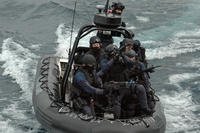
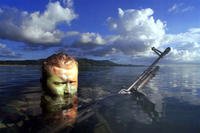
SEALs have a reputation as being the world's premier warriors, which is well deserved. They are trained to perform in any conditions on all terrains - in/under water, in the air, and on land. Normally SEALs start from and return to the sea. SEALs (Sea, Air, Land) teams go through what is considered by some to be the toughest military training in the world. Basic Underwater Demolition/ SEAL (BUD/S) training is conducted at the Naval Special Warfare Center in Coronado. Students encounter obstacles that develop and test their stamina, leadership and ability to work as a team.

Go to Navy SEAL Resources...

Top of Page


Air Force

Special Tactics
Special Tactics operators integrate with other air activities supporting the overall military campaign. Special Tactics can conduct personnel recovery missions, collect intelligence and provide terminal guidance for attacks against valuable enemy targets. Their work frees other military assets to strike other priority targets. Special Tactics operators can strike enemy targets that are beyond the capabilities of precision munitions.

Special Tactics operators were instrumental in the rescue of two Air Force pilots shot down during Operation Allied Force in Kosovo and most recently in securing airfields and calling air strikes in Afghanistan.

Go to Air Force Special Tactics Resources...

Top of Page


Marines

Marine Expeditionary Units
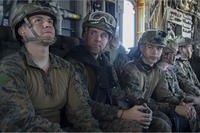
The newest of Special Operations Forces, the Marine Corps has just begun, in 2003, to deploy "Special Operations Capable" Marine Expeditionary Units - MEU (SOC). These units are trained to conduct maritime special operations. MEUs each include 2,200 combat-equipped Marines, with helicopters, Harrier jets and armored vehicles, and patrol the worlds' trouble spots in groups of amphibious assault ships.

Maintaining traditional Marine independence, MEUs perform a variety of special operations, such as hostage rescues, embassy evacuations and recovery of downed pilots from hostile territory. Instead of being commanded by the U.S. Special Operations Command, the Marines retained control over their MEUs, arguing that they were needed in order to perform the service's basic mission to project U.S. military power from the sea. Defense Secretary Donald Rumsfeld wants the Marines to work more closely with the other Special Forces, however, but only time will tell how this relationship evolves.

Go to Marines SOC Resources...

Top of Page


International

Great Britain's SAS
The Special Air Service (SAS) is the world's most experienced special operations force in the world. SAS units have recently seen action in Malaysia and Borneo, the Falkland Islands, Northern Ireland and the Persian Gulf performing raids, ambushes and reconnaissance missions. During Desert Storm for example, SAS teams snuck behind enemy lines to destroy Scud missile sites. The SAS have a lot of firsthand knowledge of Afghanistan as some members of the elite team fought with the Mujahedeen against the Soviets during the 1980s. Recently, SAS has trained in the high mountains of Pakistan and India and should be familiar serving in climates similar to Afghanistan.

Top of Page