The Air Force's Special Tactics teams consist of airmen in three career fields: combat controllers, pararescuemen and special reconnaissance. Each of these special operations career fields requires specialized intensive training.
Combat Control Training
Combat controllers are among the most highly trained personnel in the U.S. military. They must maintain a Federal Aviation Administration air traffic control qualification throughout their careers in addition to other special operations skills.
Their 35-week training and unique mission earn them the right to wear the scarlet beret.
- Indoctrination course, Joint Base San Antonio-Lackland, Texas
One-week orientation to CCT focuses on sports physiology, nutrition, basic exercises, CCT history and fundamentals. - Combat Control Operator Course, Keesler Air Force Base, Mississippi
This 15.5-week course teaches aircraft recognition and performance, air navigation aids, weather, airport traffic control, flight assistance service, communication procedures, conventional approach control, radar procedures and air traffic rules. This is the same course that all other air traffic controllers attend and is the heart of a combat controller's job. - U.S. Army Airborne School, Fort Moore, Georgia
This three-week course teaches basic parachuting skills required to infiltrate an objective area by static-line airdrop. - U.S. Air Force Basic Survival School, Fairchild AFB, Washington
This 2½-week course teaches basic survival techniques for remote areas. Instruction includes principles, procedures, equipment and techniques, which enables individuals to survive, regardless of climatic conditions or unfriendly environments, and return home. - Combat Control School, Pope Field, N.C.
This course provides final CCT qualifications. Training includes physical training, small unit tactics, land navigation, communications, assault zones, demolitions, fire support and field operations, including parachuting. At the completion of this course, each graduate is awarded the 3 Skill Level, scarlet beret and CCT flash.
Special Tactics Advanced Skills Training, Hurlburt Field, Florida
Advanced Skills Training (AST) is a 12-month program for newly assigned STS operators. AST produces mission-ready operators for the Air Force and U.S. Special Operations Command. The AST schedule is broken down into four phases: water, ground, employment and full mission profile. The course tests the trainee's personal limits through demanding mental and physical training. Combat controllers also attend the following schools during AST:
- U.S. Army Military Free Fall Parachutist School, Fort Liberty, N.C., and Yuma Proving Ground, Arizona
This course instructs trainees in free-fall parachuting procedures. The five-week course provides wind tunnel training, in-air instruction focusing on student stability, aerial maneuvers, air sense and parachute opening procedures. - U.S. Army Special Forces Combat Divers School, Key West, Florida
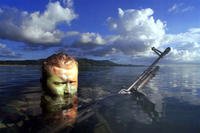
Trainees become combat divers, learning to use scuba to infiltrate denied areas covertly. The four-week course provides training to depths of 130 feet, stressing development of maximum underwater mobility under various operating conditions. - U.S. Navy Underwater Egress Training, Pensacola Naval Air Station, Florida
This course teaches how to escape safely from an aircraft that has ditched in the water. The one-day instruction includes principles, procedures and techniques necessary to get out of a sinking aircraft.
Pararescue Training
Pararescuemen endure some of the toughest training offered in the U.S. military. Their training, as well as their unique mission, earns them the right to wear the maroon beret. They complete the same technical training as EMT paramedics, plus the following physical and specialized training:
- Indoctrination course, Joint Base San Antonio-Lackland, Texas
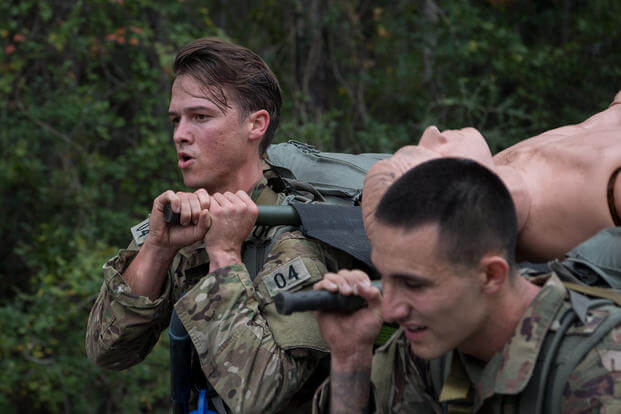
This 10-week indoctrination course recruits, selects and trains future PJs through extensive physical conditioning. Training accomplished at this course includes physiological training, obstacle course, ruck-sack marches, dive physics, dive tables, metric manipulations, medical terminology, cardiopulmonary resuscitation, weapons qualifications, PJ history and leadership reaction course. - U.S. Army Airborne School, Fort Benning
Trainees learn the basic parachuting skills required to infiltrate an objective area by static-line airdrop in a three-week course. - U.S. Army Combat Divers School, Key West
Trainees become combat divers, learning to use scuba to infiltrate denied areas covertly. The four-week course provides training to depths of 130 feet, stressing development of maximum underwater mobility under various operating conditions. - U.S. Navy Underwater Egress Training, Pensacola Naval Air Station
This course teaches how to escape safely from an aircraft that has ditched in the water. The one-day instruction includes principles, procedures and techniques necessary to get out of a sinking aircraft. - U.S. Air Force Basic Survival School, Fairchild AFB, Washington
This 2½-week course teaches basic survival techniques for remote areas. Instruction includes principles, procedures, equipment and techniques, which enable individuals to survive, regardless of climatic conditions or unfriendly environments and return home. - U.S. Army Military Free Fall Parachutist School, Fort Bragg and Yuma Proving Ground
This course instructs trainees in free-fall parachuting procedures. The five-week course provides wind tunnel training, in-air instruction focusing on student stability, aerial maneuvers, air sense and parachute opening procedures. - Paramedic course, Kirtland AFB, N.M.
This 24-week course teaches how to manage trauma patients before evacuation and provide emergency medical treatment. Upon graduation, an EMT-paramedic certification is awarded through the National Registry. - Pararescue recovery specialist course, Kirtland AFB
Qualifies airmen as pararescue recovery specialists for assignment to any pararescue unit worldwide. The 20-week training includes field tactics, mountaineering, combat tactics, advanced parachuting and helicopter insertion/extraction.
Special Reconnaissance
- Basic Military Training (BMT), Joint Base San Antonio-Lackland
This eight-week course is where trainees learn military structure, the Air Force's core values and skills necessary to prepare them to become airmen. - Special Warfare Preparatory Course, Joint Base San Antonio-Lackland
Candidates will do a lot of running, rucking and swimming over eight weeks, as well as learn about the history of special warfare and the Esprit de Corps. They will take the Physical Ability and Stamina Test (PAST) to determine whether they will advance to tech training. - Special Warfare Assessment and Selection Course, Joint Base San Antonio-Lackland
This four-week course will allow candidates to prove whether they should advance in CCT training. - Special Warfare Pre-Dive Course, Joint Base San Antonio-Lackland
This four-week course prepares candidates for combat dive school and involves intense calisthenics, middle- and long-distance running, swimming and water confidence training. - Special Warfare Combat Dive Course, Panama City, Florida
This course lasts five weeks and encompasses what it takes to become an expert diver. - Airborne School, Fort Benning, Georgia
For three weeks, CCTs are imbedded with other special forces. During airborne training, candidates are taught basic parachuting and prepare for static line-jump operations. - Military Free-Fall Course, Yuma, Arizona; Jamul, California
SRs are advanced sky divers. For four weeks, this is where they build on the training from airborne school. - SERE training, Fairchild Air Force Base, Washington
For three weeks, special warfare airmen receive survival, evasion, resistance and escape training. - Special Reconnaissance Course, Keesler AFB, Mississippi
In addition to physical training, SR candidates learn how to collect data that could affect the battlespace. The SR course is eight weeks long. - Special Reconnaissance Apprentice Course, Pope Army Airfield, N.C.
During these eight weeks, candidates apply their training under pressure and learn fundamental combat skills using various weapons and strategies. - Special Tactics Training, Hurlburt Field, Florida
This six-month course includes advanced weapons and demolition training, ATV operation and core skills instruction.
(The information on Special Reconnaissance is from the career page at AirForce.com.)
Ready to Join the Military?
We can put you in touch with recruiters from the different military branches. Learn about the benefits of serving your country, paying for school, military career paths, and more: sign up now and hear from a recruiter near you.