
'Medal of Honor': The Wars We Wage
By EVAN SHAMOON - Stars and Stripes
Oct 04, 2010
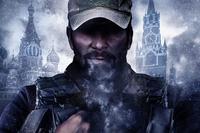
"The 'authenticity' [is] going to be relevant on many different levels," says senior creative director Rich Farrelly of Electronic Arts’ upcoming "Medal of Honor." "The mindset of the special operator is delved into throughout the game. There are moments of humor as well as moments of extreme seriousness. And the rhythm and dialogue when speaking on comms delivers an authentic feel."
But more than anything, he says, it’s the game’s storyline: Set in Afghanistan, "Medal of Honor" takes a page from the headlines as soldiers do battle against Taliban forces, and the team is making concerted efforts to stay true to the reality of a soldier’s experience.
Farrelly works for Danger Close, the newly formed Los Angeles studio helping craft the game’s single-player experience, and one that counts a number of MOH franchise veterans among its staff. And those aren’t their only in-house vets: As a group, Danger Close staffers have collectively spent more than 10 years in Iraq and more than 3 years in Afghanistan (and still counting), helping lend a new level of reality to the experience of first-person shooting.
"It portrays these men not only as warriors, but as fathers and husbands," says Farrelly of the title. "There are highs and lows in the game that are the result of decisions made. What is perceived as ‘right’ by the politicians sitting behind the desk and what is ‘right’ by the brothers who are fighting beside them are two different things many times. In our line of work, these are realities—these situations and concurrent decisions are costly. EA understood this and used it. In this MOH, the human element is exposed and that is what truly makes this game authentic."
Of course, no soldier experiences anywhere near as much action as the virtual combatants in any videogame, and in this sense MOH is very much in line with not only the series, but its genre. To this end, much of the game plays out like a traditional "Medal of Honor" game: Lots of medium-to-close range combat, with only a couple of weapons on your person at any given time. And when you jump in, one mechanic that’s rare in the genre becomes immediately necessary: leaning. With the cover-based systems that have pervaded the market since the original "Gears of War" brought it to the mainstream, the simple act of leaning has gone the way of the dodo. Here, you must hold down the left-bumper to activate "lean mode" where the left thumbstick controls your head, not your body: It lets you get up against a doorframe, for example, and peek around to aim precise shots while your body remains in cover. (Additionally, a cover system lets you position yourself behind something, and then incorporate the lean mechanic.)
The player’s role varies from one mission to the next: from US Ranger to Tier One specialist. In one scenario, for instance, you’ll find yourself downed and holed up in an abandoned house, hunkering down against wave upon wave of enemies as your supplies dwindle, recalling "Black Hawk Down." Another mission, dubbed Sniper, aligns more closely with "The Hurt Locker"’s desert sniper battle: Aided by a spotter, you receive directions to the targets, some 500 yards away, picking off the three targets through a manually steadied scope. Rather than going for the typical headshot, however, you’re instead advised to aim for the center of mass, the body. You’ll need to use suppressing fire, listen carefully to your spotter, and call in air strikes when necessary. "We’d like to see just how quickly air support shows up in the game crossover to real life. Anyone who’s ever needed it and had to call for it will understand," jokes Farrelly.
This was just the kind of technical distinction Danger Close was there to help make, and indeed a large part of the reason Farrelly and his team got on board.
"The root of the decision to be a part of the project took place after taking a step back and looking at the good that could come out of this game," he says. "Hollywood has been zealously consistent with their clichés and misconceptions about our communities. We had the chance to make an impact."
This included trying to bring a sense of what soldiers really think about in combat—how they react, what weapons they use (and how they sit against their bodies), the sounds they hear, their gear, and their banter were all designed to be as realistic as possible. In another mission, you’re manning the gunner station on an Apache helicopter, destroying ground targets as you patrol the skies of the Shah-I-Kot Valley region of Afghanistan. In addition to guns, you have front firing and hellfire missiles; unlike most games, being aware that the front firing missiles actually fire forward is essential to keep in mind. You hear radio chatter over the course of the mission, chatter that was influenced by actual Apache pilots, in terms of both procedure (how to engage targets in messy ground scenarios, for instance, and differentiate friendlies from hostiles), and also to maintain a tone of authenticity.
From design to visual and aural presentation, it’s already clear that this is going to be the most authentic "Medal of Honor" to date—not simply because it’s set during a current, ongoing war for the first time, and not simply because it will have so many technical details in place.
"It’s easy to build a badass cyber ninja to sling lead," Farrelly says. "What isn’t easy is building a character who has those same abilities and bring out the human side, a side that exists but is mostly ignored or unheard of. It’s probably the most important thing we brought to MOH—the human element of these warriors. We’ve shown people what it’s like to make that phone call home to the ones you love most, when you know you are going into harm’s way. We peeled away the stereotypes so they could create an image for themselves."
----
----
Sound Off...What do you think? Join the discussion
Copyright 2012 by Stars and Stripes
This article is provided courtesy of Stars & Stripes, which got its start as a newspaper for Union troops during the Civil War, and has been published continuously since 1942 in Europe and 1945 in the Pacific. Stripes reporters have been in the field with American soldiers, sailors and airmen in World War II, Korea, the Cold War, Vietnam, the Gulf War, Bosnia and Kosovo, and are now on assignment in the Middle East.
Stars and Stripes has one of the widest distribution ranges of any newspaper in the world. Between the Pacific and European editions, Stars & Stripes services over 50 countries where there are bases, posts, service members, ships, or embassies.