Book Review: Finding Peace
Bryant Jordan
Jun 10, 2008
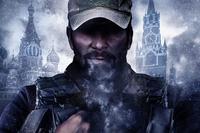
Finding Peace, by Tom Waltz and Nathan St. John. Illustrated by Nathan St. John
For all the eloquent prose written over the centuries about getting away from spilling blood in war and finding peace from it, the reality is that conflict has been as much a part of the world as the changing seasons. Peaceful summer slips toward fall, followed by wintry storms of steel and blood that finally exhaust themselves to permit the rebirth of spring – and so life to goes on.
But in some places there seems only to be winter.
That’s the country we see in “Finding Peace,” an illustrated anthology of war stories by Tom Waltz, author of the 2006 graphic war novel “Children of the Grave.” In his most recent work, Waltz is joined in writing credits by Nathan St. John, who penned one of the stories and illustrated all of them.
This is not “Sgt. Fury and His Howling Commandos” or even “Our Army at War.” Those traditional comics, even when showing the horrors and injustice of war, generally placed events in a broader context that showed something larger was going on and that peace eventually would come.
In one important way it’s not even like Waltz’s “Children of the Grave,” though a blind cycle of violence that constantly feeds on itself is at the core of both Waltz’s stories. But while “Children” attempted to offer an explanation for the chain of violence -- and even a chance for atonement -- there is none of that in “Finding Peace,” despite its hopeful title.
“To me it’s always about this,” Waltz told Military.com. “This whole idea that we have these old animosities that we can’t get past. And until we get past them, nothing’s going to get solved. It’s not going to get better. It’ll continue be the status quo or get worse.”
It’s the same with Israel and a lot of the Muslims states, Christians and the Muslims,” Waltz continued. “In our stories, we can never name the country because it could be in Africa. Or this could be in Bosnia, or it could be happening in Iraq … everybody has old hatreds and they don’t want to get past them.”
What’s left for the participants – whether peacekeeper or civilian caught in the crossfires and ancient hatreds – is to find peace in small doses, where they can, however they can.

The book begins with one Pvt. 1st Class Jones -- an American Marine assigned to a multi-national peacekeeping force in a never-identified country -- recalling the craziness of being caught between rival factions protesting each other in the war-ravaged city. Both sides railed about past injustices inflicted on them by the other side, each group thinking the other got the better deal when the city was divided by peacekeepers to end the bloodshed.
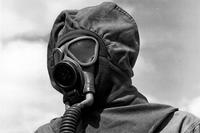
The frustrations pile on as the stories -- told in reverse chronological order -- unfold: a French peacekeeper shot through the throat; pulling security around a mass grave being exhumed by a UN-NATO team; reading a letter from a civilian back home that assumes cramming for exams is tougher than “playing soldier;” sitting in a cramped bunker, in full chemical warfare gear, waiting for a scud that may or may not land nearby, and hearing in the silence the slightest of sobs from a normally tough-as-nails female Marine NCO who left a husband and two kids behind in the U.S.
The last story, written by St. John, is about a young girl sent to live in the safety of a convent in the city after her family and home are shattered by the factional fighting that took place before the peacekeepers arrived. She finds there are no safe havens, however.
There’s an authenticity that comes with Waltz’s war stories, owed to his personal experience as a Marine during the first Gulf War and, after that, as an Army National Guard MP. For that reason he can “get it right” in both grunt and gear -- his soldiers and Marines talk and look like their real-life namesakes.
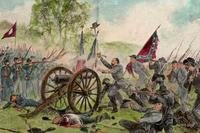
In terms of the imagery, that may not be as apparent this time around as in “Children of the Grave” because St. John is a different kind of artist. Where “Grave” artist Casey Maloney rendered more detailed images using pen and ink, St. John goes for the rougher look that comes with charcoal. Prof. William Forstchen, a military historian at Montreat College in North Carolina who penned an introduction to “Finding Peace,” wrote that St. John’s work recalls the combat art that came out of the Civil War, where charcoal sketches were made hurriedly and sometimes under fire.
St. John, who in his day job is an architect working in London, told Military.com that the Civil War connection is coincidental, “though not surprising, given the use of charcoal in this manner.
“I had studied Goya’s sketches in the past and found this looser style of drawing to be tremendously effective in conveying movement and emotion,” he said in an email.
Waltz hits the right tone in his narratives. They read like letters home, without over-the-top descriptions of combat or heroic dialogue that might have come out of the pen of someone with no real war, or at least military, experience.
Hollywood, Waltz says, routinely emphasizes “the big, dramatic, post-traumatic” experience of combat.
“I’m not trying to discount any of those types of things,” he said, “but they always want to make everybody seem s if they’re never going to get past [what happens], when the reality is the majority do. They talk to you matter-of-factly ‘this is my job and this is what happened’ – It’s not any less dramatic, and sometimes they need to talk about it.
“They don’t need to cry about it, they don’t need to scream about it.”
----
Shop for military books in the Military.com Entertainment Store
Sound Off...What do you think? Join the discussion
Copyright 2008 by Bryant Jordan