





















Home
Benefits
News
entertainment
shop
finance
careers
education
join military
community


William S. Lind: Tactics of the Crescent Moon


About the Author

William Sturgiss Lind, Director of the Center for Cultural Conservatism at the Free Congress Foundation, is a native of Cleveland, Ohio, born July 9, 1947. He graduated magna cum laude, Phi Beta Kappa from Dartmouth College in 1969 and received a Master's Degree in History from Princeton University in 1971. He worked as a legislative aide for armed services for Senator Robert Taft, Jr., of Ohio from 1973 through 1976 and held a similar position with Senator Gary Hart of Colorado from 1977 through 1986. He joined Free Congress Foundation in 1987.

Mr. Lind is author of the Maneuver Warfare Handbook (Westview Press, 1985); co-author, with Gary Hart, of America Can Win: The Case for Military Reform (Adler & Adler, 1986); and co-author, with William H. Marshner, of Cultural Conservatism: Toward a New National Agenda (Free Congress Foundation, 1987). He has written extensively for both popular media, including The Washington Post, The New York Times, and Harper's, and professional military journals, including The Marine Corps Gazette, U.S. Naval Institute Proceedings and Military Review.

Mr. Lind co-authored the prescient article, "The Changing Face of War: Into the Fourth Generation," which was published in The Marine Corps Gazette in October, 1989 and which first propounded the concept of "Fourth Generation War." Mr. Lind and his co-authors predicted that states would increasingly face threats not from other states, but from non-state forces whose primary allegiance was to their religion, ethnic group or ideology. Following the events of September 11, 2001, the article has been credited for its foresight by The New York Times Magazine and The Atlantic Monthly.

Mr. Lind is co-author with Paul M. Weyrich of the monograph: "Why Islam is a Threat to America and The West." He is the author of "George W. Bush's `War on Terrorism': Faulty Strategy and Bad Tactics?" Both were published in 2002 by the Free Congress Foundation.

William Lind Article Archive

Discussion Board
Have an opinion on this article? Sound off.

Get Breaking Military News Alerts

Related Links

Military Opinions Index

Global Hotspots: Iraq


Get $1004 a Month!

Your service may have earned you great education benefits. Get up to $1004 per month to pay for your undergraduate, graduate or technical degree.

Find out about military-friendly schools today
.

November 17, 2004

[Have an opinion on a William Lind column? Sound off in the Discussion Boards.]

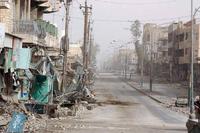
U.S. forces have taken Falluja. Were we fighting a war in the Spanish Netherlands in the 17th century, and were Falluja the fortress city of Breda, the victory might mean something. Caught up as we actually are in a Fourth Generation war in Iraq, the event is almost meaningless. Most of the guerillas fled before we attacked, as guerillas are supposed to do ("When the enemy attacks, we retreat.") U.S. forces are finding few dead resistance fighters; the 1,200 to 1,600 "body count" the American command is claiming will prove as phony as those in Vietnam. Meanwhile, the resistance is hitting us elsewhere. When U.S. forces leave Falluja, they will return there too. And the U.S. military has again destroyed the village in order to save it, giving its enemies a victory at the moral level. Will we ever learn?

If we do ever learn, a good bit of the credit should go to one of the most innovative and practical modern writers on military tactics, retired Marine John Poole. His first book, The Last Hundred Yards, was the best small unit tactics manual published in many years. Now, just in time for Iraq, Afghanistan and wherever else the neo-cons want to send American soldiers to die, he is offering his take on how Islamic non-state forces fight. Tactics of the Crescent Moon: Militant Muslim Combat Methods should be in the backpack of every American soldier and Marine.

Here's a sample paragraph that might usefully have been read by those who planned the Falluja operation:

Through better tactics, U.S. forces could take fewer casualties at close range without alienating the local population and without sacrificing their long-range capabilities. More powerful than firepower in this new kind of war will be the preservation of infrastructure. For it is the lack of social services that gives the foe his recruiting base. In the 21st century - as it was at the end of World War II - food, water, clinics and jobs will do infinitely more to secure the ultimate victory than bombs. Better small-unit technique costs nothing. It requires only a slower operational pace and the authority to experiment at the company or school level.
Interestingly, Tactics of the Crescent Moon begins at Gallipoli, where the British were handed a major defeat by the Ottoman Turks during World War I. How did they do it? Poole argues that the Turks won in part because of better tactics.

It would appear that Middle Easterners were using "maneuver warfare" at the individual and squad level some 65 years before Americans could do it at the regimental level. To lure an entire British battalion into a trap, the Turks had needed only bogus orders, harassing fire, and deliberate withdrawal...When they reemerged to stalk the flanks and rear of the British formation, they may have further enticed it to advance. By the time their quarry realized that it was alone and fragmented, it was too late.
After examining lessons from the Iran-Iraq war and Israel's expulsion from southern Lebanon, Poole goes on to consider each of the main Islamic Fourth Generation forces the U.S. may find itself facing. His discussions of the Afghan resistance to U.S., not just Soviet, invaders and the Iraqi opposition could not be more relevant. 


Part Three of Tactics of the Crescent Moon offers his prescription for how U.S. forces should act. As in his other books, Poole stresses small-unit tactics and techniques. Seeing clearly the moral disadvantages that massive use of American firepower brings, he notes how good small units - true light infantry, which America sadly lacks - can win without the vast collateral damage and civilian casualties that work against us. The keys are high levels of small unit autonomy and far better peacetime training, training that permits experimentation and adaptation rather than forcing everyone into a cookie-cutter sameness.

For those who want to learn, Tactics of the Crescent Moon is an invaluable resource. The question is whether the U.S. military can learn and adapt. At the small unit level, it can, when it is allowed to do so. The problem is that, typical of a Second Generation military, the U.S. armed forces must bear the burden of a vast, centralized, bureaucratic command structure that has little interest in adaptation. Populated with rafts of modern major generals who cannot tell at sight a Mauser rifle from a javelin, but know all too well how to grab more bucks for irrelevant high-tech weapons, our headquarters resemble the British at Gallipoli more than the Turks. The result is likely to be more flattened Iraqi cities like Falluja, more victories on the moral level for our opponents, and in the end, ignominious withdrawal and defeat. Now, if we could just convert all those headquarters and their staffs into mine-clearing platoons...

  Email this page to friends

© 2004 William S. Lind. William S. Lind is Director for the Center for Cultural Conservatism for the Free Congress Foundation. All opinions expressed in this article are the author's and do not necessarily reflect those of Military.com.


Military Opinions Index


Member Center


FREE Newsletter


Military Report


Equipment Guides


Installation Guides


Military History