






















 |
H. Thomas Hayden
recently concluded over 35 years of service,
which included the Agency for International
Development, the Marine Corps, defense industry
and the Pentagon. His specialties are Intelligence,
Counterinsurgency Operations, Counter-terrorism,
and Joint Concepts Development and Experimentation.
His Marine Corps assignments have included
command of two separate battalions; AC/S G-2,
4th MARDIV & AC/S G-2 FMFEurope; Branch Head,
HQMC, Special Operations and Low Intensity
Conflict (SO/LIC); Special Assistant to the
Assistant Secretary of Defense for SO/LIC;
and, Senior Program Analysts at HQMC with
the Joint Staff and DoD at the Pentagon. Overseas
assignments included Vietnam, Japan & Okinawa,
Europe, Central America, Saudi Arabia and
Kuwait, Somalia, Singapore, Philippines, and
Colombia. He has an MBA (Pepperdine) and an
MA in International Relations (University
of Southern California). He has written two
books and is working on a third.
Thomas
Hayden Article Archives
Sound
Off! - Have an opinion about this
article? Visit the discussion forum.
|
|
|
|
April 7 , 2005
[Have an opinion on this column? Sound off in the discussion
forum.]
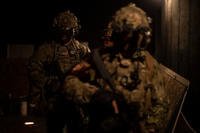
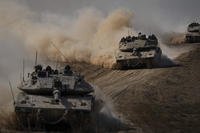
Military transformation has been at the forefront of Secretary of Defense Donald Rumsfeld’s stamp on the Depart of Defense, and all the Armed Services. Military transformation has been defined as the act of creating and harnessing a “revolution in military affairs.” It is said to require the development of new technologies, operational concepts, and organizational structures to conduct combat operations in dramatically new ways. This is a euphemism for “high tech wars.”
Military transformation covers the entire spectrum of warfare: outer space, cyberspace, weapons systems, organization structures, and not the least of which, doctrine, tactics, techniques and procedures.
Not all attempts at military transformation -- combining new technology with operational concepts -- have been successful. In the 1950s, the atomic age brought an attempt to transform the military with the introduction of tactical nuclear weapons and the Pentomic Divisions were formed. The Army found this organizational concept did not work in Vietnam. The real military transformation following Vietnam created an army that was ready for the Gulf War 1990-1991. The Special Operations Forces and Marine Corps that fought the early battles in Afghanistan were the right instrument for the initial stages of that conflict. The Army and Marine Corps that defeated the Saddam Hussein army worked well in Phase I and Phase II, but has not always been successful in Phase III.
Phase I is pre-combat operations (preventative actions), Phase II is combat operations, and Phase III is post-conflict operations (security, transition and reconstruction operations).
There is new term that is beginning to gain attention in the Pentagon and even Congress: Cognitive Transformation.
Many military writers and counterinsurgency practitioners are beginning to recognize that there is a need for a Cognitive Transformation to add to the high-tech military transformation that is already underway. The nature of the conflict in Afghanistan and Iraq dictates that the military transforms the way it fights. Many have reported the errors in the ways of using artillery and air strikes in the center of a town. Accordingly, it is critical that a Cognitive Transformation and a Cultural Transformation accompany the “revolution in military affairs.”
On 16 February 2005 Rep. Ike Skelton (D-MO), Ranking Democrat on the House Armed Services Committee, and Rep. Steve Israel (D-NY), convened a roundtable on Cognitive Transformation in the Armed Forces. Members of the roundtable included “senior military leaders, academics and policy makers and MGEN Robert Scales, USA (Ret), former Commandant of the Army War College, moderated the discussions.” Note the absence of counterinsurgency experts: “policy makers and academics” -- probably lots of hands-on experience and counter-guerrilla leaders in that bunch.
While I’m not impressed with the makeup of the people advising the Democrat leaders in the House Armed Service Committee, on a very important matter, I have to give credit to Skelton and Israel for their initiative and only hope they get to put some of their thoughts into the DoD budget.


|
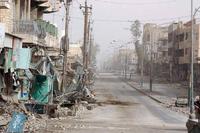
People talk of “renaissance soldiers” trying to broaden traditional combat skills in addition to counter-guerrilla or counterinsurgency skills, as if the two were separate. They are not. You need to be able to fight a three-block war in 4th Generation Warfare. On one block you may have peacekeeping and humanitarian assistance, on another block you may counter guerrilla warfare, and on a third block you may have full-blown conventional war with highly-trained soldiers.
Many U.S. Army and Marine Corps personnel are starting to be trained in culture awareness, differences in religion and language proficiency.
The Marine Corps has published a “Culture Smart Card” for every Marine going into Iraq along with special classes on the Iraqi situation. The card includes information on culture, religion and dos and don’ts on all three ethnic groups in Iraq. Additionally, the card has helpful Arabic words and phrases and seemingly but important items like how to understand Arabic names.
Flexibility and innovation must be the hallmark of the Marines and soldiers who have daily contact with Iraqis or Afghanistanis. Each small unit leader, when confronted with unique difficult situations, must think of the culture, religious and/or local customs, when he or she decides on a course of action.
The Democrat roundtable suggested that officers should obtain a broader education earlier in their career than later. Most officers now get advanced degrees at the war college level. Some are starting to get masters with their career courses, which is the right place to start. They also suggested that command involvement in professional education is required. How many times does a senior officer fail to mention on a fitness report that the officer being reported on has obtained an advanced degree, or how many fail to note the language proficiency of an officer?
Some of the members of the roundtable suggested that the personnel system is the largest obstacle to effectively changing the culture of military education. I would agree.
FY 2005 Defense Authorization bill requires the Joint Chiefs of Staff to report to Congress within a year on their “strategic vision for Joint Professional Military Education.” Whatever that means.
The best piece of proposed legislation that I have seen on this subject is that no one will be promoted to the rank of general officer unless he or she is fluent in one foreign language. This is a good start. However, I would go as far below as field grade -- major or lieutenant commander.
The Services claim that they do not have the money to pay everyone proficiency pay allowance that learns a foreign language. Well, pay for an additional foreign language. If an officer or an enlisted man, regardless of rank, can speak two foreign languages fluently, he or she should get pro pay. Then their should be a bonus for the more difficult languages, e.g. Chinese, Arabic, Farsi, etc.
In a letter to the Editors of FOREIGN AFFAIRS, in response to an article by Max Boot, Rep. Israel says: “To accomplish cognitive transformation, we must do three things: First, reform professional military education… Second, remove existing obstacles to military careers for…civil affairs, foreign area studies, and psychological operations fields. Finally, invest more money in the under-funded and undervalued military agencies that understands how our enemies are exploiting the convergence of demographics, governance, disease, disconnectedness, tyranny and religious fundamentalism.”
While many have recognized that 4th Generation Warfare requires new skill sets, few in the higher ranks of the military are willing to dedicate precious training time on meeting the current training syllabus and preparing their units for the three-block war.
Email
this page to friends
[Have an opinion on this article? Sound
off here.]
© 2005 H. Thomas Hayden. All opinions
expressed in this article are the author's and do not necessarily
reflect those of Military.com.
|