




















Jeff Edwards is a retired U.S. Navy Chief Petty Officer, and an Anti-Submarine Warfare Specialist. He is currently working as a civilian expert consultant to the Fleet Anti-Submarine Warfare Command, the Navy's think tank for high-tech undersea warfare. His naval career spanned more than two decades and half the globe -- from chasing Soviet nuclear attack submarines during the Cold War, to launching cruise missiles in the Persian Gulf.
He puts his extensive experience as a Surface
Warfare specialist to work in his new novel,
TORPEDO.
In a plot that could easily be ripped from
today's headlines, TORPEDO combines an accident
at a nuclear power plant, an illegal arms
deal, and a biological warfare attack, to
ignite a crisis that could draw Western Europe,
the Middle East, and the United States into
all-out war. TORPEDO mixes the elements of
a classic sea chase novel with state-of-the-art
technology to create a cutting-edge Surface
Warfare Thriller.
[Have an opinion on this article? Go to the Discussion
Forum to sound off.]
By Jeff Edwards
Americans value human life. It's a fact. You couldn't tell it from our video games, our movies, or our media, and you certainly couldn't tell it from world opinion, but it's a fact nonetheless. According to Homicide Tends in the U.S. (Bureau of Justice Statistics) the homicide rate in the United States peaked in 1980, and the trend has been steadily downward ever since. The most recent reports peg the homicide rate at levels not seen since the 1960's. That by itself should be good news, but there's more. The Bureau of Justice Statistics says the trend still appears to be sharply downward. In other words, it's gotten a lot better, and it's still improving.
The National Crime Victimization Survey, which has tracked trends in non-lethal violence in the U.S. since 1972, shows that the number of rapes, robberies, and assaults have been steadily declining since 1994. The lowest year recorded so far was 2002. (Numbers for 2003 are not all in yet.) Both of these statistics are directly supported by independent surveys of hospitals, clinics, and urgent care centers.
Our police organizations have been moving toward less-lethal weaponry for decades. Tasers, stun guns, pepper spray, glue guns, and humane crowd-control barriers are all becoming standard equipment in police armories. Less-lethal weapons are designed to stop or neutralize humans without causing death or serious injury. Recent events in Boston have demonstrated that even less-lethal weapons can kill under certain conditions, but that's absolutely counter to their intent. There is no perfectly non-lethal weapon, but the fact that we are searching for one is a very good sign. We're trying desperately to avoid killing people, even when those people happen to be criminals or suspected criminals.
Taken together, the declining rates in violence and the general move toward less-lethal weapons are clear signs that our country is becoming more civil, and less violent.
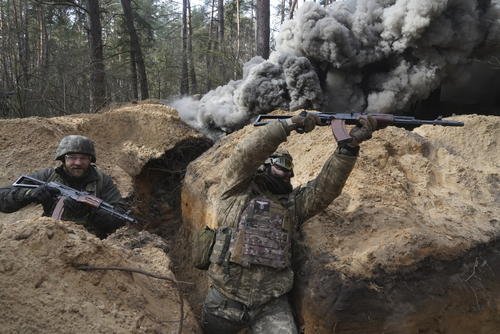
Our military is moving in this direction too. For the better part of our history, we designed generation after generation of increasingly lethal hardware: larger warheads, with increased kill ratios, higher body counts, more bang for the buck. Now, the pendulum has swung, and we are engaged in a struggle to limit the frightfulness of combat. Our warheads are getting smaller, not larger. Carpet bombing has given way to precision weaponry. Our goal is no longer to maximize devastation, but to minimize collateral damage, and to avoid unintended bloodshed. Where once we would bomb an entire city to take out its factories, we now struggle to hit our intended targets, and nothing else.
The Surgical Strike has become the Holy Grail of the United States Military: no collateral damage, and no unnecessary loss of life. In our current mindset, if we bomb a chemical munitions factory and we accidentally kill a man riding a bicycle on the other side of the street, it's a tragedy. It's not altogether unlikely that our military leaders will order some sort of investigation. How did we hit that guy? What went wrong? How did an innocent bystander get killed?
Our enemies labor under no such compunctions. When their attack on the World Trade Center killed fewer than 3,000 civilians, they probably considered that a tragedy. They'd been hoping to kill nearly 50,000 people, and now they're trying to make up the deficit using car bombs and pregnant women.
How do we fight such an enemy? I'm not minimizing the efforts and sacrifices of our service members. Far from it. The men and women of our military have my support, my respect, and my undying gratitude. But they're battling an enemy who has no regard whatsoever for human life: an enemy who will gladly expend the lives of twenty innocent civilians to get to a pair of American Soldiers. How do we fight that?
The obvious answer, the cliche answer, would be to fight fire with fire. If they're willing to throw away innocent lives to get to us, then we do the same to get to them. We could do it, too. I've been retired from the Navy for less than a year, and I have a pretty good idea of the amount of firepower the U.S. Military can dish out. We have the capacity to unleash destruction, the likes of which our enemies can scarcely imagine. But we are held back by the value that we place on life. We're simply not willing to throw away the lives of ordinary Iraqi citizens to get to the bad guys.
In 'Beyond Good and Evil,' Nietzsche said, "He who battles monsters should look to it that he himself does not become a monster." To my way of thinking, that pretty much outlines the problem. We are doing battle with monsters. How do we defeat them without becoming monsters ourselves? If Nietzsche knew the answer, he kept it to himself.