This article is provided
courtesy of Stars & Stripes, which
got its start as a newspaper for Union troops
during the Civil War, and has been published
continuously since 1942 in Europe and 1945
in the Pacific. Stripes reporters have
been in the field with American soldiers,
sailors and airmen in World War II, Korea,
the Cold War, Vietnam, the Gulf War, Bosnia
and Kosovo, and are now on assignment in the
Middle East.
Stars and Stripes has one of the widest distribution
ranges of any newspaper in the world. Between
the Pacific and European editions, Stars
& Stripes services over 50 countries
where there are bases, posts, service members,
ships, or embassies.
Related Links:
Current
Archive
Stars
& Stripes Website
Sound
off in our Discussion Boards
Have an opinion on the issues discussed in
this article? Sound off.
Get
Breaking Military News Alerts
|
|
|
|
|
Your
Two Cents

Submit your stories, news items, or a benefits update
-- and help Military.com bring the best, most important
stories to your fellow servicemembers, veterans,
and family members. Contribute
here |
|
|
February 14,
2005
[Have an opinion about the issues discussed in this article?
Sound
off in our Discussion Boards.]
By Jon R. Anderson,
Stars and Stripes, European Edition
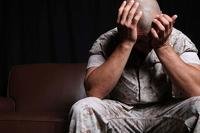
ARLINGTON, Va. - Military health officials are trying to figure
out how to reduce the stigma for troops seeking mental health care,
but concede they're fighting an uphill battle.
"Stigma is a real problem. It's a societal issue, but it is much
more pronounced in the military," said Col. Thomas Burke, one of
the Pentagon's top psychiatrists and the director of mental health
policy for the Defense Department.
"There is a perception among the troops that seeking mental health
care means you're weak or a coward and frankly, we in the military
kind of foster that attitude," said Burke. "We give medals to the
soldiers who charge the hill, but don't really recognize the day-to-day
heroism of soldiers who take care of themselves - doing simple things
like changing their socks and cleaning their weapons - doing whatever
it takes to keep themselves in condition to do the mission."
A recent Defense Department study looking at combat troops returning
from Iraq found that soldiers and Marines who need counseling the
most are least likely to seek it. As many as 16 percent of the troops
questioned admitted to symptoms of severe depression, Post Combat
Stress Disorder and other problems.
Of those, six out of 10 questioned felt their leaders would treat
them differently and that fellow troops would lose confidence in
them. As many as 65 percent said they'd "be seen as weak."
Army
psychiatrist Col. Charles Hoge, lead author of the study, said,
"Our most important finding was this concern about stigma and barriers
to care, that is, the number of soldiers who have mental health
issues who don't seek care."
Troops returning from combat soon will undergo two mandatory mental
health assessments - one right away, one three to five months later
- to make sure they aren't suffering long-term trauma, Department
of Defense officials announced in January.
But self-indentifying and pursuing further help might still be difficult
for some.
Hoge, who is head of psychiatry at Walter Reed Army Institute of
Research in Silver Spring, Md., said the key to reducing that stigma
is "making mental health care more routine. If the troops view mental
health care as routine as getting an X-ray, they'll be more likely
to get it."
"What soldiers need to understand is that stress reactions - difficulty
sleeping, reliving incidents in your mind, feeling emotionally detached
- these kinds of reactions are very common and really expected after
combat," said Hoge.
Wherever they go, they should remember that what they're feeling
"is normal and it's nothing to be ashamed of."
The War on Labels
But even in the combat zone, officials have made a conscious effort
not to call troops seeking mental heath care "patients."
"It's a hotly debated decision within the mental health community,"
said Burke, "and it cuts the very heart of the stigma issue."
On one hand, he said, calling those troops "patients" in the long
run could help reduce the sense that problems coping with the horrors
of combat are no different than bleeding from a gunshot wound.
On the other hand, studies have shown that the more troops are treated
as sick - rather than simply experiencing normal reactions - the
more likely they are to wrestle with mental health problems over
time.
The biggest barrier to reducing stigma in the military, he said,
is confidentiality.
"The military is in an ugly situation. In the civilian world, confidentiality
is pretty strict," said Burke.
Firm laws are in place protecting patient privacy, "but all those
provisions make exceptions for the military.


|
"You're never going to have complete confidentiality in the military
system," said Burke. "That doesn't mean we open our books to anyone
who wants to look - we are indeed very, very careful to safeguard
privacy as much as possible - but the truth is, there is a big hole
in the wall of confidentiality that will never close."
To ease those concerns, last year military officials opened up limited
confidential counseling outside of the military health care system
through its One Source program with civilian providers. And last
week, officials announced they would add a second round of mental
health screening a few months after troops return from combat.
Officials are also in early discussions to replicate the National
Institute for Mental Health's recent "Real Men, Real Depression"
public awareness campaign within the military.
For any program to work, said Burke, troops and military leaders
need to understand "mental illness is not the kind of unsolvable
problem that it once was." The message he tries to ram home is that
usually it's not a matter of "problem soldiers, but soldiers with
problems."
Email
this page to friends
©2005 Stars & Stripes. All opinions
expressed in this article are the author's and do not necessarily
reflect those of Military.com.
|