


With the new year upon us, those looking for some inspiration to start a new fitness routine may have found it in 101-year-old George Poleske.
Poleske, a World War II veteran, can’t see or hear well, and often depends on a wheelchair for mobility. Those obstacles alone, never mind the minor aches and pains of living in a century-old body, would be enough to make most people avoid the gym.
Not George Poleske.
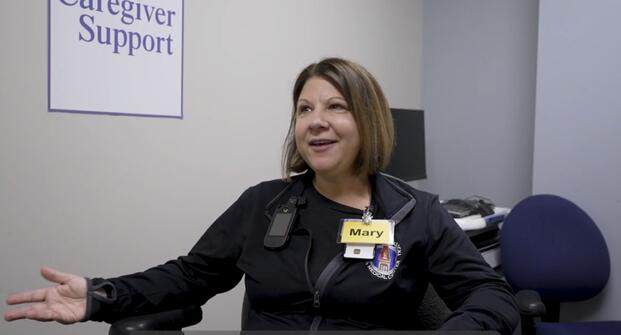
He’s still reaching for goals at 101, which includes staying as physically fit as he can. Five days a week, Poleske participates in physical therapy sessions at the VA medical center in Milwaukee, Wisconsin. Motivated by his trainer, health technician Mary Kassens, Poleske chats and smiles as she puts him through a regimen to keep him healthy.
The pair have forged a unique friendship and will gab over just about anything. During a recent session, the World War II veteran beamed talking about his winning Bingo card, the Milwaukee Brewers, and a fantastic BLT with all the “fixings” he ate for lunch. Chatting aside, Kassens keeps the 101-year-old on track, pacing him through walking and balancing drills, along with upper body training.

‘I Always Perk Up’
“We’ll do the walking,” Poleske said, rising from his wheelchair, clutching the parallel bars and walking a short path. He got to the end, turned around, and shuffled his way back to Kassens.
“Watch out, Mary; I might run you over,” he joked.
Kassens is quick to provide a motivational boost.
“You’re looking good, George. You’re doing fine,” she said.
Poleske usually calls out the number of reps he’s hitting, working both his body and mind.
“We have fun together, don’t we?” Kassens asked.
“That’s right,” Poleske told the VA's David Walter. “We’re fun and friendly. We can talk about anything. And she’s a good instructor. She takes good care of me.”
At his age, and with advanced health issues, Poleske might not trust another trainer with less experience. But he knows Kassens is safe, smart, and keeps him focused on improving his strength and stamina. The bond they’ve forged motivates him to keep coming back for more exercise.
“It’s something I look forward to. It keeps me motivated,” Poleske said. “I always perk up for it.”
Working to Keep Veterans Moving
Poleske lives in the Community Living Center (CLC) at the Milwaukee VA hospital. He’s part of the VA’s national STRIDE program that works with hospitalized patients to keep moving.
Nurses and trainers work with veterans to analyze their gait and balance, and make sure they take daily walks down hospital hallways for as long as they’re hospitalized.
STRIDE came to the Milwaukee VA in 2020, and the program has added upper and lower body exercise to its walking routine, including yoga, which has shown to improve flexibility and mindfulness.
Isabel Detienne, an occupational therapist, said keeping vets mobile and walking daily helps reduce length of stay in hospitals and helps prevent falls.
“Deconditioning is a big thing that happens in the hospital,” Detienne said, “so this is one way for us to prevent that and keep them pumping their muscles and keep their hearts healthy.”
While moving after surgery can be painful, Kassens said even small trips, 30 feet down the hall, can really help patients heal faster.
Poleske, who said he’s been active all his life, said training with Kassens has helped him get over back pain, along with leg and arm stiffness.
“I used to have back pain from sitting in this darn thing,” he said, referring to his wheelchair. “But with the exercise, I feel better. I feel like I accomplish something through exercise. I love it, and I’m going to stick with it as long as I can.”
Motivation for Other Patients
Kassens has worked with Poleske for two years. Working with him motivates her to come to work every day.
“I know he’s depending on me, and he’s a real joy,” she said. “He’s always keeping us on our toes. He’s always trying to challenge himself to be a little better every day.”
Poleske leads by example, pushing younger veterans to keep moving and showing that strength can be built at any age.
“Many other veterans look up to George,” Kassens said. “Oftentimes we hear them saying, ‘If he can do it, and look so good, so can we.’”
Poleske has a message for veterans who are hesitant to try physical therapy or daily exercise.
“Don’t give up. Just do the best you can,” he said. “And try to do better today than you did yesterday.”


")
")



")