


Secretary of Defense Pete Hegseth’s first year in office has triggered a sweeping clash over the direction of U.S. military power, turning what began as a leadership transition into one of the most closely watched Pentagon resets in decades.
Hegseth, a former infantry officer and ex-Fox News co-host, took the reins and has pushed hard to overhaul personnel policy, command culture, and national security priorities. He has President Donald Trump's trust but has also faced continued criticism from DoD outsiders including federal watchdogs and civil liberties groups.
The White House has portrayed his first year as a reset for readiness and discipline.
“Secretary Hegseth and his entire team are doing a great job restoring readiness and lethality to our military and putting our warfighters first after four years of ineptitude and abject failure by the Biden Administration,” White House spokesperson Anna Kelly told Military.com.
Pentagon officials declined to comment on Hegseth's job performance, instead referring Military.com to publicly released policy summaries.

Military.com reached out to the Joint Chiefs of Staff, the Department of Homeland Security, the Department of Justice, NATO, the European External Action Service and multiple allied defense ministries for comment.
Trump administration officials point to expanded training pipelines, stricter fitness enforcement, faster promotion tracks for combat specialties, and increased large scale exercises as evidence of renewed focus on warfighting priorities.
Defense Department materials describe the approach as a deterrence strategy centered on visible readiness while reducing what officials call bureaucratic and ideological distractions inside the force. That limited engagement has widened the divide between administration confidence and critics who argue the changes carry long-term institutional and legal risks.
Pentagon Press Corps Battle
Hegseth’s reforms have also reshaped who gets to cover the Pentagon itself.
New credentialing rules altered long-standing press access policies, including several legacy outlets losing designated workspace assignments inside the building. Newer digital and more partisan media organizations received credentials and physical access.
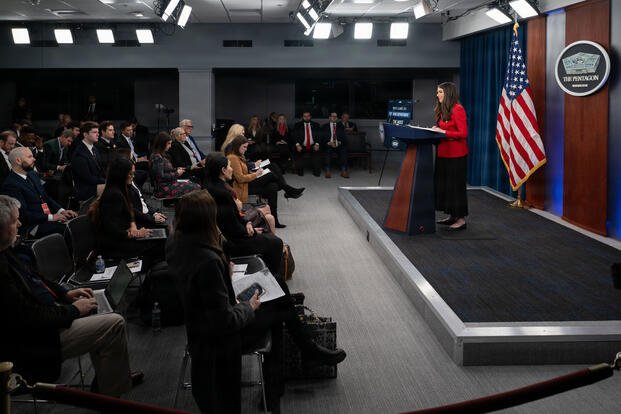
Pentagon officials said the changes modernize engagement and reflect evolving media consumption habits. Press freedom organizations disagree.
The banishment of reporters from the Pentagon press room is part of a broader pattern of constitutional violations. - Christopher Anders, director of the Democracy and Technology Division at the American Civil Liberties Union, told Military.com.
Several news organizations argue that the loss of workspace assignments complicate daily reporting, limit informal sourcing, and reduce access to senior officials—especially during fast-moving national security events.
A Defense Department spokesperson declined comment on the press corps alterations, instead directing Military.com to public statements affirming the department’s commitment to transparency and fairness.
Civil Liberties Groups' Warning on Pentagon Reforms
Civil liberties organizations describe Hegseth’s first year as a legal stress test for the modern U.S. military.
“To say that Secretary Hegseth has acted outside the rule of law understates the scope and depth of his lawlessness,” Anders told Military.com. “But there is no Hegseth exception to the Constitution or to federal law. He has already been, and will have to continue to be, kept in check by courts and a Congress that must enforce the legal guardrails against this kind of misconduct.”
The ACLU said it has filed more than 230 legal actions against the Trump administration during the past year and continues pursuing litigation involving domestic troop deployments, censorship disputes in military base schools, and alleged First Amendment violations.
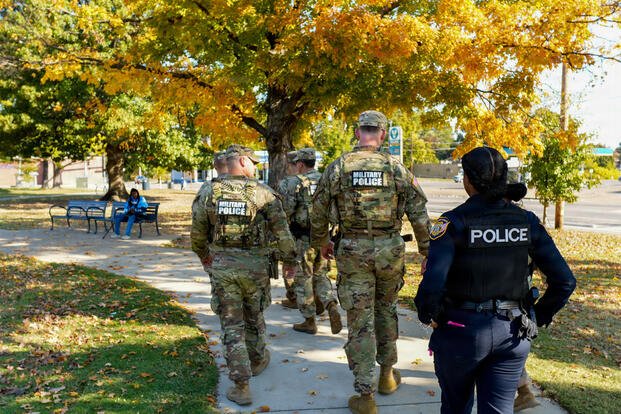
Recent litigation involving service members and families challenged new Pentagon directives affecting political expression and protest activity. A federal judge temporarily blocked enforcement of one rule, ruling that it raised serious constitutional concerns and lacked clear statutory authority.
The organization said several court rulings have already blocked or narrowed administration actions involving military school policies and domestic deployments. Additional cases remain active in federal courts.
ACLU officials said the disputes extend beyond individual policies and reflect broader questions about how far civilian leadership can reshape military institutions without violating constitutional protections.
Watchdogs Raise Red Flags
Federal oversight agencies continue tracking how rapidly Hegseth’s reforms are reshaping governance and spending.
The Government Accountability Office declined to issue a formal assessment of his tenure but pointed Military.com to ongoing reviews covering readiness, acquisition reform, cybersecurity modernization and infrastructure resilience. Those reviews documented recruitment gaps, weapons program overruns, shipbuilding delays and housing quality concerns.

Shipbuilding delays and rising modernization costs continue to strain Navy readiness goals. The Congressional Budget Office said it has not produced analysis specific to Hegseth’s leadership but continues tracking defense budget trends.
Recent projections show growth in personnel costs, nuclear modernization spending, and Indo-Pacific posture investments while warning of long-term readiness tradeoffs.
Lawmakers have questioned whether oversight systems can move fast enough to track executive driven reforms.
Military.com reached out to multiple additional federal oversight offices and policy organizations for comment.
Professional military education institutions also face the downstream effects of Pentagon reforms.

Hegseth has emphasized tighter discipline, cultural alignment and warfighting focus. Supporters call it a return to fundamentals. Critics warn it risks blurring professional independence.
Military.com reached out to the National Defense University, Naval War College, West Point and the Naval Academy for comment.
Scholars previously warned that politicized messaging inside officer training complicates how future commanders interpret lawful dissent and constitutional duty.
Those debates often surface years later when officers trained under one era begin commanding in another.
A Collision Still Taking Shape
Hegseth’s first year placed the Pentagon at the center of a rare convergence of political loyalty, legal resistance and institutional uncertainty.
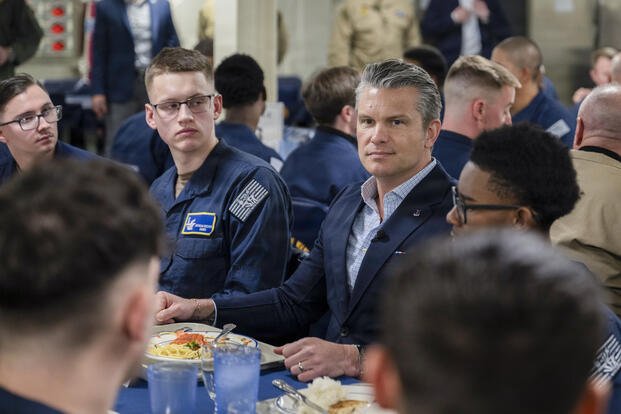
Supporters argue he restored discipline and mission focus. Civil liberties groups warn constitutional protections face erosion. Oversight agencies continue tracking how quickly executive authority reshapes long-standing structures.
Courts are now weighing several disputes. Congress faces pressure to consider statutory guardrails. Military educators are watching how today’s policies shape tomorrow’s officer corps.
The full impact may take years to measure. But the boundaries being tested now between authority and law, reform and restraint, loyalty and independence, will define how the U.S. military is led long after Hegseth leaves office.





