

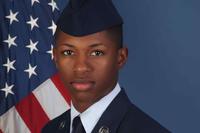








A former meteorologist for the U.S. Air Force, Fearing, 27, inspects new roads on the tip of Virginia's Middle Peninsula. He checks the pavement for cracks and imperfections that could be unsafe or expensive to fix.
He joined the Virginia Department of Transportation in December as an engineering technician; he is the latest member of the department's Wounded Veterans Internship Program.
Virginia is the first state to offer this pilot program through its highway department. It is funded through a Federal Highway Administration grant, and that agency hopes to expand it to other states.
Fearing reviews site plans for new commercial and residential streets in Gloucester, Middlesex, Northumberland and King and Queen counties.
He spends half his days on the road, inspecting sites before the streets are accepted into the network of state-maintained highways.
He has also applied his computer expertise to overhauling several databases for VDOT's Saluda Residency in Middlesex County.
"I like going out in the field and going through the inspection process, making sure everything is up to the standards," Fearing said.
It's a big departure from his duties in Afghanistan in 2003 and 2004, where he trained soldiers to forecast weather conditions.
After he left the military, he was a meteorologist for a defense contractor in Klamath Falls, Ore.
Since the move back east, Fearing said, the transition to VDOT has been smooth.
"Everybody's been so great and accommodating and understanding," he said. "They don't really try to pry into my service experience."
VDOT started an internship program for wounded veterans in 2006. Wounded veterans of all ages can apply for the program, regardless of when and where they served or the nature of their disabilities.
VDOT tries to match each veteran with a convenient job location. The veteran has a chance to polish skills or gain new ones, in preparation for full-time employment at VDOT or elsewhere. Internships can last up to two years; most interns stay six to 18 months.
So far, VDOT has had 23 veterans participate in the program, including four in the Fredericksburg District. Seventeen veterans are actively working as interns now.
Vietnam War veteran and career VDOT employee Levi Cary came out of retirement to organize the internship program.
After returning from duty in 1969, he couldn't find work and was collecting unemployment.
A year later, a job clearing brush on a survey crew at VDOT lead to greater things. In 2002, Cary retired as division administrator for VDOT's civil rights office.
"It's a perfect match," Cary said. "Some of the veterans' skills are a very close match with what we have here in the department, and not only are their skills transferrable, we also see some veterans gaining new skills."
To access the largest veteran job board in the world, visit the Military.com Career Center.
The internships also help veterans transition from a war zone to civilian life and the decidedly more sedate office setting.
"One of the main challenges is getting adjusted to the change in work environments, from taking orders or giving orders to the management style that's in the work environment, as opposed to the disciplinary style of the military," Cary said.
Fearing plans to start courses this summer at Rappahannock Community College in Glenns. He is working toward a bachelor's degree in civil engineering, a decision spurred in part by his recent work at VDOT.
Fearing hopes to later earn a master's degree in environmental engineering, pursuing his passion of planning communities and road networks that are environmentally sensitive.
Fearing graduated from Gloucester High School, near the Chesapeake Bay. He is concerned about protecting the region's natural character and wildlife. He wants to "make sure everyone is doing their part to preserve the environment."
He now lives in Lancaster County with his wife, Victoria, and their 4-year-old daughter and 1-year-old son. Both of their families live nearby, which is one reason they returned to the area from Oregon.
But Fearing is still an hour and 40 minutes away from the Hampton Veterans Administration Medical Center, where he has appointments once or twice a month.
The VDOT internship has given him the flexibility to take classes and keep medical appointments.
That's another goal of the internship, Cary said: to build skills while supporting a veteran's return.
The needs of veterans returning from a deployment in Iraq or Afghanistan are complex and sensitive, and many wish to keep their experience private.
Fearing declined to discuss the specifics of his service experience and medical history. This choice is not uncommon among veterans of all ages, from soldiers who recently served in Iraq and Afghanistan to veterans of World War II.
A Rand Corp. study released last week showed that 320,000 troops who served in Iraq and Afghanistan have suffered traumatic brain injuries, and 300,000 troops are suffering from post-traumatic stress disorder, according to an Associated Press article. Post-traumatic stress disorder is an anxiety disorder triggered by a traumatic event.
At VDOT, "We have compassionate individuals that understand," Cary said. "We have a lot of veterans in VDOT itself, some of our veterans have actually served in Iraq through National Guard and reserve units."
This fall, Cary will make a presentation on Virginia's Wounded Veterans Internship Program at a national civil-rights conference. VDOT was recently recognized for its work with veterans by the Federal Highway Administration, winning a Strive for Excellence team award.
Fearing hopes veterans in other states have the opportunity to join a program similar to VDOT's.
Unlike at other government agencies, spreading the internship program through transportation departments will reach veterans in every community, Fearing said.
"There's a highway department in every state," he said.