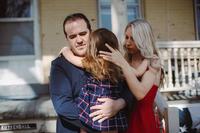
Military Divorce Rates Continue Steady Climb

Military marriages

This year's overall military divorce rate has increased slightly over last year's, part of a continued upward trend since 2001, according to Defense Department statistics released Tuesday.

Researchers and military officials say the steady up-tick confirms a reality they have been expecting and dealing with all along -- years of repeated deployments slowly but surely wear on military marriages.

"What we would expect, what we predicted a while ago, is that there would be gradual ripple effects," said Benjamin Karney, an expert on military divorce and researcher with the RAND Corp.

"When we first started analyzing this in 2007, we were not seeing too much of an increase in military divorce. But we suggested that over time the effects on families would expand. And it seems like we're gradually seeing that sort of thing happen."

Since the start of operations in Afghanistan in 2001, the overall divorce rate among military members has risen from 2.6 percent in 2001 to 3.7 percent in 2011. While the year-to-year rise is statistically small, Karney said, the big picture view shows a military force replete with struggling marriages.

"There is very little drastic change between 2010 and 2011 -- but there does seem to be a continuation of trends. And the trend is a very gradual, very slight increase overall in the military," he said. "This is all consistent with what we would expect: That very little has changed, the drawdown has affected people a little bit, but there's still plenty of people deployed."

Officials with the Army, which has the most servicemembers and devotes the largest amount of money to family and marriage intervention programs each year, said that the rise in the divorce highlights the continued need to help families, despite the current budget crunch.

The Army's most popular intervention program, Strong Bonds, last year devoted over $100 million to marriage support for more than 4,000 events at bases across the country and overseas. And while the 2012 budget has yet to be approved, the Army expects to see an even greater demand this year, said Lt. Col. Carleton Birch, a Protestant chaplain and a spokesman with the Army Chief of Chaplains office.

"We know that commanders have asked for more Strong Bonds than they did last year, and that has been the case for the last 10 years Strong Bonds have been in existence," he said. "There continues to be a demand out there that is very strong."

One of the challenges for the Army, Birch said, is making sure its marriage counseling programs adapt to new challenges. For example, when Strong Bonds was launched, it focused primarily on helping families deal with repeated deployments and long absences. Now chaplains are working to shift their focus to instead help families handle longer dwell times.

"Any change in the relationship pattern of the family needs a resulting adjustment," Birch said. "Our programs -- Strong Bonds or anything a chaplain does to try to help Army families -- are helping give them the relationship skills they need."

Despite the overall divorce rate rise of 0.1 percent between 2010 and 2011, certain subgroups within the military saw a greater increase and, in some cases, a slight decrease in their individual divorce rates during that period. For example, there was a 0.4 percent increase between 2010 and 2011 among females in the Navy, but a 0.4 percent decrease among females in the Marine Corps.

Karney said inconsistencies across the services should be expected, particularly among small population groups such as married female Marines. That population totals about 95,000, compared to a married female servicemember population of almost 320,000 in the Army. Even small changes in the actual number of divorces can equal a big rate jump in a small population, he said.

"When the numbers are so small, especially for females, you're going to get year to year differences," he said. "The overall trends and the larger numbers are what we have to pay attention to."

Despite the continued increase, officials with military family support organizations are optimistic that the divorce rate will eventually start to go down.

"We're heartened to see that the rate of divorce for military families has increased by only 0.1 percent in the last year," said Stephanie Himel-Nelson, a spokeswoman for Blue Star Families. "Of course, we're hoping that the family readiness programs put in place by the Department of Defense and broader support for military families from the American public will help divorce rates begin to decline in 2012."

© Copyright 2012 Military.com. All rights reserved. This material may not be published, broadcast, rewritten or redistributed.

Military.com Networking Sites

Become a Military.com fan on Facebook
Follow Military.com on Twitter

Add Your Comment:

More Headlines

Latest Stories

   Latest Stories | RSSIcon RSS

What's Hot

Editor's Pick

   Editors Pick | RSSIcon RSS