






History Repeats on Korean Peninsula

MARINE CORPS BASE QUANTICO, Va.  — Sabers are again rattling on the Korean Peninsula, Kim Jong Il, leader of the People’s Republic of North Korea, threatens to test more long-range missiles and develop and test more nuclear bombs.  Increasing the threat is the growing state of military readiness on both sides of the Demilitarized Zone and the chilling effect on relations by the arrest, conviction and imprisonment of two American journalists.  All this could easily be confused with the events of June 1950. 

On June 25, 1950, shortly before dawn, eight divisions of the North Korean People's Army crossed the 38th Parallel and invaded the Republic of Korea. Within three days, the South Korean capital city of Seoul had been captured. On June 30, President Harry S. Truman ordered a naval blockade of the Korean coast and authorized the sending of U.S. ground troops to Korea. Two days later, General Douglas MacArthur, the Commander in Chief Far East, formally requested that a Marine regimental combat team be deployed to the Far East.

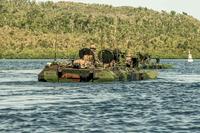
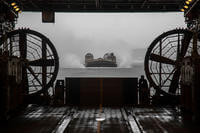
The North Korean army very quickly drove South Korean forces and a handful of U.S. units back to an area around the city of Pusan, known as the Pusan Perimeter. The United States responded to break North Korea’s hold on the peninsula not by attacking through the already heavily fortified perimeter, but by using the sea as an area for maneuver.  By using the tactics and ships left over from WWII, the United States Marines and the Army enveloped the North Korean forces by making an amphibious landing behind enemy lines at Inchon.

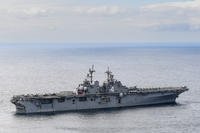
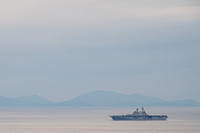
The landing at Inchon was one of most notable strategic moves in modern warfare.  It proved the value of being able to use the sea instead of being constricted by it.  It showed how being able to rapidly move a fighting force from the sea, where the United States still remains dominant, to shore is a vital national capability. After WWII, amphibious ships composed 37 percent of the Navy’s fleet; today amphibious ships compose only 12 percent of the fleet. This decline in amphibious ship capability is counter to the fact that most of the world’s population is increasingly located near the coast.

Amphibious ships and Marine Corps forces carried on them can conduct a range of operations, such as evacuating U.S. Embassies, providing humanitarian assistance, rescuing downed U.S. pilots (Like Air Force Capt Scott O’Grady, rescued from Bosnia in 1995) to forcible amphibious entry. June 25, 1950 marks a day in which the United States desperately needed an effective response, to provide a large amount of men and material to stop the spread of totalitarianism. 

The Marine Corps and Navy team continue to develop and provide the ability to move large combat units by sea, and land them on foreign shores;   that capability is currently in debate during the Quadrennial Defense Review. Let us use June 25 as a day to remember and validate the importance of an amphibious force in readiness that only Marines and Naval amphibious shipping can deliver.

© Copyright 2009 Marine Corps News. All rights reserved. This material may not be published, broadcast, rewritten or redistributed.
Bookmark and Share

Add Your Comment:

More Headlines

Latest Stories

   Latest Stories | RSS Icon RSS

What's Hot

Editor's Pick

   Editors Pick | RSS Icon RSS