







FAYETTEVILLE, N.C. -- The crowd starts to build around 11 p.m. at the Big Apple. It's still early, in singles time.
Women wear low-cut shirts; guys wear short-sleeved shirts that showcase their muscles.
They eye each other, buy a drink and approach.
The scene is a part of American culture.
But here, about a mile from the entrance to Fort Bragg, there's baggage attached to the pickup game. At every table, it's a safe bet that someone has a connection to the Army. That might mean a husband or wife overseas.
The atmosphere -- good-looking people and absent spouses -- creates a place where people will be tempted to cheat. It's up to individuals to decide whether they'll act on those temptations, patrons say.
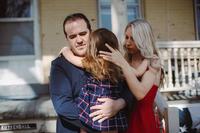
Infidelity isn't new to our society. It isn't new to our city. And it isn't new to the Army. But as many Soldiers and their families deal with multiple deployments, maintaining a military marriage is getting more difficult.
Despite the Army's efforts to provide therapy and programs, cheating continues. But therapists, chaplains and other experts say it isn't more prevalent in the Army than in any other segment of our community.
"We can look at it as an Army command issue," said Dr. Jerry Powell, a retired Army chaplain who runs a family life center off post, "but it really comes down to a husband-and-wife issue."
Those issues vary, depending on the husbands and wives.
At the Big Apple on a recent Friday night, three Army wives sit around a table. One is talkative. She wears a deep-cut blouse showing cleavage. In her 30s, she says she's been married nearly eight years. Her husband was unfaithful a few years ago while on an overseas deployment. They're still married, and she says she's never retaliated with an affair of her own. But, she says, she's considered it.
Nearby, a male Soldier sits at the bar. He is 23 and already divorced. His former wife cheated on him while he was deployed. Their divorce was final on their first anniversary.
The stories go on. Nearly every Soldier or spouse approached by The Fayetteville Observer in the past three weeks said they knew someone who had been involved in an unfaithful relationship. Nearly all of those people refused to give their names.
It's a tough subject. It's personal and messy. But it's happening, at home and overseas.
And in the worst cases, it can lead to extreme ends.
In each of the three recent murders of military women from the region -- Marine Lance Cpl. Maria Lauterbach, Army Spc. Megan Touma and Army 2nd. Lt. Holley Wimunc -- there was at least some evidence of a relationship triangle, according to investigators.
"I think relationships are a real problem," said Polly Coe, a marriage and family therapist who works closely with the Army's Fort Campbell in Tennessee. "Infidelity is one of the symptoms."
Suspicious minds
Michael Hardin hears everything.
He's been cutting and styling hair in Fayetteville for more than 20 years. On a recent weekday at Westwood Hair Styles in Westwood Shopping Center, Hardin chuckled when the subject of military infidelity came up.
Sometimes, women in his chair get calls from their husbands who are overseas. The communication, he says, gets more difficult as time passes and deployments drag on.
Moreover, he said, many women suspect their husbands are cheating on them while overseas.
"Women get upset," he said. "They say, 'If he can do it, I can, too.' It happens a lot."
Often, spouses at home will find somebody close -- even somebody the person who's away may know -- to help them deal with the deployment.
"The woman starts falling out of love," said Coe, the family therapist in Tennessee. "If there's somebody here who's friendly to her and pays attention to her, guess what? She's real open to an affair."
Most evidence of infidelity in the military is anecdotal. A study last year by the Rand Corp. showed that the divorce rate in the military was only marginally higher during the first four years of the war than it was in peacetime a decade earlier. But the study did not explore the reasons for divorce, such as infidelity.
People see it, though.
One Army sergeant, standing in Wal-Mart recently, said he's seen some Soldiers call home only to hear another man answer the phone. And it goes the other way, too, with Soldiers cheating during deployments.
"Yeah, it happens there," one Army sergeant said recently, standing in Wal-Mart. "You've got dummies over there who either don't care or they're trying to get back at their wives. But me, man, it's not worth losing your rank over. Your money's your money.
"When they're cheating, it's up to them to live with it, because it's eventually going to come out."
Excuses not tolerated
Adultery is a violation of one of the articles in the Uniformed Code of Military Justice.
But in order to be found in violation of the code, the affair must involve sexual intercourse, must involve someone who is legally married, and must hurt a unit or bring discredit among the armed forces.
In the field or at home, infidelity by a Soldier is not tolerated, Army spokesman Tom McCollum said.
He said those who are caught sometimes have excuses. They aren't tolerated, either.
"They'll blame the deployments and the hardships and such. I personally don't buy it," McCollum said. "I know a number of Soldiers who have deployed who have not cheated. And to turn around and just, if that's your excuse, it's a crutch and it's a lie."
Lt. Col. Paul K. Hurley is a chaplain with the Special Operations Command who has served a yearlong deployment to Iraq. He doubles as a Catholic priest in Fayetteville.
"I would really be hard-pressed to say that (infidelity is) more prevalent in the military," Hurley said. "I do not think that's an issue. I seem to run into it as much in the civilian community as in the military community."
The Army deserves credit for keeping the numbers close, Hurley said.
"What other business, what other organization ... provides a family support group?" he asked.
It's in the Army's best interest, McCollum said, to keep Soldiers' home lives strong.
"Joe cannot afford to deploy and question what's going on at the home front. He or she has to concentrate on what the mission is while deployed," McCollum said. "It's like we recruit the Soldier but we re-enlist the family, and the family needs to know that being part of the military is not going to be harmful to their marriage."
Ties that bind may fray
It's Friday morning, and Dena and Cory are getting married.
"It just feels right," said Dena, who is standing next to her fiance in the Cumberland County Register of Deeds office.
Dena is cute, blonde and 23. Cory is blue-eyed, handsome and 20.
Cory and Dena are in the Army. They met while serving in the same company. Cory will leave for Iraq at the end of October. Dena's already been.
Their story is not unusual, said Diana Fisher, assistant register of deeds.
The office sees a lot of young people in the military getting their marriage licenses before deployments, she said. Fridays and paydays, too.
On days before large numbers of troops deploy, Soldiers have stood in lines that snake out the door, said Pam Gore, senior assistant register of deeds.
Fisher said they filed about 100 marriage licenses last week and about 100 the week before.
It keeps them busy, making Cumberland one of the top five counties in the state for the number of marriage licenses issued.
"We have young people come in, excited and happy," Fisher said. "Some are in uniform. Some are in wedding dresses and suits. Some are in casual clothes."
Dena and Cory chose Friday morning because they wanted the rest of the weekend to celebrate, Dena said.
Then, when Cory gets back from Iraq, the couple will probably have a bigger wedding with their families, she said.
But the big, fancy wedding is just a technicality, Dena said. The important thing is that they are in love.
"We just want to get it knocked out and go celebrate," she said.
What happens after the celebration, though, varies from couple to couple.
Bryce Neier, a Fayetteville lawyer who has been practicing domestic law locally for 15 years, serves a heavy military clientele.
He said he's seen immaturity lead to infidelity in a number of cases.
"They're getting married too young," Neier said. "And they're not ready financially, and they don't have maturity, and they don't have the emotional skills for what it takes to be committed to a marriage."
But the problem isn't age-specific.
Renny Deese, a certified specialist in family law and a fellow in the American Academy of Matrimonial Lawyers, sees plenty of older, established couples.
"Persons of senior status. Higher-ranking officers and noncommissioned officers," Deese said. "Most of my clients are persons of substance, if you will."
So, if not age, what are the reasons?
That's what Jay Coker, the pastor at First Presbyterian Church, spends his time trying to learn.
Coker asks the members who come to him with infidelity issues to dig deeper.
"If infidelity takes place, it's because there's brokenness in another part of a person's life," Coker said. "(An) affair is just a dimension of a destructive addictive behavior. Let's get beyond the symptom. What is it that is in you that's causing you to risk a great deal? And do you have any evidence that this relationship, the one you left or the one you've begun, has eased the pain within your heart and your soul?"
Alicia Chinlund, a clinical psychologist at Fayetteville Psychiatric Associates, grew up in a military family and married a former Soldier.
She, too, believes it's hard to say that military people are more likely to cheat on their spouses.
Regardless, she says, the reason for marriage failures in the military is probably not post-traumatic war stress. It's probably deeper than that.
The military, she said, can attract people with certain types of personality flaws, such as antisocial personalities, narcissistic personalities and obsessive-compulsive personalities.
Chinlund said some aspects of the military can make for a good Soldier but not necessarily a good husband or father.
"Soldiers can compartmentalize, tune out the emotion in order to do their jobs effectively," Chinlund said. "They are traits that aren't necessarily good for a relationship."
Ops tempo wearing families down
Dr. Jerry Powell was once Lt. Col. Jerry Powell.
He could have become Col. Jerry Powell. But he decided to retire last year, one step short of his big promotion.
He had several reasons. But one was that he knew he would have deployed again if he accepted the promotion. And in his 34 years of marriage, he figured he'd already spent about six years of his life training or on deployment.
So he turned down the promotion and took a civilian job as director of the Fayetteville Family Life Center. He's still working with military families every day.
And he still stays home with his wife.
"Over time, deployments are like losing sleep or stress," the retired chaplain said. "It's cumulative. You can lose sleep one night, maybe two, but after a while, your body shuts down."
The center has 18 staff therapists who deal with infidelity all the time, Powell said.
He hasn't noticed an increase in the number of extramarital affairs. But he has seen an increase in the number of Soldiers who come for counseling.
Infidelity is probably the second-most common issue. General bickering and fighting still is the most frequent problem in a relationship, Powell says.
"The operational tempo of the military is just wearing down the families," Powell said. "It has a number of adverse effects. And one of those adverse effects is affairs."
Even then, Powell said, many marriages can be saved.
"If they're willing to work on it, not just the affair, but the underlying issues," Powell said. "It will never be like their old marriage. But it will be their new normal."
'We get calls from everywhere'
Some military spouses will stop at nothing to prove unfaithfulness.
In the past year, Mike Cavnar, a private investigator in Spring Lake, has taken 60 to 100 calls that involved somebody suspecting infidelity in a military relationship.
"I've seen an increase," he said. "Usually when there's a big deployment, that's when I get most of my calls. I get calls from Afghanistan (and) Iraq. We get calls from everywhere."
Cavnar charges about $75 an hour for his services.
Once, he said, he got three different calls from Soldiers in the same battalion.
"We've had some (cases) that would totally blow your mind," he said.
But, most often, finding evidence about affairs is only the beginning of the worst.
James, who asked that his last name not be used, keeps pictures of his former wife cuddling with another man.
He intends to use them in future custody cases.
As he opened a file containing the pictures Monday, his eyes started to spill over.
For the first five years of the marriage, James said, everything went well. Then his wife joined the Army. Shortly after basic training, she started cheating on him.
James said he forgave her the first time. Then it happened again during a deployment to Iraq. And then again when she returned. Until finally, he had the pictures of her with a younger GI.
Despite what therapists and counselors might say, James still holds the military somewhat accountable for his failed marriage.
"If she hadn't joined the Army, we'd still be together," James said. "You can't deal with the flow. The numbers are against you."