









The White House apology, if true, follows one delivered to the Iraqi prime minister and vice president May 19 by the No. 2 U.S. commander in Iraq, Lt. Gen. Lloyd J. Austin III.
Military officials in Iraq said May 19 that Austin paid individual visits to each of the two leaders and to the Sunni speaker of parliament in an attempt to soothe anger over an American sniper using a copy of the Quran for target practice.
The visits were seen as underlining the American eagerness to make amends for the incident, particularly among Sunni Arabs who have become key allies in the fight against insurgents.
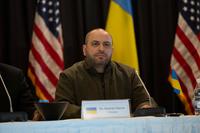
In their meeting in his office, Vice President Tariq al-Hashemi, the top Sunni Arab in the government, told Austin that "the feelings of bitterness and anger cannot be eased unless there is a deterrent punishment and real guarantees" such an incident won't be repeated, according to al-Hashemi's office.
Al-Hashemi expressed his appreciation for the visit but asked for a written apology from the U.S. military.
Austin also met separately with Prime Minister Nouri al-Maliki - a Shiite - and parliament speaker Mahmoud al-Mashhadani, a Sunni Arab, the military said in a statement.
Austin underlined in all three meetings that "the Soldier had in fact been removed from Iraq. He assured them that the matter was serious and that we hold our Soldiers accountable for their actions," the statement said.
There was no immediate comment from al-Maliki or al-Mashhadani on the meetings.
The U.S. military said May 18 it had disciplined the sniper and removed him from Iraq after he was found to have used Islam's holy book for target practice. The copy of the Quran was found May 11 by Iraqis on a firing range in Radwaniyah, west of Baghdad, with 14 bullet holes in it and grafitti written on its pages.
On May 17, the top American commander in Baghdad, Maj. Gen. Jeffery Hammond, and other officers held a formal ceremony apologizing to tribal chiefs in Radwaniyah.
Al-Hashemi's Iraqi Islamic Party issued a tough statement May 19 saying that apology alone was not enough and the U.S. military should impose the "severest punishment" on the Soldier to ensure others do not repeat his act.