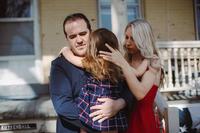
East Meets West in Army Mental Therapy

East Meets West in Army Mental Therapy

When it comes to how the Army treats its war-stressed Soldiers, it has become a combination of old and new, East and West.

Gone are the days of padded couches and Freudian questioning. Instead, the Army is using the ancient practices of yoga and acupuncture -- as well as techie solutions like video games -- to help its Soldiers and their families deal with mental health issues.

"One of the things I'm excited about ... is we're beginning to penetrate the fusion of Eastern and Western science and medicine," said Lt. Gen. Eric Schoomaker, the Army's top doctor, during a May 27 breakfast meeting with reporters in Washington. "We're taking a much more holistic view toward how do you care for people with post traumatic stress and anxiety disorders."

The Army appears to be pulling out all the stops as it tries to address increasing mental health and behavioral problems among its Soldiers and their families. On May 29, the Army said the suicide rate among Soldiers climbed for the fourth straight year, prompting even greater concern over care for mentally-scarred troops.

According to Army officials, 115 Soldiers took their own lives in 2007. And while they didn't say how many have committed suicide so far this year, the officials acknowledged that this year's total could mirror 2007.

To deal with the rising numbers of suicides, the Army is boosting the number of mental health professionals in the U.S. and overseas and expanding the service's mental health programs, said Brig. Gen. Rhonda L. Cornum, assistant surgeon general for force protection, during a May 29 interview.

"More than anytime in history ... we have more resources available at home and in theater than ever before," she said. "The Army has 200 behavioral health personal deployed in support of Operations Iraqi and Enduring Freedom, and we have stood up behavioral health Web sites that have information" for single Soldiers, their spouses and entire families."

Beyond the traditional counseling and treatments the Army also is looking seriously at alternative kinds of therapies, ranging from meditation to virtual reality, said Col. Elspeth Ritchie, psychiatric consultant to the Army Surgeon General.

"Although [these] therapies are interesting, we don't have the hard data to show which therapies are useful for what population. So we're really in the research phase of this for yoga, acupuncture and some other therapies," she said.

Therapies that are "kind of tried and true" remain at the forefront of treating Soldiers with behavioral problems, Ritchie said. These include behavioral therapy and exposure therapy -- where patients are "exposed" by degrees to scenarios that may be at the core of the problem -- and medication.

But Walter Reed Army Medical Center in Washington and military hospitals around the country are using yoga and meditation to treat patients -- even acupuncture and virtual reality simulations. Virtual reality therapy uses high tech visual and audio programs where patients simulate the experience that traumatized them.

In some cases Soldiers who survived IED attacks have used such high-tech therapies to re-live the ambush, with the aim of working through the post traumatic stress the attack caused. Additionally, Fort Bliss is trying an intensive out-patient program that utilizes meditation, yoga and martial arts, Ritchie said.
 
Schoomaker said the Army is "beginning to use good evidence-based approaches to study any of a variety of complimentary and alternative approaches to the treatment of psychological and behavioral health."

The Army spoke to reporters May 29 after Pentagon officials claimed the 2007 suicide rate among Soldiers was the highest since the Army began tracking them. About a quarter of those deaths occurred in Iraq.

But the number originally cited, 108, was from a report the Army drafted in March, before it had information back on seven other deaths it concluded were suicides. That brought the total to 115.

Preliminary figures released in January showed as many as 121 troops might have killed themselves, but a number of the deaths were still being investigated then and have since been attributed to other causes, the officials said.

Suicides have been rising during the five year-old war in Iraq and nearly seven years of war in Afghanistan. The 115 deaths last year followed 102 in 2006, 85 in 2005 and 67 in 2004.
 
More U.S. troops also died overall in hostilities in 2007 than in any of the previous years in Iraq and Afghanistan. Overall violence increased in Afghanistan with a Taliban resurgence and overall deaths increased in Iraq, even as violence there declined in the second half of the year.

Increasing the strain on the force last year was the extension of deployments to 15 months from 12 months, a practice ending this year.

Managing Editor Christian Lowe contributed to this report.

Click here for more information on PTSD.

© Copyright 2010 Military.com. All rights reserved. This material may not be published, broadcast, rewritten or redistributed.
Bookmark and Share

Add Your Comment:

More Headlines

Latest Stories

   Latest Stories | RSSIcon RSS

What's Hot

Editor's Pick

   Editors Pick | RSSIcon RSS