Home
Benefits
News
entertainment
shop
finance
careers
education
join military
community


Troops Say Proposed UCMJ Change Unfair in Prostitution-Legal Germany
 

Stars & Stripes

This article is provided courtesy of Stars & Stripes, which got its start as a newspaper for Union troops during the Civil War, and has been published continuously since 1942 in Europe and 1945 in the Pacific. Stripes reporters have been in the field with American soldiers, sailors and airmen in World War II, Korea, the Cold War, Vietnam, the Gulf War, Bosnia and Kosovo, and are now on assignment in the Middle East.

Stars and Stripes has one of the widest distribution ranges of any newspaper in the world. Between the Pacific and European editions, Stars & Stripes services over 50 countries where there are bases, posts, service members, ships, or embassies.

Related Links:

Current Archive


Stars & Stripes Website

Sound off in our Discussion Boards
Have an opinion on the issues discussed in this article? Sound off.

Get Breaking Military News Alerts


Related Links

Unit Pages


Get $985 a Month!

Your service may have earned you great education benefits. Get up to $985 per month to pay for your undergraduate, graduate or technical degree.

Find out about military-friendly schools today
.

September 27, 2004

[Have an opinion about the issues discussed in this article? Sound off in our Discussion Boards.]

By Jessica Inigo,
Stars and Stripes European Edition

RHEIN-MAIN AIR BASE, Germany — Troops stationed in Germany are seeing red over the Pentagon’s proposal to add an anti-prostitution charge to the Uniform Code of Military Justice, and it’s not just the glow from the local red light district.

Military personnel and their families on Rhein Main Air Base, only minutes from one of the largest red light districts in the world, are angered by the Department of Defense announcement to change the UCMJ. Those interviewed largely agree that Germany is not the place to enforce such a law.

Unlike other overseas military installations across the world where sex trade and human trafficking runs rampant, in Germany, prostitution is legal. There are licensed brothels, called Eros Center, where working girls can rent their own rooms for the day. There are no madames. Germany women choose prostitution as a profession and are taxed as regular workers, according to Frankfurt Web sites.

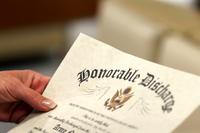
“Where are we talking about?” asked Pfc. Marty Conyers of the 464th Replacement Detachment on Rhein-Main when asked if troops should be punished by one-year confinement and a dishonorable discharge if convicted for paying for sex. Conyers said the anti-prostitution law would be unfair to troops in Germany, because it is legal here.

Army Sgt. Adam Z. Pastor, who just arrived at the replacement detachment on Rhein-Main and is waiting to go to his next unit, agreed, saying the addition to the UCMJ would be “harsh.”

“It would be different if it were some third-world country that had no jobs and no opportunity, and women were forced into it,” Pastor said. “It’s a little bit pushy to enforce that law here.”

He added that if DOD officials were making the addition for safety reasons, they should think again. “Right off the bat, if it’s an issue of safety, there are condoms and stuff like that that soldiers can use.”

Spc. Tasha Smith added that the working women in Germany are regularly tested, so there should be nothing stopping troops from using Eros Centers if they choose to.

“It’s a legal job, and if a girl wants to make money that way, she should be able to get her customers,” Smith said.

Preventing troops from visiting red light districts is going to be difficult, according to Airman 1st Class Gerard Garcia.

“Normally, I don’t go to those places, but I don’t think [the addition of an anti-prostitution charge to the UCMJ] is going to work,” Garcia said.

“I think, psychologically, we have men who have been away from women and, of course, hormones have built up, especially in the single soldiers,” Garcia said. “I don’t know what’s going to happen, but I know it’s not going to work from a psychological point of view.”

Not only that, but Conyers said troops should be able to spend their money how they choose.

“I’ve talked to soldiers who have gone to these places and it doesn’t badly affect their military career or badly affect the prostitutes’ career,” Conyers said, adding, “Soldiers say this is [BS].”

Sgt. 1st Class Henry Mims is of the same mind, adding that the proposed anti-prostitution article is a little too much control over troops’ personal lives.

“Next, they’re going to tell us we can’t drink or only on the weekends,” Mims said. “I think it’s stupid.”

Dana Molnar, the wife of an active-duty servicemember, says the DOD is silly to fret over where troops are getting it on in Germany.

“It seems like we can spend our time worrying about more important things,” she said.

However, Airman Michelle Johnson, who is new to the military and just came into country, brings up a point on the legality of American troops paying for sex.

“I think that if it’s illegal in the United States, that it should be illegal for U.S. military members,” she said. “We shouldn’t be able to do things here, like smoke weed, just because it’s legal [where we live or visit.]

“Military members are supposed to do the same as people in the States.”

©2004 Stars & Stripes. All opinions expressed in this article are the author's and do not necessarily reflect those of Military.com.


Member Center


FREE Newsletter


Military Report


Equipment Guides


Installation Guides


Military History