This
article is provided courtesy of DefenseWatch,
the official magazine for Soldiers For The
Truth (SFTT), a grass-roots educational organization
started by a small group of concerned veterans
and citizens to inform the public, the Congress,
and the media on the decline in readiness
of our armed forces. Inspired by the outspoken
idealism of retired Colonel
David Hackworth, SFTT aims to give our
service people, veterans, and retirees a clear
voice with the media, Congress, the public
and their services.
|
|
|
|
April 6, 2005
[Have an opinion about the views expressed in this article? Sound
off in the Hot Issues with Defensewatch Forum.]
By Robert G. Williscroft
The horror stories are almost as numerous as the battles we've
fought since 9/11.
In Fort Hood, Tex., the Tallahassee Memorial Hospital credit union
recently sued Sgt. Michael Gaskins and his wife, Melissa.
The credit union was trying to collect on a loan Gaskins had taken
out just before he enlisted in November 2001. At the time of the
suit, Gaskins was assigned to duty in Baghdad. Despite being briefed
by a local military lawyer, County Judge Susan R. Stephens found
the Gaskins in default. This should not have happened, since the
Gaskins were eligible for relief under the Servicemembers
Civil Relief Act of 2003 (SCRA), and the ruling is under review
at this time.
Wells Fargo recently served a young northern Ohio Army
couple with foreclosure papers, even though the wife had repeatedly
attempted to negotiate their payment terms. Eventually, when Wells
Fargo learned that this couple was eligible for relief under the
SCRA, it dropped the foreclosure proceedings.
More than a dozen Camp Pendleton Marines
returned to California from Iraq to find that their cars and other
possessions had been sold to cover unpaid storage and towing fees.
They were able to recover their belongings, or receive financial
compensation, because the offending firms had ignored provisions
of the SCRA that require a court order prior to such actions, which
they had never obtained.
Army reservist Sgt. John J. Savage III was about to board a troop
transport to Iraq
from Fayetteville, N.C., when his wife called to tell him that EverHome
Mortgage Company was foreclosing on their house. After repeated
threats from military lawyers, EverHome Mortgage eventually dropped
its foreclosure proceeding against Savage, but by then the damage
was done. Savage's credit rating was ruined, and he was never able
to reestablish completely his struggling wireless internet connection
business. In a strange twist, Savage retired on a full disability
pension, so he has financial security, but this still doesn't change
what happened to his finances.
In each of these cases, the lender or landlord acted outside the
provisions of the 16-month-old federal law in their handling of
each case. Typically, the reason was not so much malicious as simple
ignorance of the law. Fortunately, each of the service branches
has lawyers specially trained to deal with situations like these.
Nevertheless, unless the affected service member acts in his or
her own interest, the consequences can be both severe and long lasting,
as in Sgt. Savage's case.
These examples are typical of what can happen when a service member
is not vigilant in pursuing his or her rights under current federal
law.
When I joined the Navy
back in 1962, I was protected from certain financial and legal situations
by the Soldiers' and Sailors' Civil Relief Act of 1940 - the SSCRA.
Passed shortly after commencement of World War II, the SSCRA played
a significant role in setting service members' minds at ease as
they put it all on the line for family, home and country. This law
remained essentially unchanged through the Persian Gulf War of 1991.
The SSCRA provided significant protection to me and to service members
who came before me and who followed me. These included: staying
court hearings if military service materially affected a service
member's ability to defend his or her interests; reducing interest
to 6 percent on pre-service loans and obligations; requiring court
action before a service member's family could be evicted for nonpayment
of rent if the rent was $1,200 or less; termination of a pre-service
residential lease; and allowing a service member to maintain his
or her state of residence for tax purposes.
In the decades following World
War II, it became clear that the world had changed significantly,
and America's fighting men and women and their service organizations
had changed as well. As a result, on Dec. 16, 2003, Congress passed,
and President Bush signed into law, a complete revision of the SSCRA
called the Servicemembers Civil Relief Act of 2003 (SCRA).
Although the SSCRA served us well, the new SCRA was written to clarify
the language of the old law, to incorporate many years of judicial
interpretation, and to update the law to reflect changes and developments
in American life since 1940.
Here are the significant elements of the new SCRA, and how they
differ from the old law:
* A service member can now stay administrative hearings in addition
to court hearings by 90 days - instead of an undefined period,
and additional stays can be granted at the discretion of the judge
or hearing official.
* The interest rate on pre-service loans is still capped at 6
percent, but the difference between the original rate and 6 percent
must be forgiven, and not merely deferred. Furthermore, a service
member must request this reduction in writing and include a copy
of his or her orders with the request.
* Without a court order, service members and their dependants
cannot be evicted from residential rental properties for which
the monthly rent does not exceed $2,465 (for 2004) - increased
from $1,200 in the old law. The Act also provides a formula to
calculate the rent ceiling for subsequent years - the amount for
2005 is being determined as this is written.
* Active duty service members may now terminate real property
leases when moving pursuant to permanent change of station (PCS)
orders or deployment orders of at least 90 days. There is no longer
a need to request a military termination clause in leases, as
required by the old law.
* Pre-service automobile leases for service members and their
dependants may be cancelled if the service member receives orders
to active duty for a period of 180 days or more. Automobile leases
entered into while a service member is on active duty may be terminated
if the service member receives PCS orders to a location outside
the continental United States or deployment orders for a period
of 180 days or more. This is a new provision that was not contained
in the old law.
* States may not increase the tax bracket of a nonmilitary spouse
who earned income in the state by adding in the service member's
military income to determine the nonmilitary spouse's tax bracket.
This is a new provision that was not contained in the old law.
* Legal services as a professional service is now specifically
named under the provision that provides for suspension and subsequent
reinstatement of existing professional liability insurance coverage
for designated professionals serving on active duty. The SSCRA
specifically named only health care services. Although legal services
have been covered since May 1999 by Secretary of Defense designations
under an SSCRA clause permitting such a secretarial designation,
this revision clarifies this area.
The bottom line is that service members and their families are protected
from losing their homes and personal possessions as a consequence
of the impact of military service on their lives. This law is not
automatically enforced, and it certainly does not give a member license
to renege on legal obligations.
The SCRA does, however, provide excellent protection for every service
member and his or her dependants, if the member takes the time to
understand the law, and to implement its provisions. Most legitimate
commercial concerns that have dealings with the general public and
with service members and their dependants will bend over backward
to accommodate service members - if they are apprised of the situation
in advance, and if they understand the provision of the SCRA.
When you as an active service member or your dependants find yourselves
in a situation where a creditor or landlord is taking advantage of
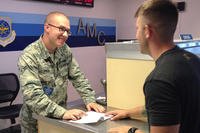
you, the nearest military legal office will have one or more staff
members specifically trained to help enforce the law. Seek them out
immediately!
It makes no sense for someone to attempt solving these problems without
expert help. This law was created to ensure that your service to your
country would not jeopardize your family's financial future.
Take advantage of it!
©2005 DefenseWatch. Robert G. Williscroft
is a DefenseWatch Senior Editor. He can be reached at defensewatch@argee.net.
Read his blogs at The
Dead Hand. All opinions expressed in this article are the author's
and do not necessarily reflect those of Military.com.
|