Home
Benefits
News
entertainment
shop
finance
careers
education
join military
community


A Big Problem or a Big Lie?
 

DefenseWatch

Ed Offley, Editor of DefenseWatch magazine, has been a military reporter and defense specialist for 22 years in a variety of journalism assignments throughout the United States. DefenseWatch is an online magazine that addresses military and security issues from the viewpoint of active-duty and reservist component personnel and veterans.

Offley previously served as Editor-in-Chief of The Stars and Stripes after the civilian-owned newspaper was acquired by Stars and Stripes Omnimedia Inc. in March 2000. A 1969 graduate of the University of Virginia, Offley served in the U.S. Navy in Vietnam before joining The Virginia Gazette, Williamsburg, Va., as a reporter in 1972. He worked as an editorial writer at three newspapers in Virginia during 1977-85 before joining The Seattle Post Intelligencer as an editorial writer in 1986.

Offley, 55, lives in Panama City Beach, Fla., with his wife, Karen, and daughter, Andrea. Contact: dweditor@yahoo.com.


Related Links


DefenseWatch Website

Article Archive

Hot Discussions

Have an opinion on this commentary? Sound off.

Get Breaking Military News Alerts


Get Stew Smith as your personal online trainer!

Check out Stew Smith's downloadable fitness eBooks, designed to help you pass PFT and to get you into the best shape of your life.
April 4, 2005


[Have an opinion about the views expressed in this article? Sound off in the Hot Issues with Defensewatch Forum.]

By Ed Offley

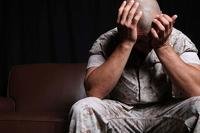
He's coming back again: The guilt-ridden, stressed-out, insomniac, enraged, potentially murderous, unemployable and homeless combat veteran.

That's the gist of several controversial studies and dozens of news media reports based on those studies over the past year that purport to diagnose the mental health of combat veterans of Iraq and Afghanistan. Since currently there are 150,000 troops currently serving in Iraq and 16,000 in Afghanistan, with hundreds of thousands of other troops who have already returned home, the implication is clear" We will soon see a replay of the post-Vietnam era when bedraggled veterans in tattered fatigues - desert cammies rather than Woodland BDUs this time - will soon haunt the streets of our cities.

Here's how USA Today described it last month:

"As the United States nears the two-year mark in its military presence in Iraq still fighting a violent insurgency, it is also coming to grips with one of the products of war at home: a new generation of veterans, some of them scarred in ways seen and unseen. While military hospitals mend the physical wounds, the VA is attempting to focus its massive health and benefits bureaucracy on the long-term needs of combat veterans after they leave military service. Some suffer from wounds of flesh and bone, others of emotions and psyche."

While acknowledging that the actual numbers are still "small," The Christian Science Monitor warns that a new wave of emotionally-disturbed Iraq veterans may soon swell the ranks of the unemployed and homeless:

"The concern is that these returning veterans - some of whom can't find jobs after leaving the military, others of whom are still struggling psychologically with the war - may be just the beginning of an influx of new veterans in need. … After the Vietnam War, tens of thousands of veterans came home to a hostile culture that offered little gratitude and inadequate services, particularly to deal with the stresses of war. As a result, tens of thousands of Vietnam veterans still struggle with homelessness and drug addiction."

Never mind, as the Monitor noted, that unlike Vietnam, there is "almost unanimous support for the soldiers overseas" from the American people. As one activist told the newspaper, "You can have all of the yellow ribbons on cars that say 'Support Our Troops' that you want, but it's when they take off the uniform and transition back to civilian life that they need support the most."

So what's going on here?

The apparent spark for a lot of the coverage has apparently been two studies published by the New England Journal of Medicine on homecoming Iraq veterans - one last July and a new report released today.

The July 2004 study posted in the Journal, "Combat Duty in Iraq and Afghanistan, Medical Health Problems, and Barriers to Care," found that between 15-17 percent of Iraq veterans meet "the screening criteria for major depression, generalized anxiety, or PTSD." Of those, only 23 to 40 percent are seeking help - in part because so many others fear the stigma of having a mental disorder.

Then, a newer study published by the New England Journal of Medicine today "Mental Health Care Needs among Recent War Veterans," concludes - based on "tentative diagnoses" of those surveyed - that a many as one out of four veterans of Afghanistan and Iraq treated at Veterans Affairs hospitals in the past 16 months have been diagnosed with mental disorders. USA Today reported that this is "a number that has been steadily rising."

Adding to the controversy was a General Accountability Office report last fall criticizing the Department of Veterans Affairs for not having "enough information to know if it could meet the increased demand" for treating mentally-ill Iraqi veterans, a Los Angeles Times report noted: "[V]eterans' advocates and even some VA psychiatrists say the hospitals, including the massive Veterans Affairs Greater Los Angeles Healthcare System, are flirting with disaster. They say the facilities are ill-equipped to deal with veterans who need the most extensive help for psychosis, substance abuse, suicidal impulses and post-traumatic stress disorder."

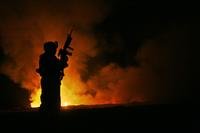
No one doubts that many of our military personnel ordered to Iraq and Afghanistan have endured extremely stressful situations both in combat and daily life. Terror tactics by the enemy, from roadside bombs to kidnapping victims beheaded and shown on the internet, have created a climate of anxiety and fear that no one should underestimate. What the Marines went through in the savage street fighting in Fallujah four months ago rivaled the harshest conditions faced by their fathers in Hue and Khe Sanh and their grandfathers at Tarawa and Okinawa.

Testifying to Congress earlier this month, Central Command CINC Gen. John P. Abizaid acknowledged, "We know that a casualty of war can as much be a psychological patient as a young man or woman that has lost their arm or leg."

In truth, in all wars both soldiers and civilians have been susceptible to the psychological stresses of combat. Writer Steve Bentley in 1991 noted the recollections of an Egyptian soldier from 3,000 years ago named Hori, who spoke of the fear he experienced in battle: "You determine to go forward. Shuddering seizes you, the hair on your head stands on end, your soul lies in your hand."

The tragic string of murders and suicides among a group of Fort Bragg soldiers back from Afghanistan two years ago clearly showed that combat experience had left a deep psychological mark on some soldiers.

No one with even the slightest sliver of a conscience would begrudge our combat veterans the finest in medical and psychiatric care for any stress disorders they might subsequently suffer as a result of their wartime service.

The armed services themselves after years of passivity toward this problem have introduced new screening and review programs aimed at identifying and helping personnel who need it. For example, the Army has established an outreach program that starts before soldiers deployed to Iraq and Afghanistan return home and continues with two weeks of mandatory classes and a month of voluntary counseling for issues ranging from stress and anger management to marriage enrichment. Three to four months after their deployment, the Army formally surveys how the troops are faring.

Even more importantly, it appears that the military is strongly encouraging its warriors not to be ashamed to speak of combat stresses and their own struggles to cope with what they have experienced - a major cultural shift that cannot but help those who do suffer genuine psychological scars from combat.

But that also does not mean we should automatically accept the dire predictions that an entire generation of American soldiers and Marines has been mentally crippled by their experiences in war since the 9/11 terrorist attacks.

A senior Marine Corps commander this week dismissed The New England Journal of Medicine study - the one that estimated 17 percent of Iraq combat veterans suffer from post-traumatic stress disorder - as an exaggeration that does not match what Marine medical organizations themselves have found. "I would reject the study," said Brig. Gen. Joseph Dunford, assistant commander of 1st Marine Division. "In no way are we seeing 17 percent." Officials say only several hundred cases of PTSD have been diagnosed in the Division, which has 45,000 Marines.

Similarly, DVA officials strongly disagree with charges that reallocation of the department's budget for helping veterans with psychological problems - more money is now being used for outpatient care as opposed to in-hospital treatment - is leaving the veterans high and dry.

Dr. Robert Rosenheck, director of the VA's Northeast Program Evaluation Center, told The Los Angeles Times this week that changes in the VA system have not produced dire results predicted by veterans' advocates. Recent studies have not shown an increase in jailed veterans after inpatient psychiatric beds have been cut. Nor, Rosenheck added, have there been significant increases in suicides or veterans showing up at non-VA hospitals for care.

What we may be seeing here is not a predicted epidemic of mentally unbalanced veterans, but instead a replay of what I call the Lifton Maneuver.

As revealed by author B.J. "Jug" Burkett in his book on Vietnam veterans, Stolen Valor, a loose confederation of antiwar psychiatrists during the 1960s and 1970s led by psychiatrist Robert Jay Lifton predicted that Vietnam would create, in Lifton's words, "a very large pool of young, embittered veterans … [whose] inability to find significance or meaning in their extreme experience leaves many … with a terrible burden of survivor guilt." Burkett added:

"Lifton would later admit that his information [on veterans' disorders] did not come from a random sample of Vietnam vets. 'Almost all of them belong[ed] to the minority of Vietnam veterans who emerge with an articulate antiwar position,' he wrote. 'I made no attempt to gather data from a "representative" group of veterans.' Lifton wanted the ones with an antiwar position, men who could be public advocates by horrifying the American public, who would then urge the politicians to end the war."

Passionately working within the antiwar movement and later within the VA bureaucracy, Burkett charges, Lifton and other like-minded psychiatrists employed selective, anecdotal evidence to portray all veterans as "ticking time bombs" and "sinister, disturbing, frightening" men who posed a danger to society and to themselves. They trashed an entire generation of veterans as psychopaths and victims as a ploy to turn American public opinion against the war.

As the Defense Department, military services and DVA continue to refine their screening and diagnostic programs to help those unfortunate combat veterans who really need help, we should raise this question:

Is the Big Lie about combat veterans being told again?


Ed Offley is Editor of DefenseWatch. He can be reached at dweditor@yahoo.com. ©2005 DefenseWatch. All opinions expressed in this article are the author's and do not necessarily reflect those of Military.com.


Member Center


FREE Newsletter


Military Report


Equipment Guides


Installation Guides


Military History