Lieutenant Colonel David L. Thomas II is a Field Artillery
Officer with over 25 years Active and Reserve Service. He served as a Battery Commander during Desert
Shield/Storm and is also an Operation Enduring Freedom Veteran after being
recalled to active duty in February 2003. He has served nine months in
Afghanistan as the Director of Information Operations, and is currently
assigned to Fort Benning, Georgia to work as a Special Projects Officer
for the Army Substance Abuse Program (ASAP). LTC Thomas promotes ASAP's services as
well as educates Soldiers and Leaders on the military readiness
impacts of substance abuse.
Get $1000 a Month!
Your service may have earned you great education benefits. Get up to $1000 per month to pay for your undergraduate, graduate or technical degree.
You just can't hire a person like a business sector company can, and put them in the position and have them working right away or after a little training. You just can't take a "civilian" and put him in any military position the way that many positions in the business sector can. There are few business sector positions that will transfer directly to the military without extensive training. A sales representative can work in the insurance industry, then move to the retail industry, and then move to the automotive industry to ply his/her trade.
We don't have this luxury in the military. We don't have people in the business sector that can jump right into a military position. We do have individuals that can go from the military to the business sector and do quite well, but the reverse is not always true. The military cannot do this, because many times, the lives of the Soldier and their unit would be put in mortal jeopardy, as shown in places like Fallujah. There are some limitations/restrictions in the military that are not applicable in the business sector.
So you have your mandatory four hours of Drug, Alcohol, and Domestic Violence Prevention training every year. Whew, another senseless (and time consuming) task completed -- on to the next item on your list. Many in the military think that Drug, Alcohol, and Domestic Violence Prevention is not as important as training a Soldier on his/her military duties, individual and crew-served weapons, driving and maintaining military vehicles, and other "necessary" military training.
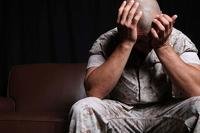
Say you have one of your Soldiers involved in a bad drunk driving accident -- the Soldier is arrested and charged with a DUI, causing the accident, and involuntary manslaughter for accidentally killing someone in the vehicle that he collided with. Let's also say that the Soldier has also been severely injured and requires treatment. Not only do you have a Soldier that is less retainable, you have someone that now requires expensive medical care in a military hospital facility, which are already overburdened. You also have that Soldier pending civilian criminal charges. You lose the time (man hours) that the Soldier is in the hospital, possibly going through some type of recovery and/or rehabilitation from his injuries. You may also lose this Soldier to the civilian court system where he may be sentenced to jail, further losing his services. Suppose the Soldier was killed? What is the loss there? Uncalculatable. One cannot just add the cost of a human life. Additionally, now you may have to obtain a replacement for this individual. How long will it take and how much will it cost? Not only have you lost the original ROI, you have to obtain another individual and try to recoup just the ROI on the new person, not necessarily the ROI that was lost on the first individual.
Wow, that seems pretty extreme you might say. It might be, but it is happening more and more often. It is significant when a military installation has six DUIs in a weekend, especially after their four-hour block of mandatory alcohol abuse prevention training. Think that is enough? I challenge commanders in today's military to tell me that four hours of mandatory Drug, Alcohol, and Domestic Violence Prevention training is enough.
Forget about the drunk driver Soldier for a minute. Could the same thing have happened if the Soldier was impaired because he/she took Ecstasy? Smoked marijuana? Took amphetamines? Snorted crack cocaine? Absolutely! Believe it or not, there is still a drug problem in the military, just like there is in the business sector. We have individuals that use illegal drugs and abuse prescription drugs, just like the business sector. When we have a Soldier come up positive on a drug screen, we have a Soldier with less retainability. We have a soldier with a reduced ROI. We have a Soldier that we may have to process out of the Army.
Suppose, like in the incident above, that the individual that took the illegal drugs and passed/sold some to other members of his unit? Suppose he bought the drugs from someone downtown that had "cut" the drugs with rat poison or added in some other drug? Suppose that the individual "stiffed" the drug dealer and was beaten/shot/stabbed/killed? Think this does not happen? Think again. It happens in the military, just like it does in the private sector. In the military, it is harder to get a replacement for a Bradley Gunner, than it is for the business sector to get another truck driver. Suppose that individual and three others in your unit wind up with brain damage or in comas because they took an illegal drug and drank alcohol at the same time. What are the costs associated with this type of behavior? In this case, they are many!
What are the costs the Army has to recoup? Let's see, just to name a few:
Losses (specified and implied)
Time - How long to get a replacement?
Training $50,000 - Cost is lost if Soldier does not or is not capable of returning to work
Man-hour loss - time away from the job (accident/death/injury)
Medical costs (Medical care in the Army is not free, as most think. There is a cost associated with it, just like in the civilian world. We just get less money in our paychecks for having 100% medical coverage)
Jail time - Civilian/Military
UCMJ/Courtsmartial
Lawyer's time
Doctors and other medical professionals' time for treatment/counseling for substance abuse
Resources - Jail/Paperwork/Legal Requirements, etc.
Other Costs? (Come on, you can think of more!)
I have not listed all of the costs associated with a Soldier abusing alcohol, taking illegal drugs and/or abusing prescription drugs, or a Soldier who commits an act of domestic violence. I think what I have listed is enough to get your attention and make my point. Just like a private sector company cannot bring a product to market without its key personnel, the Commander cannot go into the warfight and be successful unless they have all their assigned personnel to do it.
It is easier for the business sector to hire a new sales representative, an administrative assistant, a marketing representative, because there are so many of them. You just can't advertise for an Abrams Tank Driver or a Howitzer Fire Control System mechanic. You can't just advertise for a Senior Military Leader/Planner for Major Combat Operations in Iraq and expect this business sector "hire" to be able to conduct combat operations in Tikrit. They have to have had "military" training or it could not be done. If this was possible, we would not need recruiters or develop marketing campaigns to get people to join the military.
In other words, Soldiers are the Army's most valuable resource. Without them, the highly sophisticated equipment and machinery are at best, scrap metal. Without the Soldier functioning properly in peacetime and in times of conflict, the ROI the Army has made on the Soldier has been for nothing. As a Commander, take the time to make sure that the Army doesn't lose a Soldier to drug and/or alcohol abuse or domestic violence. In these times of conflict, we just can't afford it. We need to realize our ROI from the Soldiers we recruit, for our sake and theirs. It's what we do -- we take care of Soldiers. If you can't do it yourself, ask for help. There are many Soldier-oriented organizations like the Army Substance Abuse Program or the Army Community Service that can help you and your unit.
If you think you (or someone close to you, like your Battle Buddy, best friend, or spouse) may have an alcohol/drug substance abuse or domestic violence problem, contact the Army Substance Abuse Program (ASAP) at (706) 545-1138/4415. There are trained counselors there to help you overcome your drug or alcohol abuse problem. There is a chapter of Alcoholics Anonymous that meets on Monday, Thursday and Saturday nights at 7 p.m. in the basement of the ASAP Building, so come join those that are proving they have what it takes to be substance free and successful. The Army Substance Abuse Program is located on Fort Benning, next to the Infantry Museum in Building 241, Miller Hall. Call or come by and see us and we will help you see your brighter future -- one that is not dimmed by alcohol and/or drug abuse. Remember, only you have the "Power of Choice."