This article is provided courtesy of Stars & Stripes, which got its start as a newspaper for Union troops during the Civil War, and has been published continuously since 1942 in Europe and 1945 in the Pacific. Stripes reporters have been in the field with American soldiers, sailors and airmen in World War II, Korea, the Cold War, Vietnam, the Gulf War, Bosnia and Kosovo, and are now on assignment in the Middle East.
Stars and Stripes has one of the widest distribution ranges of any newspaper in the world. Between the Pacific and European editions, Stars & Stripes services over 50 countries where there are bases, posts, service members, ships, or embassies.
Related Links:
Current Archive
Stars & Stripes Website
Sound off in our Discussion Boards
Have an opinion on the issues discussed in this article? Sound off.
Get Breaking Military News Alerts
|
|
|
|
|
Your Two Cents

Submit your stories, news items, or a benefits update -- and help Military.com bring the best, most important stories to your fellow servicemembers, veterans, and family members. Contribute here |
|
|
July 21, 2005
[Have an opinion about the issues discussed in this article?
Sound
off in our Discussion Boards.]
By Teri Weaver
Stars and Stripes Mideast edition
CAMP LIBERTY, Iraq — In early June, military investigators here got the kind of case that seems more likely in the big city than in a forward operating base: They busted a soldier for selling cocaine.
It's rare that military investigators find cocaine among soldiers at war, military officials said. What's more common are soldiers who sneak liquor, marijuana, Valium, hashish and a variety of prescription drugs, such as Ritalin, onto base and pass it along to friends, said Lt. Col. John Dunlap, the top military prosecutor for the 256th Brigade Combat Team, a National Guard unit from Louisiana.
In the 256th, alcohol and drug charges rank second and third, respectively, among formal charges brought against soldiers since the guard members arrived in Iraq in October.
“The Army is a microcosm of society,” Dunlap said last month. In the National Guard, with its mix of members with different jobs, backgrounds and life experiences, it's even more so, he said. Guard members may be from the same hometown, “but they are likely to bring a cross section of problems” when deployed overseas, he said.
The brigade is certainly not alone in dealing with drugs and alcohol abuse at war, Dunlap and others said. Dunlap said statistics from his brigade reflect the stance he and other unit commanders have taken to address the problem.
“We aggressively prosecute it,” Dunlap said.
Among the soldiers with the brigade, and throughout Iraq, the top offense is “dereliction of duty,” a charge that can encompass anything from not showing up for work to misplacing equipment to acting carelessly and potentially putting a life in danger, Dunlap said. There were 99 of those cases through mid-June.
There were 53 alcohol-related charges, and 48 drug-related charges in the brigade that has more than 4,000 soldiers.
Many of the cases Dunlap sees involve soldiers in their late teens and early 20s who are making the same mistakes with drugs and alcohol that many make at home at the same age. But here the military, rather than mom and dad, doles out the punishment. Here, these mistakes can result in jail time, demotions or bad conduct discharges, and a federal conviction, Dunlap said.
And a conviction isn't necessarily a ticket stateside. Many serve their sentences in Kuwait and come back to Iraq to finish out their deployment. The brigade prints the results of its courts- martial in its newsletter, Tiger Tracks, as a deterrent.
Still, soldiers at war find ways. Generally, they get alcohol from contracted workers on base, Dunlap said. They buy hashish and Valium while on patrol in Baghdad. They typically get marijuana in the mail.
Most of the cases involve simple possession charges, he said.
“If we find they are impaired while preparing to go out” on a mission, Dunlap said, “the punishment is even harsher.”
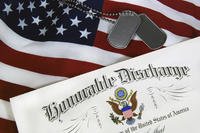
Last month, Michael Boudreaux was convicted of wrongful possession of alcohol, hashish, Valium and Xanax. Military investigators found four bottles of whiskey, 22 videos of Iraqi pornography, some hashish and Valium in his room, according to the staff judge advocate's office. The soldier got seven months confinement, was demoted from a sergeant to an E-1, and was given a bad conduct discharge.
“Now, he's got a federal drug conviction,” Dunlap said, a black mark that could get in the way of student loan applications and future employment.
Offenders are caught during random urine tests, random checks in barracks and word of mouth. For the most part, it's fellow soldiers and supervisors who notice a problem and notify authorities, Dunlap said. Soldiers who come forward and admit they have a problem typically face little or no punishment and are given counseling and medical treatment, Dunlap added.
“Some of the young soldiers just can't handle the stress,” said Capt. Christopher Krafchek, a military defense lawyer who has seen many drug and alcohol cases in Iraq.
One of those soldiers, Pvt. Emily Hamilton, was having trouble relaxing when a fellow soldier offered her a pipe full of hashish, she testified during her court- martial last month at Camp Liberty.
“It was sitting on his dresser and I grabbed it,” she told the judge, Col. Patrick J. Reinert, a military judge with the 5th Judicial Circuit who travels throughout Iraq to hear cases. “It helped me go right to sleep.”
Hamilton was convicted on possession and wrongful use of marijuana and one count of wrongful distribution of Valium. She was found not guilty of two other counts of distribution. She was sentenced to one year of confinement, reduction from E-3 to E-1, and a bad conduct discharge.
Dunlap said other staff judge advocates told him that the number of drug- and alcohol-related charges typically peaks in the middle of a 12-month tour but fall as the deployment ends.
The reason is simple. Soldiers who get in trouble toward the end of a deployment risk staying in Iraq for a trial, while their friends go home.
Email
this page to friends RSS feed
©2005 Stars & Stripes. All opinions
expressed in this article are the author's and do not necessarily
reflect those of Military.com.
|