Home
Benefits
News
entertainment
shop
finance
careers
education
join military
community


William S. Lind: 4GW in the Sudan


About the Author

William Sturgiss Lind, Director of the Center for Cultural Conservatism at the Free Congress Foundation, is a native of Cleveland, Ohio, born July 9, 1947. He graduated magna cum laude, Phi Beta Kappa from Dartmouth College in 1969 and received a Master's Degree in History from Princeton University in 1971. He worked as a legislative aide for armed services for Senator Robert Taft, Jr., of Ohio from 1973 through 1976 and held a similar position with Senator Gary Hart of Colorado from 1977 through 1986. He joined Free Congress Foundation in 1987.

Mr. Lind is author of the Maneuver Warfare Handbook (Westview Press, 1985); co-author, with Gary Hart, of America Can Win: The Case for Military Reform (Adler & Adler, 1986); and co-author, with William H. Marshner, of Cultural Conservatism: Toward a New National Agenda (Free Congress Foundation, 1987). He has written extensively for both popular media, including The Washington Post, The New York Times, and Harper's, and professional military journals, including The Marine Corps Gazette, U.S. Naval Institute Proceedings and Military Review.

Mr. Lind co-authored the prescient article, "The Changing Face of War: Into the Fourth Generation," which was published in The Marine Corps Gazette in October, 1989 and which first propounded the concept of "Fourth Generation War." Mr. Lind and his co-authors predicted that states would increasingly face threats not from other states, but from non-state forces whose primary allegiance was to their religion, ethnic group or ideology. Following the events of September 11, 2001, the article has been credited for its foresight by The New York Times Magazine and The Atlantic Monthly.

Mr. Lind is co-author with Paul M. Weyrich of the monograph: "Why Islam is a Threat to America and The West." He is the author of "George W. Bush's `War on Terrorism': Faulty Strategy and Bad Tactics?" Both were published in 2002 by the Free Congress Foundation.

William Lind Article Archive

Military Opinions Index

Discussion Board
Have an opinion on this article? Sound off.

Get Breaking Military News Alerts

July 15, 2004

[Have an opinion on a William Lind column? Sound off in the Discussion Boards.]

The international goo-goos (Tammany Hall's old name for the "good government" types) need their humanitarian crise du jour, and the Sudan currently fills the bill. The usual celebrities are wringing their hands and we are all supposed to care, deeply. The realist replies, "Yea, that's life in the global village," but realism is out of fashion these days. Sense, it seems, has been defeated by sensibility.

But there is more to events in the Sudan than the usual starving children. A recent article in the Cleveland Plain Dealer offered a peek at Fourth Generation war at work in some ways both new and very old. After noting that more than a million people have been turned into refugees in just 16 months - not a trivial military result - the paper wrote:

Over and over, they (the refugees) tell the same story. First airplanes and helicopters came and bombed their villages. Then gun-and-sword-wielding militiamen came galloping in on horseback and camelback - burning, looting, raping and pillaging.

Tens of thousands have made the journey, forced on a desperate flight through the desert by Arab herders bent on chasing their African farming neighbors from the vast western region (Darfur), the size of Iraq.
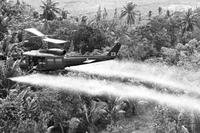
In these few sentences, we take a journey through war over the last five thousand years. It begins with a modern overlay, in the form of bombing by aircraft. Terrorizing tribesmen by bombing their villages from the air was a technique pioneered by the British in their post-World War I fight with insurgents in Iraq. It has the advantage that tribesmen seldom have much in the way of air defenses, other than to get up and move. In the Sudan, that seems to be just what their enemies desire.

Of course, the involvement of aircraft suggests the involvement of the Sudanese government. But the rest of the Plain Dealer's brief account quickly moves us beyond, or more precisely, back from the age of the state.

Those gun (muzzleloaders? flintlocks?) and sword-wielding militiamen are almost certainly tribesmen. Not only are their horse and camel-charges something out of past centuries, so is their primary loyalty. It is safe to say that their ties to the government of the Sudan are tenuous. They are fighting for their tribes, against other tribes they have fought for generations. As the state recedes, it reveals once again the old human landscape, almost unaltered and ready, like winter wheat under the snow, to spring to life again and flourish.

Another ancient cause of war, race, also presents itself. The attackers are Arabs, the refugees are Negroes. How long have those two been going at it, with the blacks almost always getting the worst of it? In the Sudan, even today, that "worst" includes black slavery. Of course, as is also true throughout history, the alternative to slavery is death. An old Russian proverb comes to mind: Life is terrible, but death is not so great either.

Finally, to complete a two-paragraph journey back to history's dawn, the mounted attackers are herdsmen while the victims are farmers. The Navahos could tell us something about that one, as could the Mesopotamians, the Egyptians and the Chinese. One cannot help but wonder if in addition to their swords and guns those horsemen are good shots with a bow?


We see here in this remarkable vignette one of the most important, most powerful and also most unremarked features of our age: the past is all coming back. As modernity crumbles, all ancient ways and causes of war return, defining a Fourth Generation that is also a vast Minus One Generation. I have said from the outset that the Fourth Generation marks the end of modern war and the modern age, and nowhere do we see that more clearly than in places like the Sudan (and there are more and more such places).

Those who have eyes, let them see.

  Email this page to friends

© 2004 William S. Lind. William S. Lind is Director for the Center for Cultural Conservatism for the Free Congress Foundation. All opinions expressed in this article are the author's and do not necessarily reflect those of Military.com.


Member Center


FREE Newsletter


Military Report


Equipment Guides


Installation Guides


Military History