|
H. Thomas Hayden
recently concluded over 35 years of service,
which included the Agency for International
Development, the Marine Corps, defense industry
and the Pentagon. His specialties are Intelligence,
Counterinsurgency Operations, Counter-terrorism,
and Joint Concepts Development and Experimentation.
His Marine Corps assignments have included
command of two separate battalions; AC/S G-2,
4th MARDIV & AC/S G-2 FMFEurope; Branch Head,
HQMC, Special Operations and Low Intensity
Conflict (SO/LIC); Special Assistant to the
Assistant Secretary of Defense for SO/LIC;
and, Senior Program Analysts at HQMC with
the Joint Staff and DoD at the Pentagon. Overseas
assignments included Vietnam, Japan & Okinawa,
Europe, Central America, Saudi Arabia and
Kuwait, Somalia, Singapore, Philippines, and
Colombia. He has an MBA (Pepperdine) and an
MA in International Relations (University
of Southern California). He has written two
books and is working on a third.
Thomas
Hayden Article Archives
Sound
Off! - Have an opinion about this
article? Visit the discussion forum.
|
|
|
|
September 21, 2004
[Have an opinion on this column? Sound off in the discussion
forum.]
(Part II of a two-part series - REVISED)
The insurgent short-lived success in the Coalition retreat from
Falluja may have begun to be reversed by the highly successful eviction
of Muqtada al Sadar's forces from Najaf. Also, it was a very good
sign that Sadar's insurgency did not spread throughout the Shiite
community.
Vacillation, indecision and signs of weakness, fuels an insurgency.
The decision by US national command authorities to withdraw the
Marines
from Falluja was a mistake. The idea of a Falluja Brigade seemed
like a good idea at the time; however, once it fell apart, it was
time to change tactics.
Falluja currently stands as a symbol that the Americans can be
made to quit. If politics, bowing to increased adverse publicity
from US and Arab news media, was the catalyst for the Marine's being
order to withdraw from Falluja, this interference in military operations
has to be quickly reversed.
A major battle is currently being fought against insurgents in
Ramadi. The US forces are working hand in hand with Iraqi forces.
Success in Ramadi may find a model for success in Najaf, which may
have been attributable to the Iraqi forces assembled for the final
assault on the Shiite shrine.
Also, a few weeks ago, the people of Samarra, a city in the contested
Sunni Triangle, decided they had enough from living in fear of the
insurgents and "foreign fighters." The people stopped supporting
the insurgents and the town mayor worked with US forces to return
Iraqi government sovereignty to the city. Najaf, Tal Afar, and Samarra
are signs that the insurgency can be reversed.
Ultimate success in an insurgency comes form the local people not
foreign troops. However, the Coalition and Iraqi government have
to work closely in a combined civil-military counterinsurgency campaign
plan.
There are 10 Basic Principles for a counterinsurgency campaign:
- The center of gravity is the people
- The first step must be focused on security for the people and
the establishment of public safety (local police and military
forces).
- The establishment of an effective Intelligence collection system
is an imperative. Local police, National Guard, and security forces
are good for collecting actionable Intelligence. However, covert
US controlled indigenous HUMINT is best.
- Establish small, specialized counterinsurgency units to neutralize
or destroy the leadership of the insurgents fighting against the
Coalition forces.
- Establish disciplined, well-trained and highly mobile, counter-guerrilla
forces.
- Balance compassion/restraint with overmatching power in fighting
guerrillas.
- Incorporate psychological operations and information operations
into every action.
- Redevelopment/development and/or reconstruction of infrastructure
must have local indigenous support and participation.
- Operate within establish international law
- Organize police, military and civilian agencies under one Civil-Military
Campaign Plan.
The first priority in counterinsurgency operations is creating
an effective Intelligence collection effort. Effective and trustworthy
local police, para-military and military forces, who have proven
that they are in the fight against the insurgency, can be very effective
in Human Intelligence (HUMINT).
The next priority is to establish effect "population and resource
control," e.g. issue new ID cards to the friendly or neutral population
and code suspected enemy agents/forces.
There are currently four major types of insurgent forces in Iraq:
(1) Islamic Fundamentalist, to include al Qaeda, Falluja Branch
(2) Former Regime Loyalists, to include the Ba'athist, the Faydeen
and the remnants of the Republican Guards and Special Security forces,
(3) the Abu Musab al Zarqawi Tawhid and Jihad Groups, with links
to al Qaeda, and (4) the Mahdi "army."
Establish or re-establish a "census grievance." All Arab and most
SE Asia countries have a long tradition of the local tribal chief
or governor setting once a month for the people (anybody) to petition
their leaders for a redress of grievances. This has proven to be
a valuable tool in collecting Intelligence.
Combined Action Platoons are generally very successful - see case
histories in Vietnam with the Marine Corps Combine Action Program.
However, pseudo-operations, or black ops, can produce very favorable
results. This is where you take returnees, Chieu Hoi in Vietnam,
and turn them back into the enemy community to scout targets and
collect Intelligence. They should not be used as strike forces or
they are quickly compromised.
The Civil-Military Campaign Plan must unite all civil and military
forces operating in the counterinsurgency campaign to identify a
main focus of effort and execution of the commander's intent. The
counterinsurgency campaign may involve the concept of a three-block
war: peacekeeping on one block, counter-guerrilla operations on
another and full scale conventional battles on another.
Whether it is development or reconstruction of essential infrastructure,
local indigenous participation must be assured. All civic action
projects must be approved and supported by the people and their
leadership.
The United States has successfully conducted "counter-guerrilla"
campaigns for over 300 years. We have a record of successful unconventional
warfare back to before the American Revolution and some of the most
recent campaigns in Afghanistan
and Iraq.
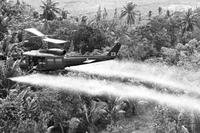
In the 20th Century, you can study The Philippines, the Banana
Wars of the 1900s to 1930s, World
War II, Greece in the late 1940s, and many counter-guerrilla
campaigns in Korea, Latin America & Vietnam. The counterinsurgency
in Vietnam was won by the US and Republic of Vietnam. The war was
lost when conventional North Vietnamese Army forces exploited the
lack of American resolve and the US Congress failure to continue
promised supplies and arms to the South Vietnamese, and Soviet and
Chinese supplied North Vietnamese Army overwhelmed a much weaken
Army of the Republic of Vietnam.
It is important to understand that guerrilla warfare is a tactic
aimed at harassing, punishing, or killing the forces of an adversary.
Guerrilla warfare in Iraq and Afghanistan, or anywhere else for
that matter, is the only means that the terrorists or insurgents
forces can employ against a stronger military regime.
Subversion, sabotage, and terrorism are only means to an end, used
by "guerrillas" in an insurgency. The insurgents can be seen to
be more powerful than they actually are when they use massive car
bombings; small hit-and-run attacks on security forces, kidnappings,
assassinations of local leadership, etc.
HOWEVER, there may be some positive signs developing in Iraq. There
seems to be a quite shift to more pragmatism.
Originally, the US planned to do everything at once by trying to
re-establish security, and at the same time complete reconstruction
projects and build new democratic institutions. If approved by the
US Congress, the transfer of $2 billion of reprogrammed money to
expand programs to train and equip Iraqi police and military forces
will go a long way to fight the insurgency.
The London Times, September 15, 2004, reported the same
story that I heard time and again in Vietnam. The ordinary citizens
of Iraq are more concerned with their welfare and their future than
the battles in Falluja and Najaf. The Times quoted
an Iraqi: "It's all meaningless. What are we (London Times,)
talking about? Impose a siege, end a siege. Fight or retreat. This
is not what we should be talking about. Let's talk about sewage,
water, utilities, security and the basic needs of life… We have
two hours of electricity and ten hours off."
Until the Iraqis see a better life for themselves and their children,
the insurgency may continue to have some form of support. Insurgents
can be self-generating and can draw plenty of support form angry
indigenous sources.
There is an important element of an insurgency that cannot be overlooked
- public opinion at home and abroad. Case studies of Vietnam, Algeria,
Cypress, Lebanon, Somalia, etc., are proof of how one can win all
the battles but lose the war.
As we saw in the mistakes made in Falluja, where political considerations
were tied to tactical decisions, perceptions often become reality.
The only way to lose in Iraq is for the Coalition and Iraqi armed
forces to fail in the counterinsurgency campaign and the doom and
gloom news reports in the United States to weaken American resolve.
Email
this page to friends
[Have an opinion on this article? Sound
off here.]
© 2004 H. Thomas Hayden. All opinions
expressed in this article are the author's and do not necessarily
reflect those of Military.com.
|