Home
Benefits
News
entertainment
shop
finance
careers
education
join military
community


Mississippi ANG Crew Races To Save Russian Sub Crew
 

DefenseWatch

This article is provided courtesy of DefenseWatch, the official magazine for Soldiers For The Truth (SFTT), a grass-roots educational organization started by a small group of concerned veterans and citizens to inform the public, the Congress, and the media on the decline in readiness of our armed forces. Inspired by the outspoken idealism of the late Colonel David Hackworth, SFTT aims to give our service people, veterans, and retirees a clear voice with the media, Congress, the public and their services.


Related Links

DefenseWatch Website

Article Archive

Hot Discussions

Have an opinion on this commentary? Sound off.

Get Breaking Military News Alerts

An Insider's Guide to Joining the Military

Stars and Stripes Article Archive

Stars and Stripes Official Site


August 16, 2005


[Have an opinion about the views expressed in this article? Sound off in the Hot Issues with Defensewatch Forum.]

By Nathaniel R. Helms

Anyone looking for arguments against closing Air National Guard bases and retiring their units from the U.S. Air Force order of battle need look no further than the 172d Airlift Wing based at Allen C. Thompson ANGB Field, a duel-use facility the wing shares with Jackson International Airport in central Mississippi.

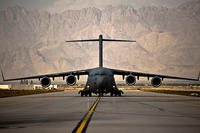
Last Friday evening, a 172d Boeing C-17 Globemaster III crew flew more than 95,000 pounds of rescue equipment from the New Orleans Naval Air Station in Louisiana to Petropavlovsk on the Kamchatka Peninsula in far eastern Russia, They were sent to assist in the recovery of the seven Russian sailors trapped in 625 feet of water in a Soviet-era Priz AS-28 rescue submarine that had become tangled in cables in Beryozovaya Bay. Although the divers and equipment the Air Guard crew delivered to Russia were never used, everything arrived in time to help save the stranded sailors.

The mission was a 24-hour nonstop effort that spanned half the world and involved a huge joint-service effort, said Col. William Crisler, vice- commander of the 172d. Before the mission was over, the C-17 and its passengers and crew had flown from Mississippi to Louisiana to Russia and back, twice refueled in the night skies and landed in a mysterious Russian military complex where American aircraft would have almost certainly been shot down without warning a little more than a decade ago.

"It was really fluid," said Lt. Col. Jim Conway, the 183d Airlift Squadron operations officer and a C-17 command pilot who has flown thousands of hours in a variety of heavy lifters delivering weapons of war and missions of mercy all over the globe. The 183d is the flying squadron assigned to the 172d Airlift Wing. Incidentally, a 172d Airlift Wing C-141 rescued our intrepid editor Ed Offley and 12 other journalists from Mombasa , Kenya airport in Africa during the troubles in Somalia in 1992 after a United Nations mandated, U.S.-led multi-national task force intervened there.

Ed explained: "A Mississippi ANG C-141 once saved my bacon (and that of another 12 journalists who had embedded with stateside AMC units and had flown to Somalia and Kenya the week after the landings there) - long before Black Hawk Down . When our week was up we were driven to the airfield at Mombasa only to find that our scheduled flight inbound from Europe had been scrubbed. We were sitting on the side of the tarmac contemplating the best hitchhiking road back home when an MSANG command pilot (he had a 141 stuffed with pallets on the ramp) took pity on us, offloaded several of the pallets, and flew us to Ramstein [Germany] for a connecting heavy hauler to Charleston via the Azores."

"I still owe that flight crew a keg of beer," Ed lamented. (There is no time like the present Ed!)

During the hasty mission planning effort, aircrews and operations staff rushing to get ready to answer the emergency half a world away were focused totally on answering the Russians' call for help.

"The squadron commander and I got the crews together," Conway said. "It was awesome. Our enlisted guys are awesome. We asked for volunteers for the load team and we had to turn people down. That is how the Guard is, we all team together and support and help each other."

Once the team was assembled, Conway and others scrambled to find parkas, MREs and other personal gear required for the mission. Within four hours, the C-17 and its crew lifted off from the naval air station.

Although the Russian crew was ultimately saved by a British rescue team flying from England , it was a desperate times for the trapped Russian sailors. All they knew was that they were rapidly running out of breathable air without any way to escape. The tiny 44-foot sub was one of four such craft built in 1986 by the former Soviet government and it is not designed for lengthy stays underwater. Ironically, the AS-28 was itself designed for deep-water rescue missions and has room for three operators and 20 saved sailors, according to public intelligence sources.

The size of the interior is probably what saved the crew's lives by trapping enough breathable air inside to allow them to survive long enough for the rescuers to arrive, one retired American submarine captain explained.

"The mini-sub had both oxygen candles and lithium hydroxide absorbent (for CO2) so that they maintained their atmosphere, for the time they had to, in a relatively normal range," the submariner said. "I suspect that there will be little long-term effect on these guys, as their ready operation in surfacing the Priz on release from the tangles and then immediately opening the hatches seems to indicate. But it was close."

"They could have been in bad trouble," added the retired submariner , who used to be involved in the U.S. Navy's deep sea-rescue program. "There is no place to go."

While all eyes were turned to San Diego where the U.S. Air Force and Navy were squabbling over shipping a super high-tech underwater drone called the Scorpio for the same operation, Mississippi's so-called "part-time" warriors were flawlessly executing one of the longest and most difficult rescue operations in their long tradition of mercy missions all over the world,

The 172d was tasked Friday morning at about 8 a.m. by the Air Force's Air Mobility Command headquarters at Scott Air Force Base, Ill. They were ordered to deliver three civilian deep submergence divers and their equipment to Petropavlovsk . Each of the single-man Atmospheric Diving System "Hardsuit 1200" rescue vehicles are capable of delivering rescue divers – called pilots – to depths of more than 1,200 feet for stays up to eight hours. The suits are owned and operated by Phoenix International, a Maryland-based company with offices in Morgan City , La.

The plan was for the Hardsuit pilots to cut the trapped min-sub loose so it could float to the surface. At the time the Russians requested American assistance the crew aboard the 44-foot submarine reportedly had only 19 hours of air left to breath, Russian officials said. Answering the call were British, Japanese and American rescuers with a variety of advanced technology designed to pull, drag, push or lift the stranded sub once the cables holding it deep in the frigid water were cut, the Russian officials reported.

Crisler described the early morning call from AMC headquarters: "They called us and asked if we could launch an emergency mission. Our unit is already activated supporting Iraqi Freedom. It just so happened we had a plane available on the ramp. We didn't have a flight plan and weren't really sure exactly where to go. The crew got out on the ramp at 10:30 . We could have gone then, but we were told we needed our K-loader (a specialty equipment handling cart), so they needed us to load up our K-loader . Five guys immediately volunteered to help. They were supposed to be going home Friday afternoon. All they had was the clothes on their back."


Atmospheric Diving System Hardsuit 1200. Drawing courtesy of Phoenix International
 

"They stepped up to the plate," Crisler continued . "While they were getting it [ the C-17] prepped, four pilots, two loadmasters and four load team members, two flying crew chiefs and one aero-port guy who could load a K-loader were ready to go." Crisler added . In New Orleans we found out they wouldn't need the K- loader and four very disappointed folks had to go home.

About 5:30 p.m . , after an hour's delay due to lightning, the C-17 took off on its epic journey to save the Russian sailors. For the next 13.5 hours, traveling at about 425 knots true airspeed, the giant transport and its Mississippi Air National Guard crew flew west and north, over Alaska to an aerial refueling point and then on across the Pacific to Russia.

"All of the men are very experienced," Conway said, "[with] twenty years or more flying C-130s, C-141s and now C-17s. They all know what to do."

Lt. Col Michael Zech was one of the pilots who flew the rescue mission. He has been an Air Force and Air Guard pilot for more than twenty years. During his career, he has flown B-52 bombers for the Strategic Air Command as well as four types of heavy lifters for the Air Force and Air Guard. When he isn't flying for the Guard, the 43-year-old flies Boeing 727 cargo jets for FedEx Corp. Zech said his five years flying with the 172d has provided him with his most diverse and interesting experiences during his long career. In addition to flying all over the world, he noted that he has performed every kind of transport mission the Air Force handles from hauling cargo to dropping paratroopers over distant landing zones.

"We were about to start up engines for a training flight when Col. [William] Hill [ the 172d Operations Group Commander] got a call on his cell phone saying they needed someone to fly to Russia," Veck said. "They pretty much wanted us to depart as soon as possible. Col. William Hill was the command pilot, LTC Scott Wiggins, and Capt. John Wilkenson were the other pilots. It was a Group thing. The last time I launched out of here like that I was on alert. It was very short notice; usually you have some time to think about it. We usually have time to plan. We had inputs coming around from every section. We had crew chiefs added at the last second. It was a just-in-case kind of thing."

The 172d is heavily engaged in supporting operations in Iraq and has pilots and support personnel on the ground there, Zech said. "We are getting ready to go to the desert. We are busy doing night-vision-goggle training and we fly missions overseas, usually to South America , Europe - standard overseas flights."

Coordinating an effort of that magnitude involved several commands within the Air Force as well as the cooperation of the U.S. Navy, Coast Guard and Marine Corps officials assigned to the New Orleans Naval Air Station, Zech said.

"When we got to Navy New Orleans members of the 926 AFRES, an A-10 unit called the Cajuns, coordinated a significant amount of the support we needed to get the job done. In addition they brought us  food, coffee, water, and ran errands for us while the Navy base operations folks were setting up the [cargo] pallets that had to be weighed and loaded onto the aircraft. The last thing to arrive was some devices the divers needed. A Coast Guard Falcon brought in devices that had shotgun cartridges in them and then away we went," Zech added .

Refueling twice on the way required close coordination with the A.M.C.'s Tanker Airlift Control Center (TACC) at Scott AFB , Zech added. "We refueled once off of the West Coast over the Pacific wth a KC-135 from  Fairchild AFB in Washington state and once near King Salmon Island in Alaska from a crew out of Eielson AFB, near Fairbanks going east to west. Both were at night. As you get older - I am 43 - my night vision is not what it used to be. From them we took on 85,000 pounds the first time and 50,000 pounds the second time.

Ensuring they had enough fuel was vital and made somewhat more complicated by the fact they had initially planned for carrying 60,000 pounds of cargo but in fact ended up with 95,000 pounds instead. "Anytime you have to use max power and full gross weight if you lose an engine – well it has to cross your mind," Zech noted .

The actual flight was uneventful in both directions, Zech said, but landing in Russia on a military base of a former enemy was enough to spark some mixed emotions, Zech said. "After so many years considering them enemies, seeing Russian military aircraft – Mig-31s and SU-27s – was strange. I had been trained once a month to identify them in SAC while sitting SAC nuclear alert ," he said .

Zech said he had never heard of Petropavlovsk . A couple of American Airlines pilots said it was a divert place in an emergency. "I wouldn't say it was all that modern ... runway was rough. It definitely had some bumps but it was 11,000 feet [long] and it was somewhat wet and we were heavy so it was just fine."

The Guardsmen's visit with Russian customs officials was friendly but business like, Zech said. "The Customs folks were very thorough but it didn't take an inordinate amount of time. They did a good head count, checked our passport and then we went to a hotel. First before they did that, they took us to a place where Russian pilots eat to get breakfast. The food was very good - boiled eggs, homemade bread, some things I didn't know exactly what they were."

"Initially they were rather reserved," Zech went on , "but later in the day after the guys had been rescued they were very friendly. Things are definitely opening up. Col. Hill was able to exchange some patches and a Russian second lieutenant gave me a Russian Navy belt. I wasn't with the guys at the time, but they went to a little market around the corner and one of the locals -a woman was with them who could speak English - explained the seven men had been rescued and they were in good health and gave the guys a bottle of vodka. Everybody was very thankful."

"The bottom line was it was a huge international gesture," Zech said . "It was the best they could offer us, the best they could do. They fed us well and took good care of us. You could tell from the locals they were genuinely happy, relieved and thankful. And kudos for the Brits for getting there first and saving those guys, that is what it was all about."

©2005 DefenseWatch.Contributing Editor Nathaniel R. "Nat" Helms is a Vietnam veteran, former police officer, long-time journalist and war correspondent living in Missouri . He is the author of two books, Numba One – Numba Ten and Journey Into Madness: A Hitchhiker's Account of the Bosnian Civil War, both available at www.ebooks-online.com . He can be reached at natshouse1@charter.net . Send Feedback responses to­ dwfeedback@yahoo.com . All opinions expressed in this article are the author's and do not necessarily reflect those of Military.com.


Member Center


FREE Newsletter


Military Report


Equipment Guides


Installation Guides


Military History