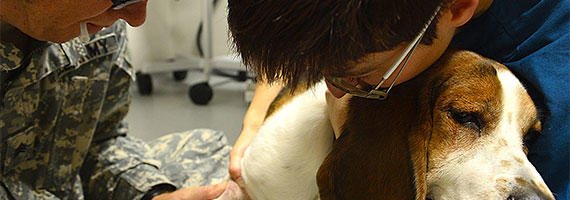
A change to on-base veterinary clinics that is reported as "temporary" means you'll need to take your pets off-base for routine surgeries, at least for now.
The command that oversees veterinary clinics on bases across all services has halted the surgeries, including neutering and spaying, as a means of reigning in service options and getting back to basics, the Army Times reports.

Pet clinics are run on revenue from the people who use them, not funds given to them by Congress. The bulk of that money comes from routine appointment fees and from the income earned when you buy flea and tick, heartworm, or other routine medications for your pet.
But a recent expansion in surgery offerings have left the clinics offering fewer routine appointments and, therefore, earning less money. Surgeries can take a long time -- officials told the Army Times that 50 pets could've been seen for a routine appointment during the time it takes them to conduct one surgery. And since the surgeries are done at cost, they are not a money maker for the clinic.
While this means that routine pet surgeries - like tooth extractions, for example - must now be d0ne off base there could be an even bigger impact thanks to a different set of surgeries that now must be outsourced: spaying and neutering.
On many bases with pet shelters, such as where we live at Fort Campbell, Ky. the cost of spaying or neutering an animal is included in the cost of adoption. Otherwise spaying, for example, cost $25 for a 45-lbs. dog. Elsewhere the procedure can cost up to $300. Even the low cost clinics at the Humane Society can cost up to $175 depending on the size of the pet.
That means military-affiliated pet owners may be less likely to get their pets spayed or neutered. That could, logically, mean more unwanted animals -- and even greater crowding at on-base shelters.
But officials with the Army's Public Health Command, which oversees the clinics on all bases across the services, said they don't think the procedures not being offered on base will keep people from getting them. The clinics only performed about seven surgeries per month, they said.
"We do not have any concerns that the suspension of surgeries at military veterinary clinics will dissuade families from getting these procedures for their pets," said C0l. Thomas Honadel, veterinary services portfolio director for USAPHC. "Since surgeries in military veterinary clinics have never provided more than a limited number of surgeries, this suspension should have negligible impact on unwanted animals on or off-post."
Do you think this change will result in pets not getting neutered or spayed and, therefore, unwanted litters? Tell us in the comments.
Photo courtesy U.S. Air Force.