"In the snow of far-off northern lands and in sunny tropic scenes, you will find us always on the job, the United States Marines."
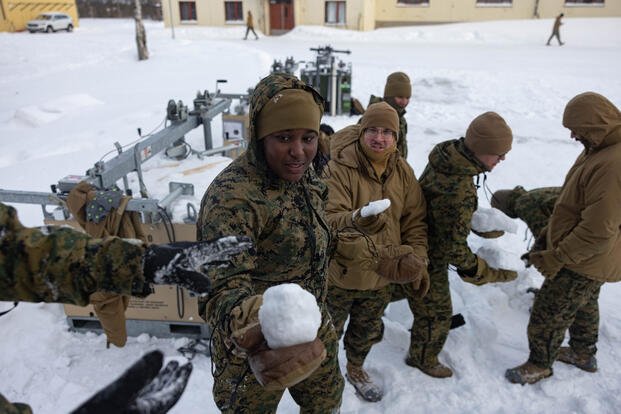
The line from the Marines' Hymn rings true today as ever. As winter grips the High North, U.S. Marines are sharpening their cold-weather skills in preparation for one of NATO's premier exercises. Allied forces, including about 3,000 Marines, are conducting unit-level training this month ahead of Cold Response 2026, a large-scale drill set to launch in March that focuses on defending Norway and building collective capabilities against emerging threats.
This year's iteration underscores the Corps' commitment to rapid deployment and interoperability, with a Marine Air-Ground Task Force surging from Camp Lejeune, North Carolina, to demonstrate transatlantic reinforcement in harsh conditions.
The exercise arrives at a pivotal moment for Arctic security, where strategic interests align with strengthened alliances. Major General Daniel Shipley, commander of Marine Corps Forces Europe and Africa, highlighted the forward-looking approach:
"This exercise isn't just about preparing for today's threats. It's about building the capabilities and strengthening the capacity necessary to deter future aggression and safeguard our shared interests."
Pre-Exercise Training and Equipment Focus
January's preparatory phase emphasizes hands-on cold-weather proficiency, from survival techniques to equipment maintenance in subzero environments. Marines are testing gear like cold-weather clothing systems, skis and snowshoes to ensure reliability during extended operations. This builds on lessons from prior iterations, prioritizing mobility and sustainment in snow-covered terrain.
U.S. assets include P-8 Poseidon maritime patrol aircraft for surveillance and F-35A Lightning II fighters for air superiority, integrating with ground elements for joint all-domain operations effects. The focus remains on efficient, effective preparation that leverages existing alliances for maximum impact.

The Bigger Picture of Cold Response 2026
Cold Response stands as a cornerstone for NATO's northern flank defense, involving roughly 25,000 personnel from a dozen nations in realistic combat scenarios. Activities range from amphibious assaults and live-fire maneuvers to logistics resupply under simulated adversarial pressure, all designed to enhance deterrence in the Arctic region.
Norway hosts the event, providing vast training areas that mimic potential operational challenges. Participating countries include Canada, Denmark, Finland, France, Germany, Italy, the Netherlands, Spain, Sweden and the United Kingdom, fostering seamless cooperation. For the Marines, this means honing expeditionary skills that align with overall service priorities, such as distributed operations in austere settings.
Arctic Strategic Context and Allied Cohesion
The drills will unfold amid heightened attention to the Arctic, including discussions on bolstering security through collaborative efforts. President Donald Trump has emphasized Greenland's role in national defense, advocating for enhanced U.S. access to support missile warning and space operations, as outlined in the 1951 Defense of Greenland Treaty. This aligns with NATO's collective goals, with the alliance's military committee chairman, Adm. Giuseppe Cavo Dragone, affirming unity:
"Cohesion is the key quality of this group. Yes, we do have differences. But those differences can and do make us better."
European allies have stepped up their presence in the region, including troop deployments to Greenland. President Trump expressed optimism about outcomes:
"I think that we will work something out where NATO is going to be very happy, and where we're going to be very happy. I think things are going to work out pretty well."
For deeper insights into this dynamic, see our coverage in Trump Says the US 'Needs' Greenland for Arctic Security. Here's Why and European Troops Arrive in Greenland as Talks With US Highlight 'Disagreement' Over Island's Future.
These developments highlight proactive steps to secure vital routes and resources, positioning the U.S. and partners for long-term stability while maintaining the Corps' commitment to fight in any clime or place.
Marine Contributions and Future Implications
Marines bring specialized units to integrate with allied forces for joint missions. The rapid deployment from Camp Lejeune showcases the Corps' global response capability, essential for reinforcing NATO's eastern and northern defenses.
This participation reinforces Force Design principles, adapting to cold climates while maintaining lethality. It also complements ongoing U.S. initiatives in the Arctic, such as enhanced basing and surveillance, to counter potential challenges from competitors like Russia and China.
Looking ahead, exercises like Cold Response build enduring partnerships, ensuring Marines remain at the forefront of high-latitude operations. For more on related Arctic strategies, check out Trump Says Anything Less Than Having Greenland in the United States' Hands Is 'Unacceptable'.
In an era of evolving geopolitics, these efforts affirm the Marine Corps' role in promoting security and alliance strength.