A Bipartisan Push to Ease the Strain of Constant PCS Moves
Military families move more often than almost any other group in the country, and the pace has only increased the strain on budgets, careers, and stability at home. Many active-duty families relocate every two to three years, often with little choice. Alongside rising moving costs, spouse unemployment remains several times higher than the national average, and children face repeated school disruptions that can impact academic progress and emotional well-being.
A new bipartisan bill aims to take a closer, data-focused look at whether all of those moves are necessary.
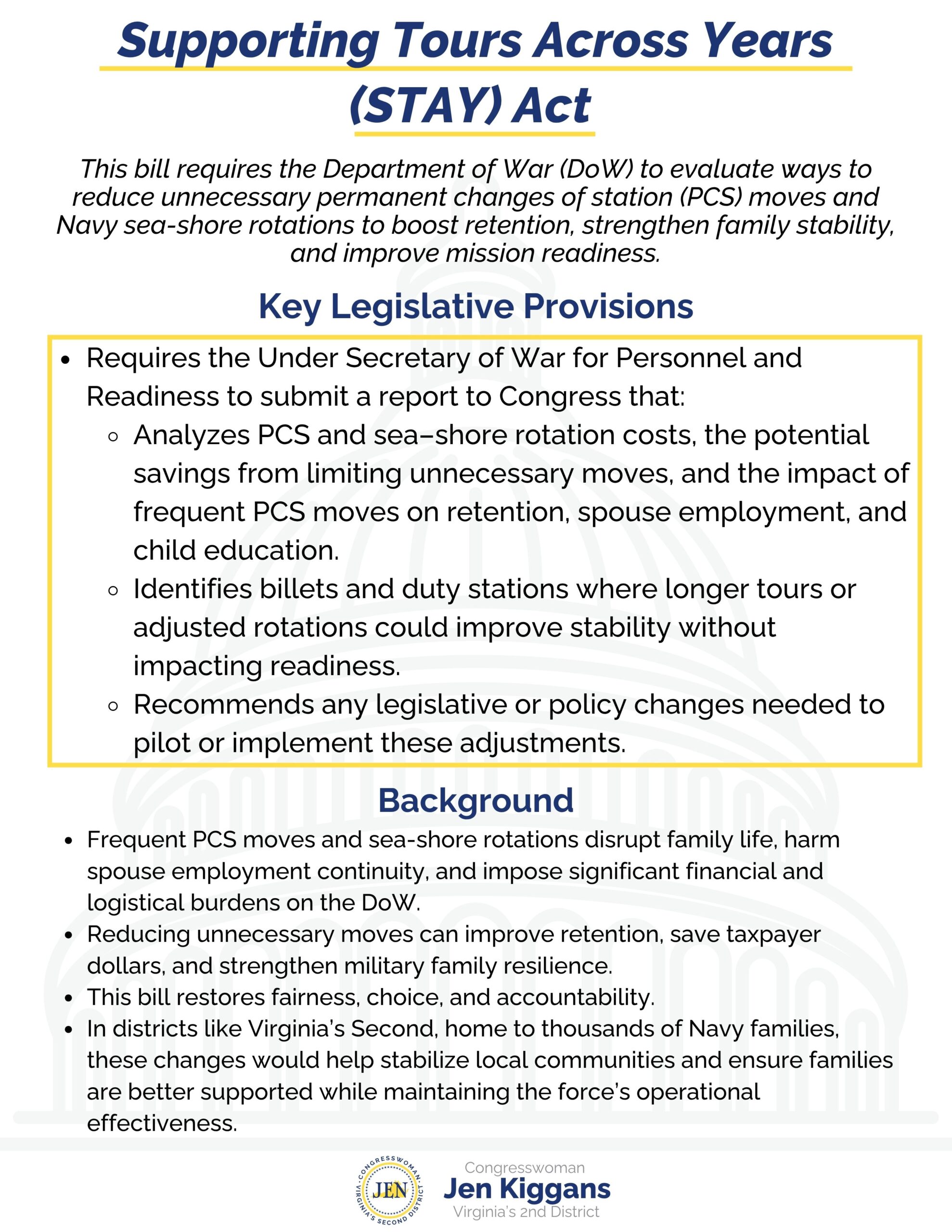
The Supporting Tours Across Years (STAY) Act, introduced by Rep. Jen Kiggans (R-VA) and Rep. Sanford Bishop (D-GA) would require the Department of War to evaluate current PCS frequency, tour lengths, and whether some assignments could be extended to improve family stability without hurting readiness.
What Prompted the Bill
Rep. Kiggan could not be reached for an official comment, but her office shared that recent reporting and direct feedback from service members pushed this issue forward. Families have described growing financial and logistical burdens tied to frequent relocation, while PCS costs for the Department continue to rise.
Her office also noted that the substance of the STAY Act has already been included in the House-passed NDAA. Introducing a standalone bill, they said, helps ensure the issue does not get lost in broader negotiations and keeps attention on military family stability. The bill itself does not change policy but requires a DoD-led evaluation “to determine whether all moves are necessary and whether some billets could support longer tours.”
With ongoing discussions about PCS pressures and rising relocation costs, the timing of the bill reflects a broader push in Congress to reassess whether the current system is delivering the best outcomes for families and the force.

What the STAY Act Would Require DoD to Study
If passed, DoD would conduct a detailed analysis of assignment cycles across all branches. That report must evaluate:
- Which billets could safely support longer tour lengths
- Whether frequent moves are still required in specific communities
- Costs associated with PCS churn
- Impacts on spouse employment
- Effects on children’s education
- Overall implications for readiness
The STAY Act does not assume any outcomes in advance. Rather than identifying specific jobs for extended tours, the bill leaves those determinations to the services, which are best positioned to assess manning needs, training pipelines, and where longer assignments might be feasible.
Could Longer Tours Improve Life for Military Families?
Military spouse unemployment consistently rates between 20 and 25 percent, driven in large part by job disruptions caused by PCS moves. Studies from the Defense Department and outside organizations such as the Military Family Advisory Network have long shown that spouse income is one of the biggest predictors of financial stability in the household.
Longer tours have the potential to reduce career interruptions for military spouses, improve income stability, and lessen the financial strain that comes with frequent relocations. Even modest reductions in PCS frequency can make a measurable difference for families who move every few years.

What About Readiness or Career Progression Concerns?
Questions often arise about how extending tours might impact promotion timelines, training pipelines, and unit readiness. Kiggans’ office stressed the intent of the bill is not to force policy changes. Instead, it’s designed to give Congress accurate information on whether the current PCS system is working as intended.
Each service operates complex manning and training systems, and any potential challenges or opportunities would be identified in the required report. “Future policy discussions should be guided by DoD’s expertise and evidence, rather than assumptions,” her office shared.
When Families Might See Changes
If enacted, DoD would deliver its report no later than March 1, 2026. That review would be the first step in a long-term process. Any real changes to PCS cycles would occur only if each service determines that adjustments are feasible and beneficial. Families should expect this effort to inform discussion, not rapidly overhaul assignment policy.
Why This Matters Now
The Pentagon continues to face retention pressures across the services. Quality-of-life issues, including PCS stress, regularly appear among the top reasons service members consider leaving early. A more stable assignment system could:
- Lower family financial strain
- Improve spouse employment continuity
- Reduce academic disruptions for children
- Strengthen ties between families and local communities
Those outcomes directly affect readiness and retention issues central to the Defense Department’s strategy for the coming years.
What to Watch Next
- The bill now awaits movement in the House.
- If passed, DoD will begin its formal review ahead of the March 2026 deadline.
- Advocacy groups focused on spouse employment and military child education are expected to weigh in as the report develops.
- Families may be asked for input through future surveys or installation feedback channels.
Sources:
- Department of Defense PCS and spouse employment data
- Military Family Advisory Network (MFAN) surveys
- Congressional bill text and summary
- Rep. Jen Kiggans’ office
- House-passed NDAA provisions related to tour length review