By Nigel Evans
Some people love the look and "out there" design of an old sports car but feel that regulators have been too draconian in "banning" things like pop-up headlights. They may feel particularly aggrieved because those regulators don’t seem to be doing anything about the size of pickups and SUVs. Those blunt-edged big guys must represent more of a threat to pedestrians than any pop-up headlight-equipped car and the disparity seems particularly unfair if safeguarding pedestrians is the name of the game.
However, this story is not quite so straightforward, as regulators did not simply ban headlights in the US under one specific pedestrian safety rule. The reality is that those headlights gradually disappeared for a variety of reasons. And lawmakers have only started to focus on pick-ups and SUVs in recent times, looking specifically at hood heights and front-end shapes.
Pop-Up Headlights Disappeared While Tall Trucks Stayed Legal

Pop-up headlights gradually disappeared because the engineering case for them collapsed. Steady improvements in fixed headlamp technology made retractable units very hard to justify at the accounting stage, especially as lighting regulations became more complex. Meanwhile, giant pickups and SUVs became more dominant across the land, with their hulking presence, flatter front face, and challenging presence. And regulators have been slow to act from a pedestrian protection point of view, never really turning their attention to the shape of these vehicles.
Still, the reality is that pop-up headlights existed mainly due to old US lighting rules. The NHTSA rule FMVSS 108 insisted that headlamps should be located between 22 and 54 inches above the road surface, and so pop-up headlights became an elegant workaround for low-slung sports car designers. This type of design would allow cars like the C5 Corvette to keep its nose sleek with the lights tucked away, with those lamps only rising into a legal position when they were switched on.
| 2004 Chevrolet Corvette C5 Coupe Specifications | |
|---|---|
| Engine | 5.7-liter LS1 V8 |
| Transmission | Six-speed manual or four-speed automatic |
| Drivetrain | Rear-wheel drive |
| Power | 350 hp |
| Torque | 375 lb.-ft |
As time went by, fixed headlamp technology became simpler and manufacturers were able to create smaller, brighter, and better-packaged solutions. Those technological developments tended to remove the rationale for movable units altogether. And while this was going on, regulators never enforced any rules to say that a pickup's hood could not be too upright or too high. Those vehicles continued to rule the roads with fewer restrictions, while pop-ups gradually vanished from the automotive scene for a variety of reasons.
Pop-Ups Faded Because They Weren't Worth The Engineering Pain

By the late 1990s and early 2000s, retractable headlamps were more bother than they were worth to most manufacturers. Yes, they could certainly deliver drama from a design perspective and even define the whole identity of certain vehicles, but the flip side was that they were mechanically complex, heavy, and expensive to package. Increasingly, they didn't fit in with the approach to modern front-end engineering and were also less compatible with directional lighting.
Mazda replaced “heavy” pop-ups in its second-generation MX-5, the NB, realizing that this approach was no longer the smart answer to the problem it once solved. Outside the United States, specific rules started to come into play, which also pushed pop-up headlamps toward the exit. In Europe in particular, pedestrian protection rules were quite critical of components that could change their shape or position, and pop-up headlights came under the spotlight.
Countries in Europe then introduced pedestrian protection regulations in 2003, with new passenger car types having to comply from 2005 onward. So, when manufacturers continued to consider the strategic case for pop-up headlamps alongside these new rules and directives, moving lamp hardware became even less attractive.
Modern Pickups And SUVs Are A Much Bigger Problem

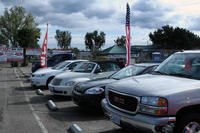
There seems little doubt that modern tall-fronted trucks and SUVs could pose a much bigger problem for the average pedestrian than a protruding light structure. In fact, IIHS research from 2023 found that vehicles with hood leading edges higher than 40 in and a grille sloped at 65 degrees were about 45% more likely to cause pedestrian fatalities than vehicles with hood heights lower than 30 in, or those with sloped front ends. Medium-height vehicles with blunt front ends were also 26% more likely to kill a pedestrian, clearly underlining the scale of the problem.
Apparently, it's not the actual mass or size of the vehicle that's the issue, but rather the way a tall, upright front end can strike the human body higher and send more force into the torso or head region. Lower-slung vehicles might simply impact the person in the leg region and cause that unfortunate individual to wrap onto the hood.
Sources: Ferrari, Hyundai, IIHS, NHTSA.
Read the full article on CarBuzz
This article originally appeared on CarBuzz and is republished here with permission.