American forces are widening air and naval strikes across Iran.
Defense Secretary Pete Hegseth and Adm. Brad Cooper, commander of U.S. Central Command, said Thursday that U.S. bomber forces have struck nearly 200 targets across Iran in the past three days while Iranian missile and drone attacks have dropped sharply since the operation began.
“In just the last 72 hours, America’s bomber force has struck nearly 200 targets deep inside of Iran, including around Tehran,” Cooper said during a briefing at U.S. Central Command Headquarters in Tampa, Fla.
The strikes are part of Operation Epic Fury, a U.S. military campaign launched Feb. 28 aimed at degrading Iran’s ability to threaten American forces and allies in the region.
Those attacks included B-2 bombers dropping dozens of 2,000-pound penetrator bombs against deeply buried ballistic missile launchers as the campaign widened. Earlier in the conflict, U.S. leaders said strikes targeted Iran’s nuclear and ballistic missile infrastructure as part of a broader effort to prevent Tehran from expanding its strategic weapons programs.
Iran’s Missile Barrage Slows as Strikes Intensify
Officials at U.S. Central Command said the campaign is already eroding Iran’s ability to strike back.
Ballistic missile launches from Iran have dropped 90% since the operation began, while Iranian drone attacks have fallen 83%, according to Cooper.

The sharp decline follows days of U.S. airstrikes hitting missile launchers, air defense systems and other military sites tied to Iran’s missile and drone forces.
Our air dominance allows us to hit Iran’s center of gravity with overwhelming power.
American and allied aircraft have continued flying strike missions as the campaign enters its sixth day. More than 50,000 U.S. service members are now involved in the mission.
Iran and allied militia groups have fired missiles at Israel, Arab states and U.S. positions across the region since the conflict expanded, raising concerns about a broader regional war involving multiple countries and armed factions.
Cooper said the operation is designed to eliminate Iran’s ability to threaten Americans while sharply reducing Tehran’s missile and drone attacks.
US Forces Hammer Iranian Navy
U.S. forces have also intensified strikes against Iranian naval assets as part of the widening campaign against Tehran’s military infrastructure.
President Donald Trump said earlier in the operation that American forces had destroyed 24 Iranian ships during the opening phase of the conflict.
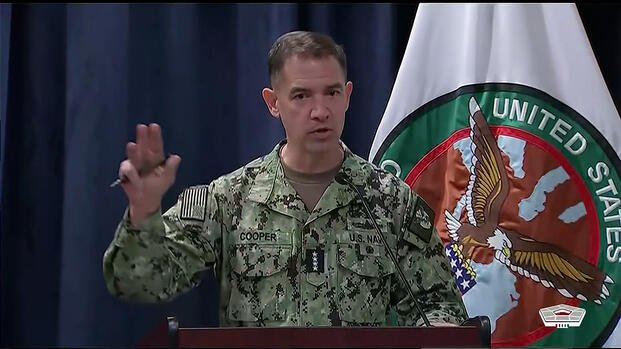
Cooper said that number has since climbed to up over 30 ships as U.S. and allied aircraft and naval forces continue hammering Iranian maritime targets.
“In just the last few hours, we hit an Iranian drone carrier ship roughly the size of a World War II aircraft carrier,” Cooper said. “As we speak, it’s on fire.”
The naval fight has intensified across the region, with U.S. forces striking Iranian warships and maritime assets while Tehran has threatened to target military and economic infrastructure across the Middle East in retaliation.
Officials said the strikes are targeting Iranian naval vessels and the maritime capabilities supporting Tehran’s military operations. U.S. commanders said crippling Iran’s naval capabilities is a key objective.
US Moves to Destroy Iran’s Missile Arsenal
Officials said the next phase of the campaign will focus on dismantling Iran’s ability to rebuild its missile arsenal by targeting the country’s ballistic missile industrial base.
Cooper said the mission has expanded beyond destroying launch sites and stockpiles already deployed across the country.
“The president gave us another task to level Iran’s ballistic missile industrial base,” Cooper said. “So, we’re not just hitting what they have. We’re destroying their ability to rebuild.”
Analysts have warned that while Iran’s military is outmatched by the United States, the country retains the ability to inflict significant damage through missiles, drones and proxy forces operating across the region.
Pentagon Refutes Iranian Claims
Hegseth also pushed back on several claims made by Iranian officials about the conflict, saying Tehran is spreading false reports about battlefield successes and American casualties.
One widely circulated claim that an American F-15 fighter jet had been shot down was incorrect, he said, dismissing it as part of an Iranian propaganda campaign.
As you can imagine, Iran is doing everything it can to peddle lies, deception and inflation of numbers. - Hegseth
Iranian officials have also claimed hundreds of American troops have been killed, a figure U.S. officials say is completely untrue.
“These are lies,” Hegseth said.
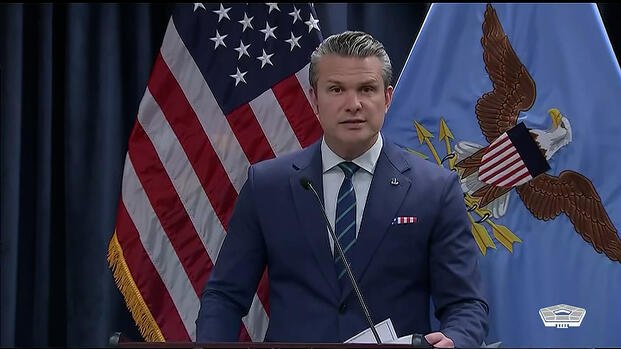
Pentagon officials said such claims are common during conflicts and are often aimed at shaping domestic opinion inside Iran, where authorities have restricted internet access and tightly controlled information about the war.
Pentagon Vows to Keep Striking Iran
Pentagon officials indicated the campaign against Iran could continue for some time as U.S. forces expand attacks across the country.
Hegseth said U.S. forces have the munitions and capabilities needed to sustain the operation if necessary.
“There’s no shortage of munitions,” Hegseth said. “Our stockpiles of defensive and offensive weapons allow us to sustain this campaign as long as we need to.”
U.S. officials said the campaign will continue targeting missile, naval and military infrastructure tied to Iran’s capabilities.
Cooper said the U.S. military has already demonstrated the scale and precision of its capabilities during the opening phase of the operation.
"What it takes to do this with the precision that we do is world class,” Cooper said. “No one else can do it.”