DOD IG: Neglect of Military Working Dogs Caused Disease, Mold, Deaths
Military working dog Indira participates in a training event at Marine Corps Base Quantico, Va., July 17, 2024. The training tested the Marines’ physical endurance while acclimating the dogs to the sound of gunshots. (Marine Corps Lance Cpl. Kayla LeClaire)
An alarming Pentagon report documenting below-average treatment of military service dogs has led multiple animal wellness groups to call for urgently enacted changes.
A 42-page Department of Defense Inspector General’s (DOD IG) report published Feb. 17 evaluated the federal government’s management of canine warfare, finding that widespread neglect of military working dogs (MWDs) on U.S. bases has resulted in disease outbreaks, exposure to toxic mold, and multiple deaths linked to inadequate housing.
Some findings reported by the DOD IG include the following:
Open-air facilities lacking shelter from cold, heat and rain.
Very high rates of disease, including up to 47% of dogs sick at one location, “likely because of the poor kennel conditions.”
No protection from hazardous exposure to black mold and other “toxic debris.”
Four pneumonia dog deaths linked to inadequate housing conditions.
Contagious disease outbreaks, which are further compounded by a lack of quarantine and isolation areas
Standing waste and contaminated water.
“This is a DOD-level IG, so that's about as bad as it gets,” Col. Tom Pool (ret.), a veterinarian and former chief of the U.S. Army Veterinary Command, told Military.com. “I've seen general officers fired for single findings on DOD IGs. These are bad.”
'Troubling' Findings
The report, titled “Evaluation of the DoD Military Working Dog Program’s Management of Canine Welfare,” sought to determine whether the U.S. Air Force—the DoD executive agent for the MWD program—and other oversight agencies “are providing DoD MWDs with a high standard of canine welfare.”
Groups including Animal Wellness Action, the Center for a Humane Economy, and Animal Wellness Foundation are calling for immediate resolutions to resolve what they described as institutional failures contributing to severe neglect and even deaths of MWDs on military bases nationwide.
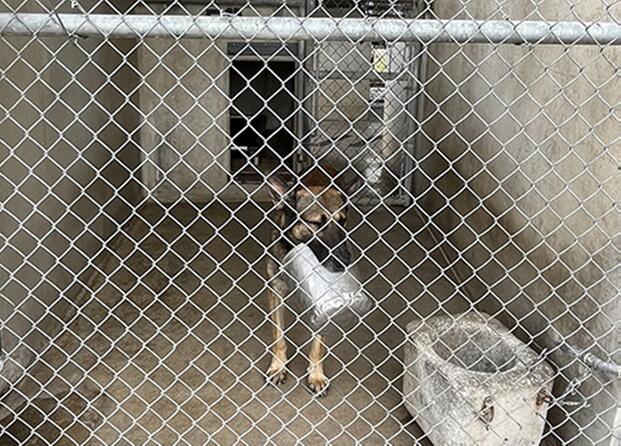
A DOD MWD displays stress behaviors with its water bucket. (DOD IG report)
It's very troubling, certainly. I'm angry that the dogs were not being better cared for. I don't think it was this bad when I was in. Things have slipped. - Tom Pool to Military.com
“I understand the challenges these people are under. You have budgets and all of these things that you have to meet and everyone is pressuring you for their particular thing in the budget that they need. But somehow along the way, the military work dogs, their budgets were allowed to slip pretty badly," Pool added.
There’s about 2,000 MWDs across the Army, Navy, Air Force, Marines, Space Command and Coast Guard, according to Pool, with roughly 1,500-1,600 of them actually deployed and working. The other 500 are either in training status, awaiting deployment or on medical hold.
The approximately 230 dogs at Lackland that “were treated the worst” were awaiting deployment, on medical hold, or had failed their training and were awaiting disposition of some kind.
Pool, a senior veterinarian with Animal Wellness Action the past four years, said that to the Pentagon’s credit, bigger budgets were devoted towards military dogs in the 2025 fiscal year budget and before this report was published.
“So, they were already on it before this report came out—I think, I want to believe that,” he said.
The evaluation was conducted from April 2024 through September 2025, in accordance with the “Quality Standards for Inspection and Evaluation,” published in December 2020 by the Council of Inspectors General on Integrity and Efficiency.
How and When Investigation Unfolded
Officials narrowed the evaluation to MWDs in non-training status as those being trained generally receive sufficient physical activity, social and cognitive enrichment.
They based findings on information gleaned from the Air Force’s 341st Training Readiness Squadron (341 TRS), located at Joint Base San Antonio-Lackland, Texas, which is responsible for the acquisition, initial training and sustainment of DoD MWDs and handlers for all U.S. military branches and select allied nations.
Air Force Senior Airman Jayden Artherton, a military working dog handler, directs Denisz during a high-value individual transfer exercise at Whiteman Air Force Base, Mo., Aug. 8, 2025. (Air Force Staff Sgt. Joshua Hastings)
That acquisition cycle involves carefully selecting canines with the desired temperament, drive and physical attributes. After being selected, canines undergo rigorous training focused on obedience, detection and patrol skills.
When their initial training is completed, DoD MWD teams are deployed to military installations and operational theaters worldwide where they provide vital support to combat operations, security missions, and various law enforcement activities.
For the purpose of this analysis, DOD officials tailored focus areas to the following: healthcare, kenneling, mental and physical wellness, training and safety, and ethical and humane treatment for DOD MWDs retired from, or not selected for, active service.
They determined that 341 TRS did not provide MWDs with 5 hours per day of physical activity, social and cognitive enrichment as required. Rather, the canines were walked for approximately 10 minutes, four times per week or less.
During an August 2024 site visit, 230 MWDs were in non-training status. Due to what was described as a limited number of caretakers to manage MWD volume, canines there experienced higher rates of diseases, injuries and behavioral problems than at other DoD MWD operational units.
“I'm going to suspect that things were this bad,” Pool said. “I'm going to suspect that because the veterinarians do reports on all of these facilities. And so if the veterinarians are saying they're great, you know, lovely, then the veterinarians are at fault, too.
“But I hope that's not the case. … Some of these things sound so bad, reading that report, that I just can't imagine that the veterinarian was blessing that stuff.”
A military working dog and handler, alongside Naval Criminal Investigative Service (NCIS) agents and Commander, Fleet Activities Yokosuka (CFAY)Security personnel, conduct a routine K-9 sweep at postal distribution facility. (U.S. Navy photo by Sheryl Sullivan)
He also called the canines’ lack of protection from the heat and cold “unconscionable.”
Pool worked largely with German Shepherds, who are calmer than other canines, earlier in his career. Other popular MWD breeds like the Belgian Malinois and Dutch Shepherds require more attention.
Long Love of Animals and the Military
Col. Pool’s experience in both the military and as a vet go hand in hand.
He graduated from Oklahoma State University and had an Army ROTC obligation to pay back four years. Intending to get in and out, he fell in love with the service and ended up staying 26 years.
The Army continued to help him get educated, sending Pool to graduate school at Harvard where he received a degree in public health and tropical medicine. He served a three-year stint as commander of U.S. Army Veteran Command.
Army Sgt. Brianna Plush teaches military working dog Edzsi patience at U.S. Army Garrison Bavaria, Germany, Jan. 8, 2026. The training helps ensure reliable performance and discipline during operational missions. (Army Sgt. 1st Class Tanisha Karn)
Pool and his wife, also a veterinarian from Japan, wanted to stay mostly in Guam where Pool was stationed. The couple and their children spent about a third of their time in Japan.
That’s where Pool met Wayne Pacelle, president of Animal Wellness Action and the Center for a Humane Economy.
“It is deeply distressing that these working dogs help to keep our country safe, yet they are neglected and treated like machines,” Pacelle said in remarks provided to Military.com. “The DOD needs a reboot when it comes to the proper and humane treatment of its canine soldiers.
“To fall short of first-rate care is a betrayal of our responsibilities to animals who give their lives for America.”
Easy Solutions
Pool said all these noted issues stem from facilities essentially being allowed to really go bad, due to factors including insufficient funding and “grossly insufficient manpower to get the job done.”
It still remains unknown whether veterinarians OK’d such conditions or neglected the safety of these MWDs.
Pool said that beyond funding mechanisms, solutions to mitigate these issues could be implemented with adding more caretakers. Reducing the number of dogs is a swift solution but, according to him, not “a real smart fix.”
“These are jobs that people enjoy and there's a lot of people that kind of want to do that sort of thing,” he said. “I don't think it would be hard to quickly acquire a lot of caretakers to quickly solve that part of the problem.”
Nick Mordowanec is a deputy editor for Military.com, reporting on general news and features across the U.S. Armed Forces in addition to investigative stories.





")



