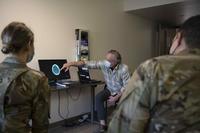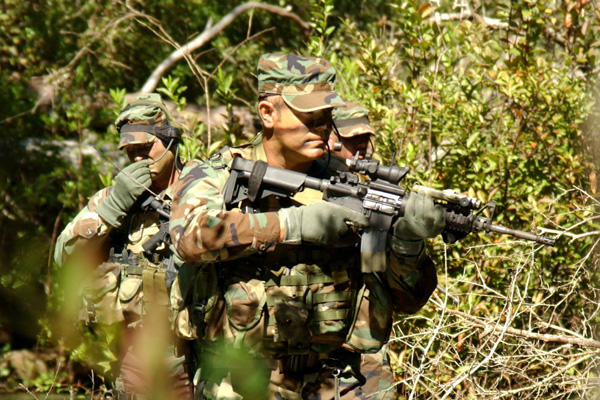
When planning a mission, it's crucial to have accurate information on as many variables as possible, and the weather is one of the most important. Special Operations Weathermen work to accurately assess meteorological conditions in hostile and denied territory. They gather data on oceans, rivers, snow, and terrain, advise during mission planning, and tailor meteorological reports for specific missions to support global special operations. Special Operations Weathermen also train other Special Operations groups in assessing the weather and communicating that information. They utilize ground and unmanned aerial sensors to collect data, and deploy by land, see, or air as the mission necessitates.
History
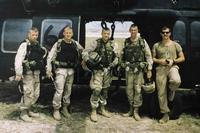
The Special Operations Weathermen formed during World War II and operated in Japan and Asia at large as well as European operations at Normandy Beach, France, the Netherlands, and Yugoslavia. They were brought back in 1966 to train local fighters in Thailand to properly observe the weather. They frequented the Ho Chi Minh trail during the Vietnam conflict to support aerial operations. Aside from frequent small operations afterwards, they have since participated in Operation Iraqi Freedom and Operation Enduring Freedom. They were excluded from Operation Eagle Claw, and the Holloway Commission cite insufficient weather intelligence as a key factor for mission failure.
Training
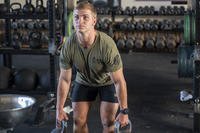
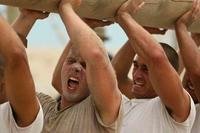
Training for Special Operations Weathermen takes place in a 61-week course. Selection takes two weeks and includes physical training and general instruction on the history and fundamentals of the unit. Thirty weeks are spent on learning the breadth of knowledge required to assess terrain and weather. Training during this period includes further physical and mental challenges as well as fostering a team mentality. The remaining weeks are spent in basic survival schools, operating in water, thirteen weeks of qualification, and twelve to fifteen months of training to prepare new Weathermen for deployment.