Obtaining a VA loan mortgage, unsurprisingly, involves a lot of paperwork and procedures.
Is it worth it? Absolutely.
Benefits like zero down and no personal mortgage insurance (PMI) are worth the slight increase in paperwork over a traditional mortgage.
So what paperwork do you need? It starts with a Certificate of Eligibility (COE) and your Service Record (DD-214). After that, the process is very similar to a traditional mortgage: pull your credit reports, shop around for pre-approvals and favorable rates, make offers and sign a contract, have appraisals done, and wrap up even more paperwork before getting the keys and moving into your new home.
Below, we've outlined the most common forms and steps required to get from COE to moving day:
Certificate of Eligibility Request
In order to receive your Certificate of Eligibility for VA loan benefits, you will need to submit your Request for a Certificate of Eligibility (VA Form 26-1880), as well as your Service Record (DD-214).
VA Loan Certificate of Eligibility Request
This form must be completed and sent in with a service record (DD-214) if you want to obtain a Certificate of Eligibility.
VA Form 26-1880 (Request for Eligibility Certificate)
Once you have filled out your form, submit it and your Service Record (Form DD-214) to a Regional Eligibility Center.
Service Record Request
The DD Form 214 serves as your proof of military service. If you do not have your DD Form 214, you can request it from the National Personnel Records Center, using a Standard Form 180 (Request Pertaining to Military Records).
Standard Form 180 (Request for Service Record)
After you fill out your Standard Form 180 send it to:
National Personnel Records Center (NPRC)
Military Personnel Records
9700 Page Avenue
St. Louis, MO 63132-5100
Website: https://www.archives.gov/
The NPRC will send you your service record (DD Form 214) after processing your Standard Form 180.
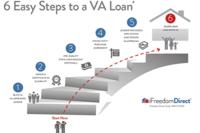
Now that you've determined that you are eligible, you can begin the loan application process. This process involves six important steps: finding a VA-approved lender, pre-qualifying for a loan, selecting your home, drawing up the purchase contract, getting the property appraised by the VA, and finalizing the loan.
To obtain a VA loan, it is important to note that the law requires that:
- The applicant must be an eligible veteran who has available entitlement.
- The loan must be for an eligible purpose.
- The veteran must occupy or intend to occupy the property as a home within a reasonable period of time after closing the loan.
- The veteran must be a satisfactory credit risk.
- The income of the veteran and spouse, if any, must be shown to be stable and sufficient to meet the mortgage payments, cover the costs of owning a home, take care of other obligations and expenses, and have enough left over for family support.
An experienced mortgage lender will be able to discuss specific income and other qualifying requirements.
Finding a VA Approved Lender
Before you begin the application process, it is a good idea to get a copy of your credit report. This can be obtained from one of the three major credit bureaus: Experian, Equifax, and TransUnion. While the individual credit bureaus will likely charge to pull your report, you can obtain your credit report from each of the three bureaus for free, once per year, through the FTC's Annual Credit Report program.
Once you've gotten your credit report, the next step is to find a VA approved lender. A lender can point out any credit problems you might have and provide you with a loan estimate. Shop around. Compare different lenders' closing costs (over and above the price of the property) incurred by buyers and sellers in transferring ownership of a property (also called settlement costs) and other fees.
Military.com makes it easy to find VA approved lenders - just use our Quick Form and be matched with up to five lenders, where you can get pre-qualifications and compare rates.
Pre-Qualifying for Your Loan
Pre-qualifying for a loan is the best way to determine how much borrowing power you have. Pre-qualifying involves letting your lender know what your income and assets are. Based on that information, you can find out if you qualify for a given loan. Note that pre-qualifying only gives an estimate of the amount of mortgage payment you can afford, based on the information you provide. While pre-qualifying is not a requirement, it is highly recommended. Without pre-qualifying first, you may find yourself looking at houses that you wouldn't necessarily be able to afford. Sellers are also far more likely to pick an offer from a pre-qualified buyer than one without a pre-qualification.
Once you pre-qualify, you'll have a strong idea of how much income you'll need to qualify. You'll also know what price range of houses you can manage, which is important for the next step.
Selecting Your Home
If you've pre-qualified for your VA Home Loan, you will have a good idea of which houses you'll be able to afford. You can now begin the process of selecting your new home. Finding a home can be accomplished through several avenues:
- Online: There are many web pages dedicated to listing homes for sale. These pages are often useful for finding homes that are out of your travel range, and often include numerous pictures and detailed information.
- Using a real-estate agent: Many people use real estate agents to navigate through the paperwork involved in buying a new home. The best source for an agent is through friends or asking around the nearest base. Otherwise, check reviews online through Google or Yelp and meet with a couple of agents until you find one you are comfortable with. This person will be your agent for negotiating the deal, arranging appraisals, and your go-to if things go wrong (such as a sale that falls through), so choose wisely.
- Newspapers and other guides: Classified ads, agency ads, and real estate guides are a tried-and-true way to find listings for houses on the market.
Making an Offer and Drawing up the Purchase Contract
Also referred to as a "sales agreement" or "purchase agreement" contract, this document represents the finalized terms and conditions upon which the transfer of real estate will take place. A purchase contract is essentially an agreement between the buyer and seller to purchase an agreed upon property on agreed upon terms, whatever they may be. The Purchase Contract will among other things address: restrictions and easements, liens on the property, inspections, prior leases, disclosures, preparing of documents for closing, and maintenance of the property up to closing.
In some states, you'll submit a written offer before inspecting and appraising the property, and before signing a full purchase contract. Discuss the process with your real estate agent, as it varies greatly by state and locality.
VA Appraisal
Because the loan amount may not exceed VA's estimate of the value of the property, in order to finalize the loan, you must request an appraisal by the Veterans Administration. Although anyone (buyer, seller, real estate personnel or lender) can request a VA appraisal, it normally comes from the lender via the Internet using TAS (The Appraisal System).
It is important to recognize that while the VA appraisal estimates the value of the property, it is not an inspection and does not guarantee that the house is free of defects. Homebuyers should carefully inspect the property themselves, or hire a reputable inspection firm to help. VA guarantees the loan, not the condition of the property.
Finalizing the Loan
If the established value is acceptable to all parties and the lender determines that you qualify on the basis of credit and income, the loan may be approved. Most lenders are authorized to make this decision.
You (and your spouse) attend the loan closing and sign the note, mortgage and other related papers. The lender or closing attorney will explain the loan terms and requirements as well as where and how to make the monthly payments. When the loan is reported to the VA, the Certificate of Eligibility is annotated to reflect the use of entitlement and returned to the applicant. The loan closing procedure may vary in some states. Closing costs can be substantial, even with a VA loan, so get the details from your realtor and lender before closing and avoid unpleasant surprises.
Find a VA Loan
If you're ready to move forward, or just want more information, the first step is to get no-obligation rate quotes.