
Military Bookshelf: War & Warriors, II

Military.com - Tom Miller

The Brenner Assignment: The Untold Story of the Most Daring Spy Mission of World War II,
by Patrick K. O'Donnell.  Da Capo Press, $25 (288p) ISBN 978-0-306-81577-5

O'Donnell, the author of several military-themed books including the excellent We Were One about the Battle of Fallujah, tackles a little-known World War II spy mission in his latest popular history. 

In August 1944, Capt. Stephen Hall, an OSS—Office of Strategic Services, the World War II forerunner of the CIA—operative, jumped behind German lines into northern Italy.  Hall's mission was to link up with local partisans and shut down the Brenner Pass that connects Austria and Italy and was the Germans' supply and communications lifeline through the Alps. 

Hall's task was complicated by several factors: the local Gestapo's tireless pursuit of the partisans; the internecine struggles among the various partisan factions; and the rugged terrain.  It didn't help that Hall's drop zone was eighty arduous miles south of the Brenner Pass. 

As Hall trekked north, the OSS dispatched Capt. Howard Chappell and a three-man OSS team to take him a radio operator.  Chappell's team was hounded by the SS almost from the beginning and only barely escaped captivity. 

Meanwhile, Hall—suffering from depression and a severe case of frostbite after six months behind enemy lines—was captured, tortured, and murdered by the SS.  

Hall's ambitious mission failed, but his stranger-than-fiction odyssey—including a love affair with a beautiful countess and double-agent—makes for a compelling tale.  The parallel story of Chappell's race to find Hall, if less tragic, is equally compelling. 

Beginning with an inherently engaging tale of wartime derring-do, the author adds  extensive research—from the OSS files at the National Archives to interviews with eyewitnesses including Italian partisans and the 90-year-old Chappell—and sprightly prose.  The result is a first-rate spy tale.  
**************************************************************

Baghdad at Sunrise: A Brigade Commander's War in Iraq,
by Peter Mansoor.
Yale University Press, $28 (432p) ISBN 978-0-300-14069-9

Before he retired to teach military history at Ohio State University, Prof. Mansoor was Colonel Mansoor: a career Army officer whose credentials included a Ph.D.  Besides a stint teaching at West Point, he also was the founding director of the U.S. Army/Marine Corps Counterinsurgency Center. 

From 2003-04, however, Col. Mansoor commanded the 1st Brigade Combat Team, 1st Armored Division in Iraq.  This excellent memoir is based largely on that experience. 

Mansoor and his Ready First Combat Team arrived in Baghdad shortly after Saddam's fall expecting "a difficult peacekeeping mission."  What they faced instead was a growing insurgency that neither the military nor the Coalition Provisional Authority (CPA)—the U.S. agency headed by Paul Bremer that governed Iraq in 2003-4—was prepared for. 

As violence increased, Mansoor had to devote more and more time and effort to kinetic operations—patrols, raids, etc.—and less to stability operations and nation building.  Even so, security deteriorated. 

The great strength of Mansoor's detailed account of his year in Iraq is his careful critique of what went wrong.   The list is long and instructive: the Army ignored the lessons of Vietnam and was unprepared to fight a counterinsurgency; planners in D.C. proved too optimistic about post-invasion stability and put too few boots on the ground; the decision to demobilize the Iraqi Army swelled the ranks of disaffected Sunnis; and the CPA's "top-down, centralized approach to governing alienated many Iraqis"—including influential tribal leaders. 

Mansoor has high praise for the Army's junior leaders who learned on the job how to conduct counterinsurgency warfare.  He saves his harshest criticism for Bremer and the bureaucrats in the CPA who kept doing the same things even after they had failed. 

With an eye to the future, Mansoor offers some lessons learned for the Army and the nation.  Expect more asymmetrical wars in the coming decades, he warns.  Our enemies have embraced asymmetrical tactics to counter/negate our overwhelming advantage at conventional war making.   We also must adapt.  That means changes in the organization, training, and culture of the Army.  The Army, for example, needs more Civil Affairs specialists, Military Police, and Military Intelligence operators and fewer artillerymen.  Mansoor is especially critical of "the lack of HUMINT-trained counter-intelligence operators" since HUMINT [human intelligence] is "the coin of the realm in counterinsurgency combat operations."

As for the politicians and the American people, Mansoor warns that counterinsurgencies are "labor intensive and long-term affairs," and that we'll surely lose "by quitting the field prematurely."

By combining a scholar's perspective and a military commander's boots-on-the-ground experience, Mansoor renders an account of the first year of the Iraqi insurgency that is at once compelling and instructive.     
*****************************************************************

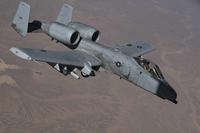
Paperback Tip: For another revealing and instructive account of the American military at war, check out the newly-released paperback edition of Robert Kaplan's Hog Pilots, Blue Water Grunts: The American Military in the Air, at Sea, and on the Ground (Vintage, $15.95).  Kaplan, a national correspondent for The Atlantic Monthly and an acclaimed travel writer (The Ends of the Earth), began embedding with American troops around the globe after 9/11 in order to tell their story in the larger context of U.S. diplomatic and military policy.  The first fruit of his research, Imperial Grunts, was published in 2005.  In this excellent globe-trotting sequel, Kaplan continues to chronicle the efforts of a cross-section of warriors engaged in the many tasks of "imperial maintenance": fighting terrorists, providing humanitarian relief, protecting sea lanes, and training indigenous troops.  Whether they are piloting a Hog (the Air Forces' A-10 Warthog), cramped inside a nuclear sub, or driving a Stryker combat vehicle across the Iraqi desert, Kaplan is impressed by their practical intelligence and old-fashioned notions of service and patriotism.  He quotes Ensign Zephyr Riendeau of the USS Benford, a destroyer plying the strategic Strait of Malacca in Southeast Asia: "'I could have a well-paying job with a company like DuPont, and be home every night.  But life is supposed to have meaning.'"  He hears similar comments everywhere he goes.  In an age when critics—foreign and domestic—are quick to blame the U.S. for every wrong in the world, it's good to have someone of the stature of Kaplan to provide another perspective.  For that alone, this is a brave and important book.  Read it.

----

More book reviews

Shop for books in the Military.com Entertainment Store

Sound Off...What do you think? Join the discussion

Advertisement