















Sgt. Shaft
was hatched in April of 1982 at the home of
the veterans' newspaper, Stars & Stripes,
in Washington, D.C. This moniker combines
the name of its creator, John Fales, Marine
MOS in Vietnam and "Scout Sgt.," with the
military expression when wronged, "Shafted."
Sgt. Shaft's wry sense of humor, empathy for
the underdog, and strong love of country and
fellow veterans closely mirror the nature
of its creator. The weekly advice column resided
in the Stars & Stripes from 1982 to 1985,
and laid dormant until its rebirth in the
Washington Times in 1991. The column,
Fales is proud to say, gives an outlet for
the concerns of active military, veterans,
and their families in a national newspaper.
In addition to writing the column, John Fales
is President of the Blinded American Veterans
Foundation. Fales was born in New York City
and served in the U.S. Marine Corps until
his retirement on disability. His decorations
include Purple Heart, Vietnam Service Medal,
Vietnam Campaign Medal, National Defense Service
Medal, Armed Forces Expeditionary Service
Medal, New York State Conspicuous Service
Medal, Presidential Unit Citation, Combat
Action Ribbon, and South Vietnamese Cross
of Gallantry. Sgt. Shaft has no twin.
|
|
|
|
[Want to sound off on Sgt. Shaft's latest column? Visit
the discussion boards.]
Dear Sgt. Shaft:
In spite of the spelling of my name, I am a male. I served in the U.S. Army as an oral surgeon from June 1955 to June 1957. I was honorably discharged.
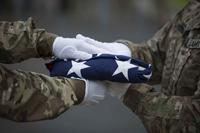
As the years accumulate, one begins to think about a final resting place. I would like to be interred in a national cemetery for veterans. Please inform me as to the paperwork and form numbers that are required for burial in a veterans' cemetery.
I have already attempted to obtain this information from the VA but have run into an endless telephone chase in which one is never connected to a real person.
Many thanks,
Jean O.
Dear Jean:
Veterans Affairs national cemetery directors have the primary responsibility for verifying eligibility for burial in VA national cemeteries. A determination of eligibility is usually made in response to a request for burial in a VA national cemetery. VA regional offices also assist in determining eligibility. The toll-free number for the nearest VA regional office is (800) 827-1000.
On July 17, 1862, Congress enacted legislation that authorized the president to purchase "cemetery grounds" to be used as national cemeteries "for soldiers who shall have died in the service of the country." Fourteen cemeteries were established that year. By 1870, the remains of nearly 300,000 Union dead had been buried in 73 national cemeteries. Most of the cemeteries were located in the Southeast, near the battlefields and campgrounds of the Civil War.
All honorably discharged veterans became eligible for burial in 1873.
In the 1930s, new national cemeteries were established to serve veterans living in major metropolitan areas such as New York, Baltimore, Minneapolis, San Diego, San Francisco and San Antonio. In 1973, Congress transferred 82 national cemeteries from the Department of the Army to the Veterans Administration.
Today, there are more than 135 national cemeteries. VA, through its National Cemetery Administration, directs 119 of them. Two national cemeteries -- Arlington and the United States Soldiers' and Airmen's Home -- are administered by the Department of the Army. Additionally, most post military installations have post cemeteries. The Veterans Millennium Health Care and Benefits Act of 1999 requires the VA to establish additional national cemeteries in areas of the U.S. where the need is greatest.
The American Battle Monuments Commission maintains 24 military cemeteries and several monuments overseas; and the Department of the Interior's National Parks Service maintains 14 cemeteries for veterans; two are open for new burials. Eligibility for burial is similar to VA cemetery eligibility. For more information, see www.cem.va.gov.


|
Shaft Notes
Members of the U.S. Senate Committee on Veterans' Affairs recently approved two nominees and two pieces of legislation.
The committee's unanimous approval moved the nominations of James Phillip Terry and Charles S. "Chick" Ciccolella to the Senate floor for final approval. Mr. Terry was nominated by President Bush to be chairman of the Board of Veterans' Appeals within the Department of Veterans Affairs, and Mr. Ciccolella was nominated by the president to be the assistant secretary of labor for the Veterans' Employment and Training Service.
The final vote on the nominations was approved by the Senate before its August recess.
Committee members also approved two bills that increase the pay rates for disabled veterans and compensation for survivors by an estimated 2.3 percent, and another measure that increases life insurance coverage for military personnel from $250,000 to $400,000. The two bills are expected to be voted on when Congress reconvenes in September.
The increase in life insurance was approved temporarily in May. If Congress does not make the law permanent by Oct. 1, coverage will revert to $250,000.
The Senate's version of the insurance coverage bill differs in two substantive ways from a similar bill approved by the House of Representatives. It would not require notification of "next of kin" when an unmarried service member changes coverage amounts and would not include an "opt out" choice for coverage available under the new traumatic injury protection insurance provisions.
Congress approved that legislation in April, and President Bush signed it into law.
Send letters to Sgt. Shaft, c/o John Fales, PO Box 65900, Washington, D.C. 20035-5900; fax 301/622-3330; call 202/257-5446; or e-mail
sgtshaft@bavf.org.
Email
this page to friends RSS feed
© 2005 Sgt. Shaft. All rights reserved.
|