




























 |
William Sturgiss Lind,
Director of the Center for Cultural Conservatism
at the Free Congress Foundation, is a native
of Cleveland, Ohio, born July 9, 1947. He
graduated magna cum laude, Phi Beta Kappa
from Dartmouth College in 1969 and received
a Master's Degree in History from Princeton
University in 1971. He worked as a legislative
aide for armed services for Senator Robert
Taft, Jr., of Ohio from 1973 through 1976
and held a similar position with Senator Gary
Hart of Colorado from 1977 through 1986. He
joined Free Congress Foundation in 1987.
Mr. Lind is author of the Maneuver Warfare
Handbook (Westview Press, 1985); co-author,
with Gary Hart, of America Can Win: The Case
for Military Reform (Adler & Adler, 1986);
and co-author, with William H. Marshner, of
Cultural Conservatism: Toward a New National
Agenda (Free Congress Foundation, 1987). He
has written extensively for both popular media,
including The Washington Post, The New York
Times, and Harper's, and professional military
journals, including The Marine Corps Gazette,
U.S. Naval Institute Proceedings and Military
Review.
Mr. Lind co-authored the prescient article,
"The Changing Face of War: Into the Fourth
Generation," which was published in The Marine
Corps Gazette in October, 1989 and which first
propounded the concept of "Fourth Generation
War." Mr. Lind and his co-authors predicted
that states would increasingly face threats
not from other states, but from non-state
forces whose primary allegiance was to their
religion, ethnic group or ideology. Following
the events of September 11, 2001, the article
has been credited for its foresight by The
New York Times Magazine and The Atlantic Monthly.
Mr. Lind is co-author with Paul M. Weyrich
of the monograph: "Why Islam is a Threat to
America and The West." He is the author of
"George W. Bush's `War on Terrorism': Faulty
Strategy and Bad Tactics?" Both were published
in 2002 by the Free Congress Foundation.
William
Lind Article Archive
Discussion
Board
Have an opinion on this article? Sound off.
|
|
|
|
|
Your Two Cents
 Submit your stories, news items, or a benefits update -- and help Military.com bring the best, most important stories to your fellow servicemembers, veterans, and family members. Contribute here
|
|
|
July 14, 2005
[Have an opinion on a William Lind column? Sound off in the Discussion
Boards.]
Until very recently, an article titled "Hunt for Cops" might have described a city's effort to recruit more police officers. Sadly, that was not the message of an article in the July 3, 2005 Cleveland Plain Dealer, my hometown newspaper.
Residents of the capital of the poor and chaotic Russian province of Dagestan have come to call it "the hunt for cops" -- more than two years of bold and brutal attacks on police ... 26 police officers have been killed in gun and bomb attacks this year alone...
What is true in Dagestan is also true in Iraq: Iraqi police are being hunted and killed in large numbers by the Iraqi resistance. As one commentator recently put it, it is safer to be a door-to-door Bible salesman in Peshawar than to wear a police uniform in Baghdad. And, it is happening in some American cities. Police officers are being killed -- assassinated, really -- not because they get in the way of some bank robber but because they are symbols of the state. A Fourth Generation fighter, usually a gang member, simply walks up to a police cruiser and shoots a cop.
It is easy to understand why Fourth Generation entities would go hunting for cops. The police are not only the first line of defense in the state's attempt to maintain order (remember that maintaining order was the state's original raison d'etre), they are an irreplaceable line. If the police fail and the military has to be called in, the state has probably lost. Why? Because troops, who are trained for combat, not police work, usually act in ways that alienate the population they are supposed to protect. That in turn further undermines the legitimacy of the state, which is both the origin and the goal of Fourth Generation war. This dynamic is one of the principal reasons why the legitimacy of Iraq's American-installed government remains tenuous at best. It continues to depend on troops, many of them foreign, rather than being able to rely on police to create and maintain order.
It is less easy to see what police should do about Fourth Generation threats, to themselves and to the communities they are supposed to protect. Two approaches do not work. The first is brutality. The Plain Dealer article reports that
The roots of the hunt (for cops) reach back to fall 1998, when Dagestani authorities moved to fight back against growing criminality by forming a special police division to combat kidnapping...
The division was under pressure to show results, and its officers started employing torture regularly to squeeze confessions out of suspects, said an officer in the regional prosecutor's office who spoke on condition of anonymity.
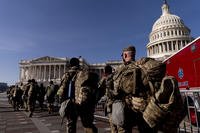
A second approach that does not work is militarizing the police. This is a phenomenon which we already see too often in American police departments, where citizens increasingly face police officers in fatigues, helmets and body armor, armed with automatic weapons. Such units are needed, but they must remain largely invisible to the public. Why? Because their intimidating appearance separates the public from the police, while effective police work demands the closest possible relationship between the police and the public.
This points to what is probably the most effective approach police can use against Fourth Generation elements: community policing. Community policing relies on police officers who always work the same neighborhood, often on foot. They come to know that neighborhood intimately, including many of the people who live there. With the help of the people they protect, they can quickly see any abnormality and move to nip it in the bud. And, just as the cop protects the neighborhood, the neighborhood protects their cop. A close, working relationship between citizens and police faces any Fourth Generation fighter with a very difficult problem.
Cops, most of them anyway, understand this. Several years ago, I gave my standard Fourth Generation of Modern War talk to a police conference in Salt Lake City. Whereas maybe 10% of a military audience gets what I am saying, 90% of the cops got it.
Unfortunately, American government, on all levels, does not get it. The Bush administration has effectively destroyed the best community policing program in the country, the Police Corps. State and local governments are happy to spend money to militarize the police, but they regard community policing, which is labor-intensive, as inefficient. They remain content with the L.A. model, where police isolated in cruisers respond to calls. If the goal is to preserve order, by the time a call comes, it is too late. Order has already been undermined by an incident that community policing might have prevented.
When it comes to Fourth Generation war, an ounce of prevention is worth many pounds of cure.
Email
this page to friends RSS feed
© 2005 William S. Lind. William S. Lind
is Director for the Center for Cultural Conservatism for the Free
Congress Foundation. All opinions expressed in this article are
the author's and do not necessarily reflect those of Military.com.
|