
















Home
Benefits
News
entertainment
shop
finance
careers
education
join military
community


H. Thomas Hayden: Insurgency Is Not Over


About H. Thomas Hayden

H. Thomas Hayden recently concluded over 35 years of service, which included the Agency for International Development, the Marine Corps, defense industry and the Pentagon. His specialties are Intelligence, Counterinsurgency Operations, Counter-terrorism, and Joint Concepts Development and Experimentation. His Marine Corps assignments have included command of two separate battalions; AC/S G-2, 4th MARDIV & AC/S G-2 FMFEurope; Branch Head, HQMC, Special Operations and Low Intensity Conflict (SO/LIC); Special Assistant to the Assistant Secretary of Defense for SO/LIC; and, Senior Program Analysts at HQMC with the Joint Staff and DoD at the Pentagon. Overseas assignments included Vietnam, Japan & Okinawa, Europe, Central America, Saudi Arabia and Kuwait, Somalia, Singapore, Philippines, and Colombia. He has an MBA (Pepperdine) and an MA in International Relations (University of Southern California). He has written two books and is working on a third.

Thomas Hayden Article Archives

Sound Off! - Have an opinion about this article? Visit the discussion forum.


Related Links

Military Opinions Index

Global War on Terror

Unit Pages


Get $1004 a Month!

Your service may have earned you great education benefits. Get up to $1004 per month to pay for your undergraduate, graduate or technical degree.

Find out about military-friendly schools today
.

November 22, 2004

[Have an opinion on this column? Sound off in the discussion forum.]

Contrary to the statements by my esteemed former colleague, Lieutenant General John Sattler, USMC, Commanding General of I Marine Expeditionary Force, the insurgency is not over. Sattler said in Falluja last Friday that they had "broken the back of the insurgency."

One battle does not win a war.

The insurgents fighting the U.S. and Iraqi forces have renewed battle in Monsul, Samarra, Tikrit, and Baghdad. Even mortar attacks in Baghdad. How do you get a mortar into Baghdad?

It's simple, there are diehard, true believer insurgents -- terrorists if you will -- who will never quit, and there are people who are supporting these insurgents. The Ba'athist and the hardcore Islamic radicals will never lay down their guns unless they are killed, run out of ammo or have their money totally cut off.

It seems that it is not clearly understood by many that there is a "three block war" in Iraq. To paraphrase General Charles C. Krulak, USMC, who first coined the phrase, there is a part that is doing Humanitarian Relief, a part that is doing Peacekeeping and a part that is fighting a war.

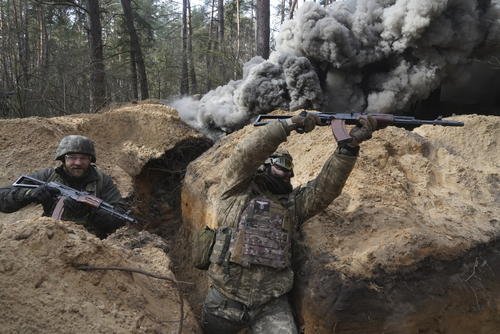
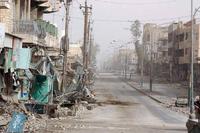
The war in Iraq is both a counterinsurgency and conventional urban warfare. No doubt there were insurgents in Falluja but there seem to be a mixture of Islamic extremists trained in Afghanistan and Republican Guards who were well-trained in earlier combat with the Iranians and the Americans.

There were no hearts and minds to win in the battle for Falluja. To defeat the determined resistance took the best and the toughest Army and Marine Corps units available, and they did a magnificent job -- as was expected.

While most armchair theorists, academics, and many Military Opinion writers think that winning the hearts and minds of the people with MedCAPs and Civic Action are the answer, the people do not give a damn about all the good work if they don't have total security and are free from intimidation. I do believe that the people are the center of gravity in a counterinsurgency, but the insurgency cannot be defeated until the enemy combatants and all their supporters are removed in one way or another.

Many ill-informed pundits are writing or saying on TV that the air strikes and heavy bombardment by artillery and tanks are overkill and making more enemies than necessary. These people do not understand the situation. Heavily fortified or buildup positions, particularly dense urban areas, are not easily taken without overwhelming firepower. You have to use all the firepower you have.

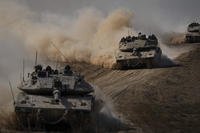
A tank, with infantry in support, can be a counterinsurgency weapon in an urban area, particularly the M1A1 Abrams. The Abrams can be a weapon of terror against the insurgents. The M1A1 is like a Killer Whale, which has evolved with no competition. It is a deadly killer for everything that steps into its path. Eleven feet wide, twenty-six feet long, nine and a half feet tall and seventy tons, it can be heard or felt long before it comes around a corner. Its engine is loud and its weight makes the ground shake. RPGs, mortars and heavy machine guns just bounce off the armor. Any inexperienced infantry, let alone insurgents, must tremble when they see what is about to kill them.


When the battle for Falluja started last week, it was reported that there were 5,000 to 10,000 insurgents within the city. It now seems that there were no more than 1,000 to 2,000. Obviously it is clear that the Ba'athist Party members, Republican Guards, and Jihadist leadership had been long gone before the initiation of the attack and had left the city along with much of their fighters but left behind a rear guard to cover their withdrawal.

The insurgents have studied the American methods of combat and have tried to negate the night vision devices and fight in daylight using ruses and spotters directing snipers. The white flag has become a cover for Islamic fighters to close with unsuspecting Americas. Fortunately America Soldiers and Marines learn quickly also.

The U.S. military leadership and the interim Iraqi government cannot continue the war by fits and starts. The show of force in Falluja has brought out of hiding a lot more insurgents than were know to be in many parts of the country. More troops are needed and the military leadership needs to keep on the offensive.

Critical to all planning is the need to keep Falluja from falling back into the control of the insurgents. After many lessons in Vietnam -- where the enemy returned as soon as the Americans left -- this cannot happen again in Falluja. The elections in January 2005 must go forward and the Sunnis need to understand what they have to lose if they do not participate in the elections. It would seem that they do not understand the consequences of boycotting the elections and continuing the fight.
It is reported that the U.S. Central Command believes the supply of Ba'athis holdouts, Republican Guards and Islamic "holy warriors" will eventually exhaust its numbers and the counterinsurgency will be won.

I do not think that will happen anytime soon.

  Email this page to friends

[Have an opinion on this article? Sound off here.]

© 2004 H. Thomas Hayden. All opinions expressed in this article are the author's and do not necessarily reflect those of Military.com.


Military Opinions Index


Member Center


FREE Newsletter


Military Report


Equipment Guides


Installation Guides


Military History