






















 |
H. Thomas Hayden
recently concluded over 35 years of service,
which included the Agency for International
Development, the Marine Corps, defense industry
and the Pentagon. His specialties are Intelligence,
Counterinsurgency Operations, Counter-terrorism,
and Joint Concepts Development and Experimentation.
His Marine Corps assignments have included
command of two separate battalions; AC/S G-2,
4th MARDIV & AC/S G-2 FMFEurope; Branch Head,
HQMC, Special Operations and Low Intensity
Conflict (SO/LIC); Special Assistant to the
Assistant Secretary of Defense for SO/LIC;
and, Senior Program Analysts at HQMC with
the Joint Staff and DoD at the Pentagon. Overseas
assignments included Vietnam, Japan & Okinawa,
Europe, Central America, Saudi Arabia and
Kuwait, Somalia, Singapore, Philippines, and
Colombia. He has an MBA (Pepperdine) and an
MA in International Relations (University
of Southern California). He has written two
books and is working on a third.
Thomas
Hayden Article Archives
Sound
Off! - Have an opinion about this
article? Visit the discussion forum.
|
|
|
|
November 16, 2004
[Have an opinion on this column? Sound off in the discussion
forum.]
President George Bush will not have much of a honeymoon of rest and recreation following his successful re-election. There is much work to be done. The President’s initial news conference was a great success, but you would never know it from the lukewarm reviews he received in the news media.
There are a number of Defense related challenges facing the President. Here is my list of top ten challenges -- not in any order of priority:
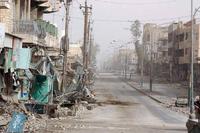
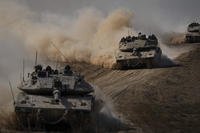
- Rumsfeld’s War. As has been said before, the planning for the Iraqi war and the lack of adequate planning for the post-war left a vacuum that was quickly filled by the remnants of the Saddam Hussein regime, Islamic radicals and Al Qaeda-like foreign fighters. This still challenges our military leaders. The occupation mentality has been too slow to give way to the counterinsurgency. Falluja is not counterinsurgency -- conventional urban warfare.
- Weapons of Mass Destruction. It was a major tactical error by those who made the WMD issue the centerpiece for the pre-emptive invasion of Iraq. Enforcing UN Resolutions and removing the worst dictator since Hitler was reason enough. Time to get on with stabilization, reconstruction and NATION BUILDING.
- Syria and Iran. Major support to the insurgents in Iraq comes from Syria and Iran. Money and insurgent infiltration will continue to reach battle areas as long as the Iraqis are not strong enough to secure their borders. Iraq needs more security and military forces, and on a faster time schedule than what is currently planned.
- Homeland Security. Before appointed to the Secretary position, I would bet that Tom Ridge never gave 10 minutes’ thought to Homeland Defense. The Department remains mismanaged, poorly organized and unfocused. The Department still does not have an Operations Officer to pull all the multitude of activities together. Much work remains to be done.
- National Guard and Reserve. It is a crime to hear about the problems that NG and Reserve members are facing when they return to the US. The head of the NG has been a “political appointee” and it is time to place active duty general officers in the key positions for the NG. The NG and the Reserves need more attention to their needs after homecoming.
- Coast Guard. If there is one DoD or DHS organization that needs more financial and material support, it is the Coast Guard. Support for the Coast Guard’s responsibility for US coastal security has long been neglected, and now that many USCG cutters are in Iraq, they need major replacements at home. The weakest link in our homeland security is ports.
- Intelligence. Intelligence reform seems to be a priority for the Administration and the Congress, but the Armed Forces need more attention and support in improving tactical Intelligence. HUMINT must win out over the high-tech toys pushed by industry.
- Iran. The so called “temporary” suspension on nuclear weapons production only means that the Iranians have completed whatever research they need to build a bomb, and they are now trying to forestall sanctions by the European Union. Iranian support to Iraqi insurgents is the more pressing long-range challenge.
- North Korea. North Korea probably has nuclear weapons and will continue to be a perceived threat to the Korean peninsula for some time to come. There is little that can be done to eliminate the issue, and the Administration and the American news media should not make North Korea more important than it deserves to be.
- Osama bin Laden. Still at large and still making tapes mocking the president. It doesn’t matter that three fourths of Al Qaeda are dead or captured. We still have to capture or kill Osama bin Laden and his current lieutenants.
The announced resignation of Secretary Colin Powell was expected but still a disappointment. Powell may have been the only man in the Administration who understood the potential defects in the Iraq war planning, but it seems that he was never permitted to be in a position to influence the President. I liked his analogy of Iraq to a clay pot -- you break it and you own it. Powell needs to been given whatever support he needs as long as he remains as Secretary of State.
While you may not realize it from reading or watching the national news media, the US would now seem to be on the road to winning in Iraq. However, the war is not over and we have a long way to go. The road to success in Iraq was through Falluja, and now the remaining Baathist, Islamic radicals, and foreign fighters know that the US and the Iraqi governments will not allow insurgent “strongholds” in Iraq.
As a result of the election, President Bush can now concentrate on providing the resources needed to bring the Iraqi war to a successful conclusion. If successful, the Iraqi elections in January 2005, will be a clear indication of the future of Iraq. All signs are far more favorable than they were last month.
In Afghanistan, challenges the new government faces include the Taliban, “war lords,” and opium harvesting. The US and the Allies will have to remain for what looks to be an unpredictable future.
Email
this page to friends
[Have an opinion on this article? Sound
off here.]
© 2004 H. Thomas Hayden. All opinions
expressed in this article are the author's and do not necessarily
reflect those of Military.com.
|