
























 |
H. Thomas Hayden
recently concluded over 35 years of service,
which included the Agency for International
Development, the Marine Corps, defense industry
and the Pentagon. His specialties are Intelligence,
Counterinsurgency Operations, Counter-terrorism,
and Joint Concepts Development and Experimentation.
His Marine Corps assignments have included
command of two separate battalions; AC/S G-2,
4th MARDIV & AC/S G-2 FMFEurope; Branch Head,
HQMC, Special Operations and Low Intensity
Conflict (SO/LIC); Special Assistant to the
Assistant Secretary of Defense for SO/LIC;
and, Senior Program Analysts at HQMC with
the Joint Staff and DoD at the Pentagon. Overseas
assignments included Vietnam, Japan & Okinawa,
Europe, Central America, Saudi Arabia and
Kuwait, Somalia, Singapore, Philippines, and
Colombia. He has an MBA (Pepperdine) and an
MA in International Relations (University
of Southern California). He has written two
books and is working on a third.
Thomas
Hayden Article Archives
Sound
Off! - Have an opinion about this
article? Visit the discussion forum.
|
|
|
|
June 24, 2005
[Have an opinion on this column? Sound off in the discussion
forum.]
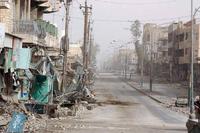
The news media headlines in the United States are as much a battleground as the streets of Baghdad. It is bad enough that our troops have to fight the enemies in Iraq, but they continually have to suffer the ignorance and misleading reporting of the situation back at home. The battle for sensational headlines is fueled by politicians who posture for the microphone or the TV camera.
The insurgency is NOT going to go away any time soon -- certainly not this year and maybe not the next.
Congress and the news media need to get a better understanding of the counterinsurgency against the nationalists, foreign fighters and the former Baathists and criminals, and how all are trying to create chaos and insecurity in the population.
We are losing the psychological war in Iraq, and the information war at home -- and the blame rests solely in Washington, D.C.
The goal of the local Jihadist and Al Qaeda foreign fighters is to run the Americans out of Iraq, and keep the Coalition from establishing any form of democracy. The goal of the Baathists is to create fear and mistrust in the newly elected government. They hold on to the hope that the people want to return to a relatively peaceful Baathist Party dictatorship. Then there are nationalists and the criminals mixed in all three.
The insurgency is increasing in activity because the Coalition and the Iraqi government are being successful at the counterinsurgency. Historical examples prove this point to be not uncommon.
Why is this message not better understood by the American people?
My guess is that we have far more “officials” working on the situation in Iraq, and too few working on educating the people and getting the right information to Congress and the news media. TV news conferences by the Secretary of Defense, while informative to many, should not be the single source of information on what is right in Iraq or Guantanamo Bay.
Many members of Congress are totally confused on the situation on the ground in Iraq and cannot understand the international criticism of the detention facility at Guantanamo Bay. Additionally, members of Congress whose politics du jour , after reading polls showing doubts among voters, do not have the political interest to stand up for what is right. Instead, they follow what is popular or unpopular as it suits their political ambitions.
A Gallup poll taken this month reported that six in ten Americans want the US to withdraw some or all of the 140,000 troops currently in Iraq. A survey this month by the Pew Research Center found that 46 percent of U.S. adults supported an immediate withdrawal of all troops, and this is up from 36 percent last October.
On the question of Guantanamo Bay, which has been exaggerated by released detainees by accusations of mistreatment, the Pew survey found that 34 percent of Americans thought there was a pattern of abuse at Gitmo. Naturally, opinions are split sharply along party lines with only 14 percent of Republicans believing in a pattern of abuse, compared with 45 percent of Democrats. Vice President Dick Cheney probably had it right when he said: "Those who are most urgently advocating that we shut down Guantanamo probably don't agree with our policies anyway." It is very unproductive; particularly form those allegedly in President Bush's camp, to talk about the uncertain prospects for drawing down troop levels in Iraq. Republican Rep. Walter Jones of North Carolina called for the US to set a date to withdraw troops from Iraq. Last week, Florida Sen. Mel Martinez, a Republican and former Bush cabinet member, who during his campaign strongly supported the Iraq war, said he was "discouraged" by the lack of progress and the inability of the Pentagon to draw down U.S. forces.
Sen. Martinez was joined in his criticism of Iraq by Republican Sen. Charles Hagel of Nebraska, who criticized the administration for failing to foresee the problems in Iraq.
This is an indication of the total lack of understanding of current insurgency raging in Iraq. This is outrageous because they should know better.
Robert Kagan wrote in The Post last week that it is entirely possible that if the Bush administration had not gone to war in 2003, the United States might have faced a more dangerous and daring Saddam Hussein later on. The Bush administration felt compelled to act. He went on to write that in addition to whatever price might have had to be paid, certainly by the Iraqi people and possibly by Iraq's neighbors, for leaving Saddam in power, we might have wound up going to war anyway.
Others have said that so long as Hussein remained in power and in confrontation with much of the world, Iraq would remain a source of potential conflict in the region, and, perhaps even more important, a source of inspiration for those who equate violence with power and compromise with surrender.
Kagan additionally wrote: “Whether historians judge the war favorably will depend heavily on whether post-Hussein Iraq does indeed provide a different sort of inspiration, but, again, the effort to change the direction of the region was surely worth paying some price.”
The discussions of whether we should or should not have gone to war are way past being relevant to the current situation in Iraq. The only question needed to be address now is how best to fight the insurgencies.
These comments may be no solace to those who have lost friends or family in this war -- and it certainly does not absolve many in the administration from the errors that it made before and after the war and continue to make today. The comments above are the kinds of considerations that ought to be part of any serious debate over what needs to done in Iraq and at home, and whether the war in Iraq is "worth it."
Email
this page to friends RSS feed
[Have an opinion on this article? Sound
off here.]
© 2005 H. Thomas Hayden. All opinions
expressed in this article are the author's and do not necessarily
reflect those of Military.com.
|