








Home
Benefits
News
entertainment
shop
finance
careers
education
join military
community


Joe Galloway: Politics Intrude into Military Operations


About the Author

Joseph L. Galloway is the senior military correspondent for Knight Ridder Newspapers and a nationally syndicated columnist. One of America's preeminent war correspondents, with more than four decades as a reporter and writer, he recently concluded an assignment as a special consultant to Gen. Colin Powell at the State Department.

Galloway, a native of Refugio, Texas, spent 22 years as a foreign and war correspondent and bureau chief for United Press International, and nearly 20 years as a senior editor and senior writer for U.S. News & World Report magazine. His overseas postings include tours in Japan, Vietnam, Indonesia, India, Singapore and three years as UPI bureau chief in Moscow in the former Soviet Union. During the course of 15 years of foreign postings Galloway served four tours as a war correspondent in Vietnam and also covered the 1971 India-Pakistan War and half a dozen other combat operations.
In 1990-1991 Galloway covered Desert Shield/Desert Storm, riding with the 24th Infantry Division (Mech) in the assault into Iraq. General H. Norman Schwarzkopf has called Galloway "The finest combat correspondent of our generation -- a soldier's reporter and a soldier's friend."

Full Joe Galloway Bio

Joe Galloway Archives

Special Report: Read Joe Galloway's new column for Knight Ridder Newspapers on
Echo Company.

LZ Xray: The climactic 1965 battle in Vietnam's Ia Drang Valley

We Were Soldiers: Joe's Photos from Vietnam


We Were Soldiers - Official Movie Website

Sound Off! - Have an opinion about this article? Visit the Joe Galloway discussion forum.

Military Opinions Index


November 15, 2004

[Have an opinion about this article? Visit the Joe Galloway discussion forum.]

WASHINGTON - The old saw has it that war is too important to be left to the generals, but the truth is that war is too important and too costly to be left solely to the politicians. Fallujah is the case in point.

This week as American and Iraqi troops launched their long-delayed and long-expected assault to crush the foreign and home-grown Sunni terrorists holed up in Fallujah, it was clear that the timing was dictated more by the American presidential election than by the forthcoming January Iraqi election.

That Fallujah is still a festering sore would seem to be a matter of politics as well.

At the end of March this year, with the nation and the world horrified by the photographs of murdered American contractors hanging from a bridge in Fallujah, orders went out to the newly arrived U.S. Marines to attack Fallujah and nearby Ramadi.

The Marine commanders had hoped they would have a chance to try some different tactics in the troublesome Sunni heartland. They wanted to put small squads of Marines out living with the people in the towns and villages, much as they did in South Vietnam with their civil action program.

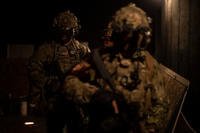
But orders are orders, and the Marines went into the Sunni cities with guns blazing. They found it a hard-fought slog, with deadly improvised explosive devices all over the place and sophisticated ambushes complete with heavy machine guns and showers of rocket-propelled grenades.

Scores of Marines were killed and wounded taking parts of both cities, house by house, block by block. The learning curve is steep and deadly in street fighting, or as the military now calls it, military operations in urban terrain.

Then, when Marine commander Lt. Gen. James Conway thought his men were on the verge of taking both cities and wiping out the terrorists, down came an order to halt operations and withdraw outside the cities to positions they held before it all started.

The assumption, both there and here, was that no one wanted high American casualties during the middle of a presidential campaign.

Where did the orders come from? Conway thought they came from "7,000 miles over my shoulder," which would be somewhere in the vicinity of Washington.

This week, Defense Secretary Donald H. Rumsfeld said those orders to start and to stop were issued by the civilian boss in Baghdad, Ambassador Paul Bremer, and the military boss in Baghdad, Lt. Gen. Ricardo Sanchez.

Whoever was flashing the traffic light, the end result was that the terrorists have now had free reign and sanctuary for six months in Fallujah and Ramadi, and the job of rooting them out still has to be done if Iraq is to have any chance of a more peaceful future.

The trouble with a slow-motion assault where you assemble a highly visible force of 15,000 Americans and Iraqis, broadcast warnings to the civilian population to leave, and then complete cutting off the city only the night before the attack is that your enemy knows you are coming. They act accordingly. The terrorist leaders leave for safer places along with a lot of their people.

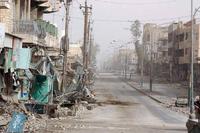
Meantime, Fallujah, a city of between 200,000 and 300,000, becomes a battleground and block after block is transformed into rubble by bombing, artillery, tank and Bradley guns and heavy machine guns.

For more than two centuries our military and the officer corps have followed orders from their civilian overlords, and no one wants to see that change. But it should be noted that for much of our history those in both the executive and legislative branches have been veterans of our wars themselves. Those who issued the orders understood war all too well.


With the dying away of the World War II generation and a Vietnam War draft that largely passed over the sons of the elite, this is no longer the case in our government. The president served in the Air National Guard at home during his generation's war in Vietnam; the vice president took five draft deferments to avoid any service.

Only about 25 percent of those in Congress today have worn the uniform. Only one member of Congress has sent a son or daughter to Iraq.

It argues for a greater degree of thoughtfulness and caution on the part of those who issue orders to the uniformed military precisely because it is not their sons and daughters who march into harm's way.

In other words, they should not interfere with an already hard and dangerous job like rooting out the terrorists in Fallujah for reasons of partisan politics.


[Have an opinion on this article? Sound off here.]

© 2004 Joe Galloway. All opinions expressed in this article are the author's and do not necessarily reflect those of Military.com.


Military Opinions Index


Member Center


FREE Newsletter


Military Report


Equipment Guides


Installation Guides


Military History