








Allies Get Special Military Training
Chicago Tribune
March 12, 2005
WASHINGTON - If the Bush administration has its way, military officers from Indonesia will soon arrive in the U.S. for training by the American military, making that country just the latest to receive such help as an ally in the war on terror.
But critics say Indonesia is also a good example of what's wrong with foreign military training, employed increasingly by the Bush administration since the Sept. 11, 2001, attacks. These nations - many unstable and in volatile regions - could ultimately use their American-trained armies against their own people, opponents of the training aid say, and in the long run make the U.S. a symbol of oppression and hurt the war on terror.
"Techniques and tactics that are being taught in these training courses could perhaps come back to haunt us in terms of human-rights abuses and interrogation techniques," said Rachel Stohl, an analyst at the Center for Defense Information, a Washington defense analysis group.
Several of the countries receiving U.S. arms and training as allies in the war on terror have given U.S. military and intelligence forces new access to parts of the world that were previously difficult to penetrate. But some of those same countries also have questionable human-rights records, drawing sharp and regular criticism in annual State Department reports.
In 2004, the State Department noted that the Indonesian government's "human-rights record remained poor." And as recently as last week, the U.S. urged Colombia, another military aid recipient, to fully investigate allegations that a Colombian army unit had used machetes to kill eight civilians.
Human-rights activists and critics in Congress contend that Indonesia's military has long been corrupt and that it may be to blame for the 2002 slayings of two Americans and the massacre of scores of residents of the island of East Timor before it won independence in May 2002.
"The Indonesian military is even more internally directed now than it was then," said John Miller of the East Timor Action Network, an advocacy group. "They argue that they're needed to hold the country together, when clearly their repressive tactics have helped fuel whatever independence movements have gone on."
U.S. military aid to Indonesia was cut off by Congress in 1992, and only a limited military exchange has been allowed, intended to increase the Indonesian military's awareness of human rights. But with Secretary of State Condoleezza Rice's recent approval, Indonesia is immediately eligible to spend $600,000 in U.S. aid to send officers to American military courses.
After the Sept. 11 terrorist attacks, the need for allies in regions where al-Qaida terrorist network operated changed everything. Military aid packages to places as diverse as Yemen, Eritrea, Tajikistan and Georgia have opened doors for the U.S. in parts of the world that were hitherto out of reach.
And military-to-military training, U.S. officers say, is playing a little-noticed but crucial role in efforts to build strategic bridges with new partners, in the Horn of Africa to name one such place.
"The work that we're doing right now in Africa is so very important, simply because we don't want to see happen in Africa what's happened in Iraq and other places," Marine Gen. James Jones, head of the U.S. European Command, told a Senate committee last week. "What we're trying to do in Africa, if I could sum it up, is to try to engage in a pro-active way before we have to engage in a reactive way."
The administration has proposed spending $4.8 billion in 2006 for foreign military assistance, including arms sales, arms grants and training. That is slightly less than the $5 billion approved for 2005 but substantially more than the $3.5 billion in aid the U.S. allocated annually before the Sept. 11 attacks.
Because this funding for training is split between the Defense and State Departments, just how much money supports hands-on training by U.S. advisers is difficult to discern.
The amount requested for the State Department-managed International Military Education and Training (IMET) program for 2006 is $86.7 million. The program allows foreign military officers to take courses at U.S. military schools. Military personnel from Pakistan, India, Thailand, the Philippines, Uzbekistan and Yemen have done so or plan to.
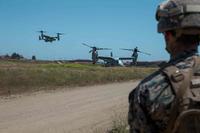
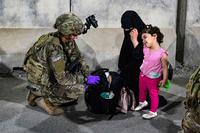
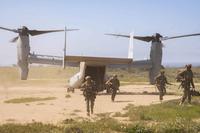
The Pentagon's Joint Combined Exchange and Training, or JCET, program, meanwhile, pays for direct tactical training. U.S. commanders recently told Congress that such training is under way in 12 African and three European countries and that U.S. Marine Corps counterterrorism training is being done in seven African countries, Georgia and Ukraine. U.S. forces also conduct JCET missions in the Philippines.
To carry out that work, the United States has posted 1,400 servicemen and women in Djibouti, for example. Those troops are conducting training missions in Djibouti, Kenya, Yemen, Eritrea and Ethiopia and are also monitoring Somalia and Sudan for terrorist activity.
"Our main purpose out here is conducting operational training, assisting host nations to combat terrorists and ultimately establish a secure environment," said Col. Bob Fauser, a Marine reservist and the deputy director of operations for the Combined Joint Task Force - Horn of Africa.
Those activities include not just military training, he said, but also support for medical and veterinary clinics, schools and public utilities projects.
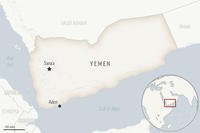
In Yemen, U.S. personnel have assisted the Defense Ministry and helped bolster security at the port of Aden, where in 2000 an al-Qaida attack blew a hole in the hull of the USS Cole, killing 17 sailors and wounding 39 others.
Indonesia is one of about 150 countries eligible for the State Department's military education and training program. But Rice's decision to offer that country U.S. military training drew nearly instant opposition from those who tracked events closely during East Timor's campaign to win independence.
In 1996, Congress approved a measure proposed by Sen. Patrick Leahy, D-Vt., that requires the State Department to verify that foreign officers receiving U.S. training have not taken part in human-rights violations.
"One reason Sen. Leahy supports accountability conditions on the spending of U.S. tax dollars to train the Indonesian army," said Tim Rieser, an aide to Leahy, "is that despite 40 years of U.S. training, the Indonesian army violated human rights, engaged in a wide range of corrupt, illegal activities, and they have yet to be held accountable for any of it."
Because training for 2005 wasn't planned, the Indonesian military must wait for training course slots in the U.S. to open up due to cancellations by other foreign officers, a State Department official said. For 2006, the Bush administration has asked Congress to approve $800,000 for Indonesian military training.
Pentagon and State Department officials say that human-rights awareness is stressed during the training and that those standards will be closely watched in Indonesia's case.
"Certainly there's concern about human rights," said a State Department official who requested anonymity. "There's certainly concern about the need for accountability in human rights in Indonesia. And in fact one of the things that we address is the need for human rights in the military."
Sound Off...What do you think?
Join the discussion.
Copyright 2005 Chicago Tribune. All rights reserved. This material may not be published, broadcast, rewritten or redistributed.
|