










Home
Benefits
News
entertainment
shop
finance
careers
education
join military
community
 
Search for Military News:  
Headlines News Home | Video News | Early Brief | Forum | Passdown | Discussions | Benefit Updates | Defense Tech
N. Korea Suspected In Sale Of Nukes
Associated Press
May 24, 2004

VIENNA, Austria - North Korea has emerged as a possible supplier in the clandestine nuclear network, with diplomats on Sunday saying the communist country was the likely source of nearly two tons of uranium that Libya bought for its now-scrapped weapons program.

The revelations stoked concern that Iran and other nations also could have benefited from cooperation with the secretive nation to get fuel, components and the knowledge needed to build nuclear weapons.

Previously, Pakistan - the key country implicated in a worldwide nuclear black market - had been thought to be the source of 1.87 tons of uranium hexafluoride that Libya handed over to Americans in January as part of its decision to get rid of weapons of mass destruction.

Now, the evidence increasingly points to North Korea, the diplomats said, though they cautioned that the investigation was not yet complete and other sources for Libya's program could not be ruled out. The diplomats spoke to The Associated Press on condition of anonymity.

The new evidence pointing to North Korea came from the International Atomic Energy Agency and was based on interviews with members of the clandestine network headed by Abdul Qadeer Khan, the Pakistani scientist implicated in selling his country's nuclear secrets to Libya, North Korea, Iran, and possibly other countries, according to one diplomat.

A U.S. official, however, told AP that U.S. intelligence was "still pursuing" the alleged North Korean link "to see how much truth there is to it" and needed more information to "disprove" Pakistan as the source.

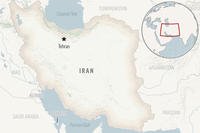
One major proliferation concern is Iran, whose nuclear program already is under scrutiny because of fears it might be developing weapons.

Iran's activities are up for review next month when the International Atomic Energy Agency's board meets to discuss the state of investigations into programs that go back nearly two decades and include covert attempts to enrich uranium, reprocessing small amounts of plutonium and other suspect activities with possible weapons applications.

Inspections last year by the Vienna-based IAEA showed that Iran failed to report imports in 1991 of large amounts of uranium hexafluoride - the same substance shipped to Libya, apparently by North Korea.

While the origin of the Iran shipments was China, other channels of weapons cooperation between the communist North and the Islamic regime appear to exist at least since the early 1980s, when North Korea sold about 100 refitted Soviet Scud B missiles to Tehran, which used them in its war against Iraq.

More recently, Japanese media quoted unidentified military officials as saying North Korea and Iran had agreed on joint production of long-range ballistic missiles. One of the diplomats who spoke to AP on Sunday cited intelligence saying that North Korean officials were believed to have visited Tehran last year, possibly in connection with such a deal.

Pirouz Hosseini, Iran's chief delegate to the IAEA, said he was "not aware of such cooperation at all," between his country and North Korea.

"These are just intelligence reports," he told AP.

One of the diplomats said as far as he knew the IAEA report up for review in June would not link North Korea to Iran's nuclear programs.

But another said that with other countries, notably Pakistan, now established as supplying both Libya and Iran with centrifuges for uranium enrichment, further investigations could also well connect North Korea to Tehran, considering the "interlinkage between suppliers and recipients that runs through the investigations into the (nuclear) black market."

In its raw form, uranium hexafluoride cannot be used as nuclear fuel - or in warheads. But it is part of a cycle that uses centrifuges in a process that produces enriched uranium with potential for both of those purposes.

Libya had purchased hundreds of centrifuges as part of a multimillion dollar enrichment program, with the Khan network as the main supplier.

After an exile opposition group revealed its clandestine enrichment program two years ago, Iran acknowledged it had planned to assemble thousands of the devices but said its program was geared strictly to generate nuclear power.

One of the diplomats said that despite its size, the shipment thought to have come from North Korea would only have been enough to make one small nuclear weapon. When it came clean on its weapons ambitions in December, Libya was far away from achieving that goal.

The evidence collected by the IAEA sheds more light on the North's program using uranium enrichment to make nuclear arms parallel to its better-known plutonium-based activities. North Korea is demanding U.S. economic aid and other concessions in exchange for scrapping its nuclear weapons programs.

Khan, the Pakistani nuclear scientist, has admitted that he provided North Korea with assistance for development of a uranium bomb, something the North Koreans deny

U.S. officials believe North Korea already has one or two nuclear bombs and could make several more within months through its plutonium program.

But former nuclear inspector David Albright, who now heads the Institute for Science and International Security, said that if North Korea was the source for Libya, that would mean it "is a lot closer" than thought to being able to make nuclear weapons through uranium enrichment as well.

Sound Off...What do you think? Join the discussion.


Copyright 2004 Associated Press. All rights reserved. This material may not be published, broadcast, rewritten or redistributed.


Sound Off...What do you think? Join the discussion.

Copyright 2012 . All rights reserved. This material may not be published, broadcast, rewritten or redistributed.


Search for Military News: