



Home
Benefits
News
entertainment
shop
finance
careers
education
join military
community
 
Search for Military News:  
Headlines News Home | Video News | Early Brief | Forum | Passdown | Discussions | Benefit Updates | Defense Tech
U.S. Forces Train In Arab Culture
USA TODAY
February 18, 2004

FORT DIX, N.J. -- A pair of Iraqis plead with wary U.S. troops across barbed wire but are turned away. Soon, a crowd arrives, chanting and jostling. Before long, the crowd morphs into a mob invading the American compound.

The situation spins out of control, and the soldiers fire, first into the air and then directly at the unarmed Iraqis. What began as a misunderstanding -- the first two visitors were only seeking medical aid -- is now a major incident.

Fortunately, these soldiers from the 3664th Maintenance Company are firing blanks. The "dead" Iraqis are acting. It's a simulation.

But the events are modeled on reality in Baghdad, Tikrit and other hot spots. Violent showdowns, even if no Americans are killed, set back the effort to win over the Iraqi people.

So as the Army and Marines prepare more than 100,000 fresh troops for Iraq, regular training is being supplemented with a helping of Arabic culture.

The Army has flown select units to Jordan and other Arab countries for immersion in customs and traditions. Even the smaller taste the soldiers get here and at other domestic bases, including Fort Polk, La., where President Bush visits today, gets the soldiers' attention.

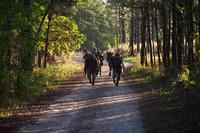
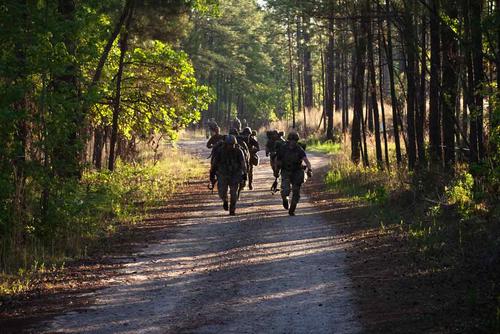
The snowy fields and evergreens of central New Jersey look nothing like Iraq. But the Iraqis are real -- from Iraqi-American communities in Michigan and Washington state. They push the soldiers hard. The soldiers see how a little knowledge could save lives.

"We want to do the right things and not overreact when we shouldn't have to. Their customs and culture are totally different," says Staff Sgt. Ricky Baker, 42, of the 3664th, an Army National Guard unit from Point Pleasant, W.Va.

Maj. Elizabeth Collins, 43, a reservist from Richmond, Va., notes errors from the sidelines and suggests corrections afterward. In this case, she says, the soldiers should have called for a translator as soon as they realized they didn't understand what the Iraqis wanted.

Next time they'll do better. And they'll practice until they can do it "whether they're tired or hungry or cold or hot. Whatever the situation, they'll be able to react with body memory and do it by the standards," Collins says.

Being effective in Iraq can mean unlearning a lifetime of American habits. For example:

* It's merely rude to point at someone in the USA; in Iraq, it's a major insult.

* Touching the right palm to the chest after a handshake shows respect or thanks. No need for that firm American-macho handshake.

* The "OK" sign with a circle of the thumb and forefinger connotes to Arabs the "evil eye."

* Raising a hand to signal "halt" doesn't work. Instead, a soldier should extend his or her arm, palm up, with the thumb pressed to the bunched fingers.

* A new guide for troops also cautions against using the left hand, which is considered unclean to Arabs, to eat, touch or give gifts.

American men must not stare at Iraqi women or touch them, even in situations where a physical search might be routine in the USA, such as in a traffic stop or a house search.

"If I have my wife in the car, they have no rights to put their hands on her. No touching, no nothing," says Salam Al-Buturky, 18, of Seattle, one of the Iraqi-American trainers. "It's real important to know that."

Soldiers also need to understand that a blunt, Army-style personal confrontation doesn't work as well as patience and subtlety. "Politeness, socially correct behavior and preserving honor are paramount," the guide says.

The Army and Marines didn't emphasize cultural training before U.S. troops invaded Iraq last March. Their focus was on the expected confrontation with the Iraqi military. Experts say deaths and ill will could have been avoided.

Retired major general William Nash, a commander in the Persian Gulf War in 1991 and then in Bosnia, says showing respect for the Iraqi people is crucial. If the culture gap isn't bridged, "then it will counter everything else we do."

The shift in training is dramatic. Operational Support and Services, a North Carolina company that supplies the Iraqi-American trainers, was hired last fall to provide 400 hours of training. In weeks, the contract expanded to 4,000 hours, the company says.

"We try to emphasize one thing -- that you have to communicate," says Amr Mohamed, an OSS supervisor who translated for Special Forces troops during the invasion. "Miscommunication causes fear. And fear causes disasters."

Ali Al-Emeri, 44, of Seattle says he gave up his business last year to serve as a translator with the Marines during the Iraq invasion. He emigrated to the USA after the Shiite uprising against Saddam in 1991.

The Americans, he says, "saved my life. Second thing, they put me in better life, to let me live here in this country and join the freedom. And third thing, they liberated my country. It's paying back."

Sound Off...What do you think? Join the discussion.


Copyright 2004 USA TODAY. All rights reserved. This material may not be published, broadcast, rewritten or redistributed.


Sound Off...What do you think? Join the discussion.

Copyright 2010 . All rights reserved. This material may not be published, broadcast, rewritten or redistributed.


Search for Military News: