



BAGHDAD, Iraq — Troops in jittery Iraq have plenty to turn over in their
minds — mortars, missiles and the general threat of mayhem among them.
But one thing the military assured them they would have some protection
against was the specter of anthrax: Before deploying here, each and every U.S.
soldier had to take an anti-anthrax vaccine.
But after U.S. District Judge Emmet G. Sullivan issued a ruling Dec. 22 that
ordered the military to stop requiring soldiers take the vaccine, the word in
the desert is mixed. Some troops believe the vaccine is indeed a needed Kevlar
against the disease-cum-weapon and are thankful for it. A few are ambivalent,
saying they would have chosen to take the serum, optional or not. And some
greeted last week’s decision with a welcome sigh, with a shared distrust that
the Pentagon’s claims about the vaccine are not backed by science.
"I think it should be optional for the military," said Sgt. Ray Poole of the
Florida National Guard during his sentry shift in front of a convention center.
"If the private sector can turn down the serum, we should be able to. As much
as I appreciate the Army’s effort to check all the serums and what have you, I
still put a little more faith in the private sector."
Immediately following the judge’s order, the Pentagon announced it would
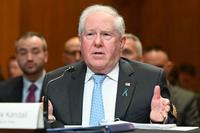
still vaccinate troops who agreed to the precaution. David Chu, undersecretary
of defense for personnel and readiness, reversed that.
Last week, Chu issued a memo reading, "pending further notice, the Deputy
Secretary has decided that DOD will stop giving anthrax vaccinations until the
legal situation is clarified."
The Pentagon’s general rebuttal to vaccine worries has been that it has been
used for some 40 years and is approved by the Food and Drug Administration.
However, a class action suit filed by six unnamed plaintiffs alleged that the
military improperly uses the vaccine to fight airborne anthrax, rather than
solely against anthrax contracted via skin exposure. Sullivan pointedly agreed,
charging the Defense Department used troops "as guinea pigs for experimental
drugs."
Last Monday, he ordered the military to stop forcing vaccinations. The
Pentagon initially protested.
"I categorically reject the use of that term," Dr. William Winkenwerder,
assistant secretary of defense for health affairs, said during a press
conference. Secretary of Defense Donald H. Rumsfeld denounced the judge’s
interpretation as inaccurate.
Nonetheless, Winkenwerder said the Pentagon would comply. He also said that
in 1970, the FDA approved the vaccine for use against all types of anthrax.
Attorneys on both sides will slug it out during a March hearing.
In Iraq, the nation the Pentagon most feared would unleash the deadly spores,
some U.S. troops were suspicious.
"It’s never been proven against inhalation-type anthrax," said Spc. William
Brown, on guard duty with Poole.
Others now in the country reacted to the brouhaha without much heat.
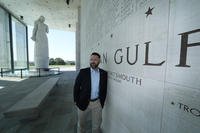
"I don’t really care whether we have to take it or not," said Sgt. Thomas
Grigsby, walking along the marble corridors of the Martyrs’ Monument in
Baghdad, now headquarters for the 1st Brigade, 1st Armored Division. "I think
it’s kind of a good idea with that anthrax being out there, and the risk of us
being exposed to it. Kind of like the flu shot."
So far, the U.S.-led coalition has announced finding no banned weapons in
Iraq, but the Bush administration maintains former Iraqi leader Saddam Hussein
had such weapons and was liable to use them.
A soldier with the Friedberg, Germany-based Company A, 1st Battalion, 36th
Infantry Regiment, echoed some of the disinterest.
"It never really bothered me the first time," Sgt. Juan Villanueva said. "So,
whatever."
"It doesn’t really matter," agreed Sgt. Eligio Marcelo.
Another soldier with their unit, however, was relieved at the prospect of not
seeing that needle again.
"It’s good," Spc. Keith Whitfield said. "I don’t have to take any more
shots."
One of their fellow soldiers, though, said friends worry about the shots’
affect on children.
Some people said that when they were taking the shots they were also trying
to have children "and supposedly it causes birth defects in some people," said
Spc. Raymond Lee.
The Naval Health Research Center has previously reported "a possible
relationship between maternal anthrax vaccination in the first trimester and
higher odds of birth defects." The national Centers for Disease Control and
Prevention subsequently warned civilians against taking the anthrax vaccine if
pregnant.
Because of such news, Poole and his fellow guardsmen in front of the
convention center worry about the vaccine. Since last summer, only 10 troops
have refused the vaccine — but about 400 refused between 1998 and 2001. All
told, about 1 million troops have been vaccinated.
"I’ve never heard anyone say it’s not going to be dangerous to you," Staff
Sgt. Miguel Hernandez said. "I had the same issue in the [Persian] Gulf War."
Hernandez said that during the first Gulf War, he ingested a regular regimen
of pills to protect against biological weapons.
"They said it was experimental, and I didn’t feel comfortable with that.
Sound Off.....Do you think the Anthrax vaccine should only be given to those who volunteer for it?
Join the discussion.
Copyright 2003 Stars and Stripes. All rights reserved. This material may not be published, broadcast, rewritten or redistributed.