





















Army Raises Maximum Age For Recruits
By Jon R. Anderson
Stars and Stripes
European Edition
March 21, 2005
ARLINGTON, Va. — Battling recruiting and retention shortfalls among its
part-time soldiers, the Army is launching a new experimental policy approving
the acceptance of not-so-young recruits into the ranks of the Army National
Guard and Reserve.
Dubbed a three-year "test," the new policy will bump up the maximum age for
new enlistments from 34 years to 39 years, according to an Army announcement.
The policy applies to both men and women joining the military for the first
time. The older recruits will be eligible for the same enlistment bonuses and
other incentives as younger volunteers, according to the announcement. Those with
prior service experience interested in reserves duty remain under existing
rules.
"The program will evaluate the feasibility of a permanent change to Army
Reserve Component enlistment policy," reads the announcement. The test program
begins immediately and will run through September 30, 2008. Set by law, the
maximum age for active-duty recruits will remain at less than 35 years old.
The move comes as reserve recruiters are struggling to convince potential
recruits to join even as unit leaders are failing to convince enough troops to
stay in uniform beyond initial contracts. Hundreds of thousands of part-time
citizen soldiers have found themselves facing full-time duty in the combat
zones, mostly under two-year mobilization orders. Of the more than 412,000 Guard
and Reserve troops who have been activated since Sept. 11, 2001, more than
63,000 have been mobilized twice, according to Pentagon figures.
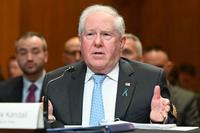
Nearly half of the forces now in the Middle East and Central Asia come from
the reserve components, noted Charles S. Abell, the Pentagon's top personnel
officer, in prepared remarks delivered before lawmakers March 16.
With that as backdrop, he wrote, "This will be a very challenging year for
recruiting for the reserve components particularly in the Army National Guard
and Reserve," which have born the vast majority of combat deployments among
reserve forces. Both the Army Guard and Reserve, he wrote "are at high risk of
falling short of their recruiting objectives."
To help stem the tide, the Army National Guard is increasing its recruiting
force by more than 25 percent, adding 1,400 new recruiters. Meanwhile, the Army
Reserve is nearly doubling its recruiting ranks with 734 new recruiters.
The Army's new policy should help their efforts.
"Raising the maximum age for non-prior service enlistment expands the
recruiting pool, provides motivated individuals an opportunity to serve, and
strengthens the readiness of Reserve units," according to the Army statement
announcing the new policy.
All applicants must meet the same eligibility standards, to include passing
the same physical standards and medical examination.
"Experience has shown that older recruits who can meet the physical demands
of military service generally make excellent Soldiers based on their maturity,
motivation, loyalty, and patriotism," reads the announcement.
It's too early to say how much the new policy will help recruiters, but
officials are hopeful.
"The impact of the measure on meeting enlistment goals has not been forecast,
but it is expected to contribute to the Army's efforts to recruit top-quality
individuals," according to the announcement.
Sound Off...What do you think?
Join the discussion.
This article is provided courtesy
of Stars & Stripes, which got its start as
a newspaper for Union troops during the Civil War, and
has been published continuously since 1942 in Europe and
1945 in the Pacific. Stripes reporters have been
in the field with American soldiers, sailors and airmen
in World War II, Korea, the Cold War, Vietnam, the Gulf
War, Bosnia and Kosovo, and are now on assignment in the
Middle East.
Stars & Stripes Website
|
|
|
Copyright 2004 Stars and Stripes. All rights reserved. This material may not be published, broadcast, rewritten or redistributed.
|