Home
Benefits
News
entertainment
shop
finance
careers
education
join military
community


H. Thomas Hayden: Bob Woodward & His Struggle to Understand Warfare


About H. Thomas Hayden

H. Thomas Hayden was formerly the President and CEO of First Communications Company (FCC), Riyadh, Saudi Arabia, a joint venture between Raytheon and a Saudi Company involved in Command, Control, Communications, Computers and Intelligence (C4I) Systems for the Ministry of Defense and Aviation, Saudi Arabian National Guard and Ministry of Interior. Before retiring from the US Marine Corps, assignments included Commanding Officer (CO), Headquarters and Service Bn, 1st Force Service Support Group, which deployed to the Gulf War, CO Brigade Service Support Group – 9, which deployed to Somalia and CO MAU Service Support Group – 33, which deployed to The Philippines and Korea. He was Branch Head, Headquarters Marine Corps, Special Operations and Low Intensity Conflict (SO/LIC), and Special Assistant to the Assistant Secretary of Defense for SO/LIC with assignments to Central America. He has participated in combat operations or contingency operations in the Republic of Vietnam, Central America, Gulf War, Somalia, and Columbia. Tom has a MBA, MA in International Relations, and a PhD candidate in Business Management. He is the author of two books and is currently writing a third: SHADOW WAR: Special Operations and Low Intensity Conflict; WARFIGHTING: Maneuver Warfare in the US Marine Corps. He has published over 40 articles and has been awarded the Navy League’s Alfred Thayer Mahan award for literary achievement.

Thomas Hayden Article Archives

Sound Off! - Have an opinion about this article? Visit the discussion forum.


Related Links

Military Opinions Index

Global War on Terror

June 16, 2004

[Have an opinion on this column? Sound off in the discussion forum.]

The people who write for The Washington Post, do not know any more about real war than to do about...well, you know the statement, to paraphrase George C. Scott as General George S. Patton, Jr.

A number of friends told me that they had bought the Bob Woodward book, Bush at War, and had found it interesting and informative reading. So I decided to buy it.

The first half is somewhat boring, with chapter after chapter on this meeting or that, and who said what to whom, and then on to the next meeting, and again who said what...and so on. Boring.

I was surprised to read not one implication that Bush had Iraq as priority one from the start after 9/11. After all the "insider" back-biting and Bush-bashing press reports about how Bush was fixated on Iraq, I saw nothing but planning to go after "Osama bin Laden and al Qaeda," no matter where they were, and Afghanistan was priority one. So I read on.

However, I was dumfounded and could not believe what I read on p. 175 where Woodward quotes Bush:

"It's part of the credibility of our overall effort. Conventional warfare is not going to win this (The Global War on Terrorism), this is a guerrilla struggle."

Then Woodward writes: "That was a problem. The United States had never figured out how to win a guerrilla war."

You have to be kidding. Is Woodward that stupid, or is it that he really has no background in military history, and knows not what he says?

Woodward is touted as a thirty-two year veteran of The Washington Post, with nine "New York Times #1 best sellers." But when you write a lot of fiction, start believing your own press clippings, and talk only to Presidents, high level officials and generals, it might be understandable that a writer, like Woodward, has not read much military history and has no idea of what things like unconventional warfare, counterinsurgency, and counter-guerrilla campaigns are all about.

Let me help Mr. Woodward and all his fawning admirers.

The United States has successfully conducted "counter-guerrilla" campaigns for over 300 years. If you count the Indian Wars (unfortunately or fortunately, depending how you look at it), we have a record of successful unconventional warfare back to before and during the American Revolution, up to the most recent campaigns in Afghanistan and Iraq.

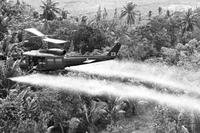
In the 20th century, you can start with the Philippines, the Banana Wars of the 1900s to 1930s, Greece in the late 1940s, many counter-guerrilla campaigns in Korea, and Vietnam. Yes, Vietnam.

It is important to understand that guerrilla warfare is a military tactic aimed at harassing, punishing, or killing the forces of an adversary. Guerrilla warfare in Iraq and Afghanistan, or anywhere else for that matter, is the only means that weak terrorists or insurgent forces can employ against a stronger military regime.

Conducting a counter-guerrilla war in Iraq or Afghanistan involves first and foremost a counterinsurgency (COIN) campaign.

There are 11 Basic Principles for a COIN campaign:

  • The center of gravity is the people.

  • The first step must be focused on security for the people and the reestablishment of public safety (police, fire, security services, EMS, etc.).

  • Quick establishment of an effective Intelligence collection system is an imperative (analysis and dissemination is for the COIN Forces). Local police, self-defense forces and security services are best for Intelligence collection.

  • Establish counter-guerrilla forces to neutralize or destroy the guerrillas fighting against the COIN forces.

  • Act with disciplined, well-trained, and highly mobile, counter-guerrilla forces.

  • Balance compassion/restraint with overmatching power in fighting guerrillas.

  • Incorporate psychological operations and information operations into every action.

  • Redevelopment/development and/or reconstruction of infrastructure must have local indigenous support and participation.

  • Operate within established international law.

  • Have an end-state focus for ending the "counter-guerrilla" operations.

  • Organize police, military and civilian agencies under one Civil-Military Campaign Plan.


    The first priority in COIN is creating an effective Intelligence collection effort and the establishment of "law and order," through police, para-military and military forces to fight the guerrillas and the insurgency.

    The next priority is to establish effective "population and resource control," e.g. issue new ID cards to the friendly or neutral population and code suspected enemy agents/forces.

    As for establishing or re-establishing a "census grievance," all Arab and most SE Asia countries have a long tradition of the local tribal chief or governor setting once a month for the people (anybody) to petition their leaders for a redress of grievances. This has proven to be a valuable tool in collecting Intelligence.

    The Civil-Military Campaign Plan must unite all civil and military forces operating in the COIN campaign to identify a main focus of effort and execution of the commander's intent. Whether it is development/redevelopment or construction/reconstruction of essential infrastructure, local indigenous participation must be assured. All civic action projects must be approved and supported by the people or their leadership.

    The most common terms associated with "guerrillas" are subversion and terrorism. Subversion is all measures short of armed force taken by one section of a population of a country to overthrow those governing the country at that time, or force the governing power(s) to do something, like abandon the government/occupation. This could be the use of political and economic pressure, propaganda, demonstrations and small scale attacks against economic targets, e.g. blowing up pipelines, roads, bridges, car bombs, assassinations, etc. Terrorism is the use of force or violence against individuals or property to coerce or intimidate governments or societies, often to achieve political, social, religious or ideological objectives. Subversion and terrorism can take place at the same time. Also, both can be supported by foreign governments, or non-state actors like Al Qaeda.

    Subversion and terrorism are means to an end used by "guerrillas" in an insurgency. The insurgents can be seen to be more powerful than they actually are when they use massive car bombings; small hit-and-run attacks on security forces, assassinations of local leadership, etc. There is an important element of subversion and terrorism that cannot be overlooked - public opinion at home and abroad. Case studies of Vietnam, Algeria, Cypress, Lebanon, Somalia, etc., are proof of how one can win battles but lose the war.

    Much of this is being done in Afghanistan and Iraq.

    Can someone pass this on to Bob Woodward?

      Email this page to friends

    [Have an opinion on this article? Sound off here.]

    © 2004 H. Thomas Hayden. All opinions expressed in this article are the author's and do not necessarily reflect those of Military.com.


  •  


    Member Center


    FREE Newsletter


    Military Report


    Equipment Guides


    Installation Guides


    Military History