Home
Benefits
News
entertainment
shop
finance
careers
education
join military
community


How Hard Is Wartime Training?
Special Report: How Hard Is Wartime Training?
 

DefenseWatch

This article is provided courtesy of DefenseWatch, the official magazine for Soldiers For The Truth (SFTT), a grass-roots educational organization started by a small group of concerned veterans and citizens to inform the public, the Congress, and the media on the decline in readiness of our armed forces. Inspired by the outspoken idealism of retired Colonel David Hackworth, SFTT aims to give our service people, veterans, and retirees a clear voice with the media, Congress, the public and their services.


Related Links

DefenseWatch Website

Article Archive

Hot Discussions

Have an opinion on this commentary? Sound off.

Get Breaking Military News Alerts

An Insider's Guide to Joining the Military

Stars and Stripes Article Archive

Stars and Stripes Official Site


March 22, 2005


[Have an opinion about the views expressed in this article? Sound off in the Hot Issues with Defensewatch Forum.]

By Nathaniel R. Helms

First of Two Parts

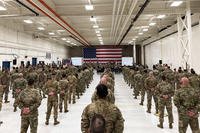
FORT LEONARD WOOD, Miss. - Almost 300 million Americans depend on roughly 1.2 million Army soldiers to help protect the country. It all begins in Basic Combat Training at places like Fort Leonard Wood, where Army officials recently invited DefenseWatch to observe the evolution of young soldiers making their right-of-passage into the crucible of war.

DefenseWatch put before the Army the question of whether recruits entering the service today are mentally prepared to endure the rigors of combat many of them will face in their immediate futures.

The issue was raised by Senior Military Columnist Col. David H. Hackworth in a recent column (see "A Battle-Rattled Army," DefenseWatch, Feb. 28, 2005), where he asked whether today's soldiers are being mentally prepared for the stresses of combat. Hackworth cited statistics that indicate the number of soldiers in the 1st Armored Division returning from Iraq suffering from post-traumatic stress disorder has tripled from returning troops in previous wars. This is happening, he noted, despite the fact that soldiers in Iraq are fighting a low-intensity war of ambush and incoming, rather than weeks and months of prolonged combat.

From the whirlwind six-hour visit that included an hour of interviews with soldiers, a walk-around tour of the new reception facilities, and several "off-the-record" conversations with personnel who administer the new arrivals transition into the Army, it was impossible to draw any firm conclusions about the quality of training the service's new recruits are receiving. Army officials declined to allow a longer visit at the base on grounds that a reporter's presence would interfere with the instruction of the trainees, said Master Sgt. Jon Connor, a 19-year veteran public affairs specialist who served as an escort throughout the visit.

If first impressions are any indication, the "kinder and gentler" U.S. Army of the 21st century is long on sensitivity and short on the kick-em-in-the-ass-and-take-names mentality of basic training yesteryear.

One sergeant said the notion that breaking recruits all the way down and then building them back up from scratch has been replaced by the idea that soldiers are individuals who can contribute something unique to the Army. It is all part of the "Army of One" attitude epitomized by the recruiting slogan of the same phrase, he said.

Gone are the days when the recruit's bus was met at 0200 by a thundering drill sergeant who told the apprehensive recruits they had "10 seconds to get off the bus and the last person off will wish he is dead." The receiving sergeants at the reception station were patient, relaxed and approachable. Cursing is not only forbidden, but also punishable by non-judicial punishment. So is screaming, dropping the recruits for pushups, and locking their heels for long stretches while the in-processing proceeds. Arriving soldiers are given something to eat, a place to sit, and an introductory speech before they are trundled off to bed for a few hour's sleep.

Name-calling and other traditional forms of recruit hazing are severely controlled, and anything smacking of any kind of disparagement about race, gender or creed is strictly forbidden. All smoking devices are confiscated upon arrival and smoking and drinking is reportedly forbidden in basic training.

Despite the declared urgency of the situation, Fort Leonard Wood is strangely quiet for a place churning out more than a division's worth of soldiers a year - about 27,000 recruits are scheduled for training here in 2005, as well as additional thousands of soldiers, sailors, Marines and airmen attending specialized Chemical, Engineering, and Military Police Schools here. Nowhere were platoons and companies marching and running in formation to the drawled cadence of iron-willed drill sergeants demanding perfection with lashing tongues that brought into question everything from conception to the moment at hand.

Female drill sergeants are the norm, and so are female recruits standing in formation with their male counterparts. According to DoD statistics, almost 20 percent of the U.S. military is now female. Regardless of gender, recruits are never touched, never cursed, and never subjected to demeaning behavior that was once thought to mentally toughen them for the challenges ahead, according to Army officials.

Also missing is "kitchen police," the dreaded "KP" duty of days gone by, as well as the daily hassle of shining shoes, starching uniforms, and all the other minutia of Army life once thought to focus the recruits' attention on what they were there for. Attention to detail is taught using different methods nowadays, Connor said.

Instead of marching and drilling, recruits now spend their time in classrooms and on the firing ranges, Connor said. The Army packs as much training as it can into nine weeks, including counter-ambush techniques, dealing with improvised explosive devices and learning about convoy security. There is simply no time for close-order drill, marching, and repetitive training beyond what is necessary to move them unless it is offered after hours as punishment for failure to adequately accomplish the day's tasks.

"They a driven everywhere in cattle cars," Connor explained. "Not like the old cattle cars, but new, nice ones. Time is very important because they have to learn so much."

A handwritten statement on a bulletin board in one of the reception station barracks explained it all. The note, written by a SFC, said something like, "Basic training is taught at the eighth-grade level. All of you have completed the eighth grade so if you pay attention you will find there is a method to the madness."

At the inoculation center where a line of recruits were receiving their shots and vaccines, the retired sergeant major who runs the facility noted that padded walls and floors had replaced the gravel and concrete where recruits used to stand of painted footprints after receiving their shots. It was once not unusual to observe half of a company kneeling, lying on the ground, or vomiting after "shot day" while the drill sergeants derided them for their weaknesses.

"Now they fall on padding," he chuckled. "And they have to sit quietly for twenty minutes after they receive their shots. We don't want to hurt them before they get to their companies." The retired sergeant major declined to be quoted by name, but recalled with a chuckle the era when "T-S slips" (tough shit slips) were handed out to recruits at the reception station when they sought counseling. Nowadays the chaplain's office is located within the reception station and recruits are encouraged to visit whenever they feel a need, he said.

One overriding impression from the activities at Fort Leonard Wood was the Army's attempt to show that it cares very much about the welfare and morale of its arriving recruits. Connor emphasized the messages in the posters and banners covering the walls of the reception station. They promised moral values, an end to sexual harassment, the need for cooperative effort, and the Army's desire to address every concern of the young soldiers as they arrive in the middle of the night.

But nowhere was there a suggestion that Army training is about killing and that the recruit's arrival at Fort Leonard Wood set the stage for that defining experience months or years ahead in places like Iraq or Afghanistan.

Army officials insist the recruits are being carefully prepared for the rigors of combat. To prove it, Connor's provided a squad of witnesses - including five recruits just entering their fourth week of basic training - who said they would be ready to fight if the time came. They were all assigned to C Company, 2nd Battalion, 10th Regiment, part of the brigade that administers basic training here.

None of the recruits I met are going into the infantry. Three of them are combat support service reservists who already knew what was in store for them when they departed basic training. The remaining two were Regular Army enlistees. One R.A. said he joined to be a military intelligence analyst and the other indicated he was going to combat engineering school after basic to learn to drive heavy equipment. One of the female recruits is married to a soldier currently going to advanced aviation training in Virginia who hoped to be stationed with her husband when she completed truck-driving school. The other recruit is going home to her reserve unit after basic and AIT.

A Regular Army captain just back from a tour with the 101st Airborne in Iraq commands them. His top kick was a 52-year-old recently promoted first sergeant who was called back into the Army from retirement after 25-years in military intelligence. When asked if his recall was voluntary, he replied that it was "half and half." Two of the three drill sergeants training the recruits were female. The senior drill instructor had 19 years in service, and her assistants had 14 and seven years, respectively.

Sitting stiffly at attention on a metal bleacher five feet from their commanding officer and Master Sgt. Connor, the newly minted soldiers offered their unconstrained views on the subject in stifled, monosyllables timed between furtive glances at Connor and their CO. Two of them were Hispanic, one a Canadian expatriate who relinquished his Canadian citizenship to join up, and two were young men two years out of high school.

None of them had reached what a salty old soldier would call the "warrior phase." Tucked into Kevlar helmets, full body armor, and BDUs still bearing bag wrinkles, they didn't quite yet inspire visions of martial competence.

And at this juncture, it was unclear whether their Army training would succeed at turning them from civilian volunteers into soldiers capable of surviving and prevailing in the harsh combat we have seen in places like Fallujah and the canyons of Afghanistan.

Next: What it takes to survive in combat. An interview with retired Lt. Col. David Grossman USA, the Pulitzer Prize-nominated author of "On Killing" and "On Combat," both important works on the stresses and rigors of combat.

The "Tyrannical Policies and martial Law" bit was in red text, apparently for emphasis in case the reader had missed Searching4Justice's big point.

Somebody calling himself "STRIKE EAGLE," proclaimed, "The Commander would never have voluntarily agreed to change the curfew policy, on which he had staked much of his credibility. The real reasons causing the civilian curfew's discontinuance included the gigantic financial liability for civil service standby pay to which the command exposed itself, the near mutinous public reaction to the command's policies and arrogant justification thereof, and political pressure emanating from USPACOM and Washington, D.C."

It would seem that every civilian in Korean put in his or her two cents' worth on the "Free Fed" website's bulletin board. Despite the obvious and vocal disdain for LaPorte and his puritanical policies, the Pacific Stars & Stripes reported, "USFK's public affairs office said the [civilian] complaints were not a factor in changing the policy."

So what is it really about? In Tuesday's edition of Stars & Stripes, it was reported that nine U.S. Army Corps of Engineers workers submitted a written request to USFK last Monday explaining that each employee was seeking an average of "800 hours in back pay" as compensation for complying with a military curfew since it was first announced last September, according to the union president representing the group. The Army has until March 14 to respond or else some unspecified event will occur, the report said. Perhaps the employees will turn into pumpkins.

That was also the first clue that DefenseWatch had missed the boat!

The workers told Stars & Stripes reporter Teri Weaver that they were demanding the back pay for contractually specified "standby duty in return for staying home during the nightly curfew policy imposed for civilian workers since September." Their demand begs the question of when were these guys going to get some sleep. Apparently these civilians are iron men and women capable of carousing all night and working all day. Perhaps LaPorte will mention that gratifying discovery during his testimony before Congress. It would certainly be good news amongst all the bad stuff he will be forced to reveal.

Corps of Engineers union president Jeffrey Meadows reportedly sent a one-page letter to Army officials in Seoul as the first step in filing a formal grievance to obtain the money. Meadows told Stars & Stripes that he and other union members first thought of the idea as a way to push USFK leaders into easing or eliminating the curfew.

"Well, that was our goal a month ago," he is quoted as saying. "But now our focus is the money."

Isn't that just dandy! It isn't about poontang after all.

LaPorte will be ecstatic to learn that. It is really about money and greed! What a sad commentary on the state of affairs in our bastion in the Pacific. Maybe we should all wish for the Magic Princess to appear and sprinkle some happy dust around. What is currently happening in South Korea sounds like a sad, sad fairy tale desperately in need of a happy ending.


©2005 DefenseWatch. Contributing Editor Nathaniel R. "Nat" Helms is a Vietnam veteran, former police officer, long-time journalist and war correspondent living in Missouri. He is the author of two books, Numba One - Numba Ten and Journey Into Madness: A Hitchhiker's Account of the Bosnian Civil War, both available at www.ebooks-online.com. He can be reached at natshouse1@charter.net. All opinions expressed in this article are the author's and do not necessarily reflect those of Military.com.


Member Center


FREE Newsletter


Military Report


Equipment Guides


Installation Guides


Military History