




 |
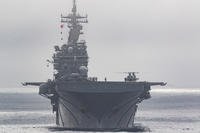
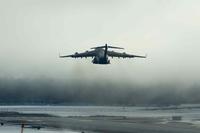
| The USS Higgins
(pictured above) is one of three Navy destroyers in the vicinity
of China's Hainan island . |
|
|
|
SOUND OFF!
|
| Join our discussion
here.
|
|
|
|
Spy Plane Collision Is Latest in 50 Years of
Sino-US Clashes
The Daily Telegraph London
The US navy's 7th Fleet and Pacific Command,
which operated the EP- 3 spy plane involved in yesterday's crash,
have been head to head with China's military ever since Mao Tse-tung
drove Chiang Kai-shek and the defeated Nationalists into exile in
Taiwan in 1949.
China squarely blames America for preventing the rapid conquest of
Taiwan. A year after Mao proclaimed the People's Republic of China,
the Korean War broke out and the 7th Fleet was despatched to the Taiwan
Strait to "contain" Red China.
The US Navy was at the heart of the crisis in 1958 when China's remorseless
shelling of the Taiwanese islands of Quemoy (now Kinmen) and Matsu
threatened to start a new Pacific war.
The two sides confronted each other again in
1996 when President Clinton despatched two aircraft carrier battle
groups to patrol just off Taiwan in a show of support for the island's
first democratic presidential elections.
The fleet's arrival was prompted by months of menacing Chinese missile
tests and military exercises.
The tests were backed up by frenzied Communist denunciations of President
Lee Teng-hui of Taiwan who in June 1995 had been allowed to visit
America. China's sabre-rattling was intended as a warning to Taiwan's
voters not to re-elect him.
The arrival of the US fleet soothed the atmosphere of growing alarm
and was followed by a landslide victory for Mr Lee.
The most recent showdown between Washington and Beijing was over the
Balkans.
Yesterday's mid-air clash threatens to see Sino-US ties at their lowest
ebb since May 1999, when the Nato bombing of the Chinese embassy in
Belgrade left three Chinese journalists dead.
China never accepted America's explanation that the embassy bombing
was an accident.
Furious students and citizens, whipped up by the state media, staged
days of government-sponsored protests, which saw mobs stone the US
and British embassies in Beijing and burn down the US consul- general's
residence in Chengdu. Last night's statement blaming the spy plane
for the clash echoed the rhetoric after Belgrade bombing, when China's
expressions of emotion mingled with claims for compensation.
Shortly after expressing concern for the missing pilot, the Foreign
Ministry in Beijing noted: "China reserves its right to further negotiate
with the US side on the losses resulting from the incident."
(C) 2001 The Daily Telegraph London. via Bell&Howell
Information and Learning Company; All Rights Reserved
|