
|
|
|
ML_miyamura_bkp.htm
 |
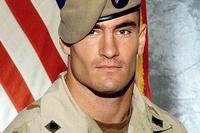
| Army Sgt. Hiroshi Miyamura. |
|
|
|
SOUND OFF!
|
| Join our discussion
here.
|
|
|
Army Sgt. Hiroshi Miyamura
Returning POW Expected a Court-Martial,
Not a Medal of Honor
By Bethanne Kelly
Patrick Military.com Columnist
After more than two years in a Chinese communist prison
camp, Army Sgt. Hiroshi Miyamura and 19 other POWs were released at
Panmunjon and taken to the nearby Freedom Village on Aug. 23, 1953. But
instead of jubilation, Miyamura -- known as "Hershey" -- looked the very
picture of nervousness. Clutched a canteen cup of ice cream and looking
even smaller than usual in missized fatigues,the slight Asian-American
soldier waited to hear that he was being brought up for court-martial for
losing so many men at Taejon-ni, Korea, on April 24, 1951, amid a Chinese
wave offensive.
Finally, his name was announced crisply. The voice
belonged not to a military policeman, however, but to a general officer.
Dazed as he was, Miyamura did not understand exactly what the general
said. "You want to give me what medal?" Miyamura replied. At last, it sank
in: Brig. Gen. Ralph Osborne, commander of Freedom Village, was telling
Miyamura that he had been awarded the Congressional Medal of Honor for his
actions during the very offensive in which Miyamura thought he'd lost too
many men.
On April 24, 1951, then-Cpl. Miyamura had been manning a
machine gun with his unit. When cries of "Kill, kill, dam 'mericans!"
filled the air. As the wave of Chinese communist soldiers appeared,
Miyamura unhesitatingly fixed his bayonet to his rifle, leaped up, and
attempted to stave off as much of the enemy as possible. Unbeknownst to
him as he fought, his selfless actions allowed many of his comrades to
reach safety. Miyamura was left to take shelter in a covered bunker.
Wounded and hopelessly outnumbered, he continued to fight off the enemy in
hand-to-hand combat. Finally, he played dead and scores of enemy soldiers
passed him by -- until a Chinese officer leveled a .45 at his head and
said, "Get up." Miyamura became a prisoner.
At first, no one in
the U.S. knew what had become of him because the Chinese did not release
his name immediately. As soon as they did, the U.S. government knew that
the Medal of Honor citation that had already been written must be
classified as Top Secret. If it hadn't been, Gen. Osborne explained to the
shaken young sergeant, "You might not be here, alive, today." Had
Miyamura's captors known what he had done to their troops in the last
hours before his capture, they might have tortured him or executed him
summarily.
In December 1953, Sgt. Hiroshi Miyamura received his
"secret" Medal of Honor from President Dwight D. Eisenhower in a ceremony
at the White House -- light years from the North Korean prison camp he'd
recently left.
|
|
|
|
|