







|
|
|
|
|
|
SOUND
OFF! |
| Join our
discussion here.
| | |
| Somalia Possible Target in
Terror War
Associated Press
January 17, 2002
WASHINGTON (AP) - Somalia is a place America once
wanted to forget. A lot of U.S. soldiers never will.
America
wanted a quick relief operation back in 1992 and 1993, to save Somalis
from starvation. That operation sank into "quicksand," as Colin Powell
put it, then the U.S. made a hasty exit after losing 18 soldiers in an
ambush.
A possible new front in the war on terrorism, Somalia
today is a somewhat difference place. That is to say, the chaos has taken
on new hues.
What is certain is that if U.S. officials go in, they will do so with
a different frame of mind. Some in the government have already been
burned once by Somalia.
Mogadishu, the
capital, was dangerous almost beyond description. It was a city of
competing warlords, pickups with machine guns and "quat," a narcotic
favored by the gunmen. A place where women and children carried guns,
armed men hid behind them, and citizens insulted U.S. soldiers by showing
them the backs of their shoes.
U.S. Gen. Tom Montgomery, deputy
commander of the U.N. force there, called Mogadishu the "Temple of
Doom."
In the fall of 1993, American and U.N. military commanders
wanted to capture Mohammed Farah Aidid, the most troublesome of the
warlords who had been raiding relief supplies and stirring civil war.
He was slippery, almost a phantom. A half dozen raids had failed
to find him. People kept reporting false sightings. Americans code-named
him Elvis.
On Oct. 3, the Americans were tipped they had a chance
to get some of his lieutenants, if not him.
The setting: a
building near the Olympic Hotel in Mogadishu's market district.
"If there was a hornet's nest anywhere in Mogadishu, this was
it," said Army Capt. Jeffrey Struecker, a veteran of the raid. "We knew
that going in."
The plan: U.S. soldiers would drop down ropes
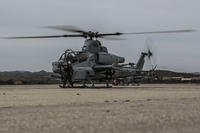
from Black Hawk and Little Bird helicopters, onto streets so narrow the
rotors barely fit between buildings, so dusty the pilots could hardly see.
They would snatch militia members and spirit them away in a convoy of
vehicles that was to meet the choppers at the scene.
The outcome
over 17 harrowing hours: a successful roundup, a sudden blizzard of
opposing fire, one Black Hawk shot down, then another during a frantic
rescue attempt, combat and confusion that stretched through the night, the
bodies of two of the 18 dead Americans dragged through the streets.
President Clinton, by his own admission, had not given full attention
to the Somalia intervention begun under his predecessor. That changed.
He made immediate plans to get out.
For the
United States, the Somali famine in 1992 came at an inconvenient time for
a crisis. A defeated George Bush was preparing to leave office. Bill
Clinton, like all new presidents, wanted a clean slate.
But
Somalis were starving in great numbers - and on TV - despite months of
relief flights.
A day before the great American feast,
Thanksgiving, and haunted by scenes of hunger, Bush and his advisers met
to decide what to do. Bush favored a strong military-backed operation. In
and out, he hoped.
"We'll do it and try to be out by Jan. 19,"
he said, according to a detailed account of the conversation by Powell,
one of the participants and then the nation's top soldier, now secretary
of state. "I don't want to stick Clinton with an ongoing military
operation."
Dick Cheney, true to form, gave Bush a reality check.
"The job won't be done by Jan. 19," said Cheney, then defense
secretary, now vice president.
It was not. The next year, the
mission turned especially deadly. On one day in June, Aidid's militia
ambushed Pakistani peacekeepers, killing 24.
In response, the
U.N., with the backing of the Clinton administration, authorized "all
necessary measures" to take control of Somalia and bring the attackers to
justice. U.N. and U.S. forces brought in more firepower and decided Aidid
had to be hunted down.
U.S. commanders put a $25,000 bounty on his
head.
They later found out Aidid had put a $250,000 price on them.
Clinton later regretted making Aidid a target, a decision he said
was based on Powell's advice.
"I would have handled it in a different way if I'd had more experience,"
Clinton said at the end of his presidency.
"I had the distinct impression," says
Struecker, then an Army Ranger staff sergeant, "that everyone in this
task force was going to die." He is among the soldiers portrayed in the
book-based movie "Black Hawk Down" opening nationwide this weekend.
Midafternoon on Sunday, Oct. 3, Task Force Ranger went into
action, down the ropes and into the dust.
Rangers secured the
building that housed Aidid's militia, and Delta commandos rounded up 20
men as the ground convoy arrived.
Sporadic gunfire became a
torrent.
Struecker, then a staff sergeant in charge of a
two-vehicle squad in the convoy, was dispatched to pick up a soldier who
had fallen off his rope and been badly hurt. As they drove back to the
airfield where U.S. forces were based, a soldier with Struecker was shot
in the head and killed.
Meantime, a Black Hawk was shot down by a
rocket-propelled grenade.
Now hundreds of gunmen were attacking
about 90 stranded Americans. The vehicle convoy, unable to find the downed
chopper crew, was ordered back to base with its prisoners.
Americans at the crash scene passed up a chance to fight their way
out, instead hunkering down until they could retrieve the pilot's body,
which was caught in the wreckage.
Another Black Hawk was hit, and
crashed about two miles from the first. Americans dropped in two snipers.
They died in combat after freeing the pilot - who was captured by the
Somalis and later released.
Almost two hours after the operation
began, a convoy of 22 vehicles set out but ran into relentless fire and
turned back.
Struecker was in the convoy, his second of three
trips through the melee. "I had the feeling there was a weapon pointed
out of every window and every door," he said. "I was receiving fire from
every rooftop and every alleyway."
It was not until close to
midnight that U.S. forces and their allies could mount a sizable rescue.
A convoy with more than 20 Malaysian armored personnel carriers, four
Pakistani tanks, two light infantry companies and 50 members of Task
Force Ranger advanced street by street through heavy fire, finally getting
the survivors back close to daybreak the next morning.
Gen. Montgomery, who has retired, had asked Washington for the
tanks and other armor he saw as necessary to do the job. But Washington
wanted to reduce its Somalia commitments.
A recently declassified
research paper for the Air Command and Staff College says Powell, who
stayed on for a while as chairman of the Joint Chiefs of Staff under
Clinton, relayed the request to Defense Secretary Les Aspin but "did not
support it strongly enough."
Powell remembers that episode
somewhat differently.
"With only three days left in my term, I
was in Les Aspin's office making one last pitch to him to give Tom
Montgomery the armor he wanted," he wrote in his autobiography.
"It ain't gonna happen," Powell quoted the late secretary as
saying. The Mogadishu ambush happened less than a week after Powell
stepped down.
Clinton's taste for foreign intervention became much
more selective after Somalia. Washington did not step in firmly to stop
the Rwandan massacres the next year. He later expressed regret over that,
too.
Aidid died from wounds suffered in a 1996 clash with another
faction.
Somalia today remains largely lawless, with a tenuous
transitional government and suspected links to al-Qaida terrorists. Still,
some local leaders have said they would welcome a U.S. crackdown.
So far the United States has been conducting reconnaissance
flights over Somalia in a possible prelude to more direct action.
As for Struecker, he became an Army chaplain based at Fort Bragg,
N.C.
"I had a strong faith already," he said. "Because of
Mogadishu I have a bulletproof faith now."
Copyright 2002 Associated Press. All rights reserved. This
material may not be published, broadcast, rewritten, or redistributed.
|
|
|
|
|