


 |
| Satellite
photo of Lingshui Airfield taken 10 April (SpaceImaging.com) |
|
|
|
SOUND OFF!
|
| Join our discussion
here.
|
|
|
|
China To Release U.S. Plane Crew
Associated Press
By MARTIN FACKLER Associated Press Writer
BEIJING (AP) - Ending an intense 11-day standoff, China agreed Wednesday
to release the 24-member crew of an American spy plane after President
Bush said the United States was ``very sorry'' for a Chinese pilot's
death and the U.S. plane's landing without permission.
Within hours, a chartered Continental Airlines Boeing 737 had left
the U.S. territory of Guam en route to China's Hainan island to retrieve
the Americans. The Chinese government said it would keep the U.S.
Navy's EP-3E surveillance plane until it could hold more talks with
the United States starting April 18.
Wednesday's delicate, carefully worded compromise - characterized
immediately by Chinese officials as an apology - capped days of tortuous
linguistic negotiation over the release of the air crew and the in-flight
collision that has threatened U.S.-China relations.
It offered a tolerable way out for the governments of two powerful,
deeply intertwined nations that, in public, had maintained intractable
positions. The United States evaded the full apology demanded by China,
which nevertheless extracted an intricate series of expressions of
sorrow from Washington.
Foreign Minister Tang Jiaxuan said the crew would be released on ``humanitarian
grounds'' as soon as ``appropriate travel procedures'' were completed.
``It won't be long,'' said Chinese Foreign Ministry spokesman Sun
Yuxi. ``The procedures are already under way.''
A senior Bush administration official said the White House expected
the crew to be released early Thursday in China, or late Wednesday
in U.S. time zones. The official said it would take several hours
to get a plane to Hainan, the crew boarded and aircraft fueled.
``This has been a difficult situation for both our countries,'' Bush
said. ``I know the American people join me in expressing sorrow for
the loss of life of a Chinese pilot. Our prayers are with his wife
and his child.''
Some issues remained unresolved, including the fate of the plane,
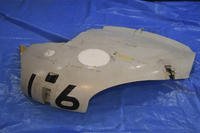
which has been held on Hainan since April 1. The aircraft made an
emergency landing there after colliding with a Chinese fighter jet
over international waters. The Chinese pilot, Wang Wei, is missing
and presumed dead.
China's deputy U.N. ambassador, Shen Guofang, told The Associated
Press that his country would keep the plane pending further investigation.
``We still have some problems with the airplane and we have to keep
the airplane and to make further investigation,'' he said. He declined
to offer a timetable for the plane's return.
China has indicated it would hold the plane at least until further
talks to be held later this month. American officials assume Chinese
experts have stripped the craft of its sophisticated surveillance
equipment.
U.S. officials said there were no plans to end the practice of flying
spy planes in international airspace near China. Chinese officials
have denounced the surveillance flights as a violation of national
sovereignty.
``It must be pointed out that this case has not concluded yet,'' Sun
said.
President Jiang Zemin has been on a 12-day Latin American tour through
much of the crisis. It wasn't immediately clear who else in the Chinese
government was managing the situation at home or who had a say in
deciding to release the crew, or to what extent the Chinese military
was involved in the process.
In addition, there were very few of the direct pronouncements from
top officials that are typical in situations when China feels its
sovereignty or dignity has been threatened.
Jiang, who arrived in Brasilia, Brazil, from Uruguay, did not immediately
answer questions about the settlement.
The Cold War-style dispute inflamed tensions over an expected U.S.
decision this month on arms sales to Taiwan - which China claims as
its territory - and over the detention in China of several U.S.-based
scholars.
Relations with China, always a balancing act, chilled further in 1999
when NATO planes bombed the Chinese embassy in Belgrade during air
strikes against Yugoslav President Slobodan Milosevic. American officials
said it was an accident; China expressed doubt, and the United States
apologized unconditionally.
Despite their differences, the two countries are bound as never before
by hundreds of billions of dollars in trade. China wants U.S. support
to join the World Trade Organization this year and win its bid to
host the 2008 Olympics. Senior officials on both sides said they want
to make sure the incident does no damage to long-term relations.
``China was economically shooting itself in the foot,'' said Rep.
Ike Skelton of Missouri, senior Democrat on the House Armed Services
Committee. ``Putting this incident behind them gets rid of this hot
potato.''
In a letter delivered Wednesday afternoon to the Chinese Foreign Ministry,
U.S. Ambassador Joseph Prueher twice used the words ``very sorry.''
The letter appeared to be a compromise to satisfy China's demand for
a formal apology while accommodating Bush's refusal to offer one for
what his government considered an accident. After the letter's release,
the two sides offered different interpretations.
Sun, the Foreign Ministry spokesman, said the letter expressed ``shenbiao
qianyi'' - a phrase translated in one government dictionary as ``deep
apology'' or ``regret.'' But he was not reading directly from the
text as he spoke.
A copy of the Chinese-language letter released by the U.S. Embassy
didn't use the same term, saying instead that Bush expressed ``feichang
wanxi'' - extreme sympathy - to the Chinese people and the family
of the missing pilot. It also says Bush was ``feichang baoqian'' -
extremely sorry - that the plane landed without permission.
``Please convey to the Chinese people and to the family of pilot Wang
Wei that we are very sorry for their loss,'' said the letter, released
by the White House in English.
It also says Washington is ``very sorry the entering of China's airspace
and the landing did not have verbal clearance.'' But, at the insistence
of Secretary of State Colin Powell, the United States refused to say
the American plane violated Chinese airspace.
The U.S. letter expressed appreciation for ``China's efforts to see
to the well-being'' of the crew.
At the Pentagon, officials said arrangements were in place for the
24 Americans to stop briefly on Guam, then continue to Hawaii.
``We're very pleased,'' said Shirley Crandall, stepmother of Navy
Seaman Jeremy Crandall, from Loves Park, Ill., home. ``My heart is
just pounding.''
There was no indication where the crew was. Reporters saw workers
removing bed linen from the military guesthouse where the crew had
been staying.
Despite state-run media reports that indicated U.S.-Chinese negotiations
were progressing, some Chinese reacted angrily.
``Down with America!'' shouted a lone man outside the military guesthouse
in Hainan where the American crew is believed to have been held. Another
man later staged a similar protest. Police confiscated posters but
let them go.
``The matter isn't settled, so it's not right that they be allowed
to go home,'' said a grocery store owner on Hainan who only gave his
surname, Fu. ``It's like coming to my doorstep and punching me. You
can't just say sorry and walk away.''
Copyright 2001 Associated Press. All rights reserved.
This material may not be published, broadcast, rewritten, or redistributed.
|